
Planning to visit Vietnam's heritage sites? Mind the dress code
A viral video showing a foreign tourist being politely asked to leave the famous Cau Bridge in Hoi An – a cultural and tourism hub in Da Nang City, central Vietnam – because of her sheer outfit has sparked discussion about appropriate attire at tourist destinations across the country, where many heritage and religious sites encourage visitors to dress modestly and respectfully.
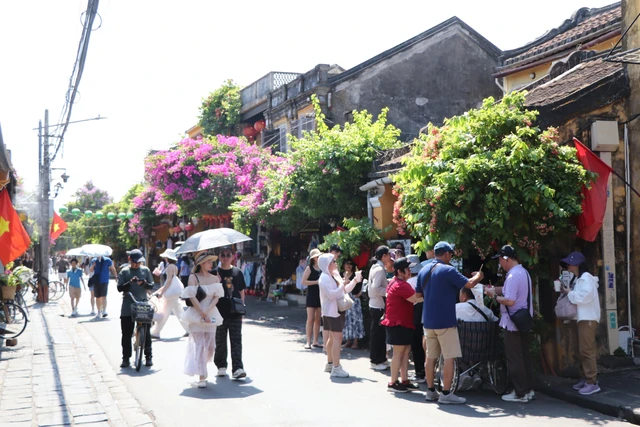
Visitors to Hoi An, a tourism and cultural hub in Da Nang City, central Vietnam, are asked to dress respectfully in keeping with the solemnity of its heritage sites. Photo: Tran Thuong / Tuoi Tre
In the video, a tour guide explained the site's dress expectations after noticing the visitor's revealing outfit.
The tourist and her companions accepted the reminder and left the attraction without objection.

The guide's calm and professional handling of the situation was widely praised online as an example of respectful communication and cultural heritage protection.
Hoi An is not alone. Many popular tourist destinations across Vietnam have similar dress guidelines, particularly at heritage sites, temples, pagodas, and other places of cultural or spiritual significance.
Hue: Traditional attire required for incense offerings
In Hue City, central Vietnam, authorities, particularly those responsible for managing relic and heritage sites, have introduced clear dress requirements for visitors to solemn and spiritual landmarks.
At royal tombs, temples, shrines, and pagodas, visitors are required to wear neat, modest, and respectful clothing.
Illustrated signs displayed at these sites inform visitors that revealing or inappropriate attire is not permitted.
Site staff may refuse entry to visitors wearing skirts above the knee, overly short shorts, off-the-shoulder tops, tank tops, spaghetti-strap tops, overly sheer or tight-fitting clothing, or other attire considered inappropriate.
Le Cong Son, deputy director of the Hue Monuments Conservation Center, said staff members are stationed at key locations to remind visitors if their clothing is deemed unsuitable.
The center also provides wrap skirts that visitors can borrow if they arrive wearing short skirts.
At Minh Thanh Palace within King Gia Long Mausoleum, both men and women wishing to enter and offer incense are required to wear traditional ao dai (Vietnamese traditional costume) and khan dong (Vietnamese traditional ceremonial headdress), as the site is considered a particularly significant relic site.
Visitors without the required attire may rent a complete traditional outfit for VND20,000 (US$0.76) per person.
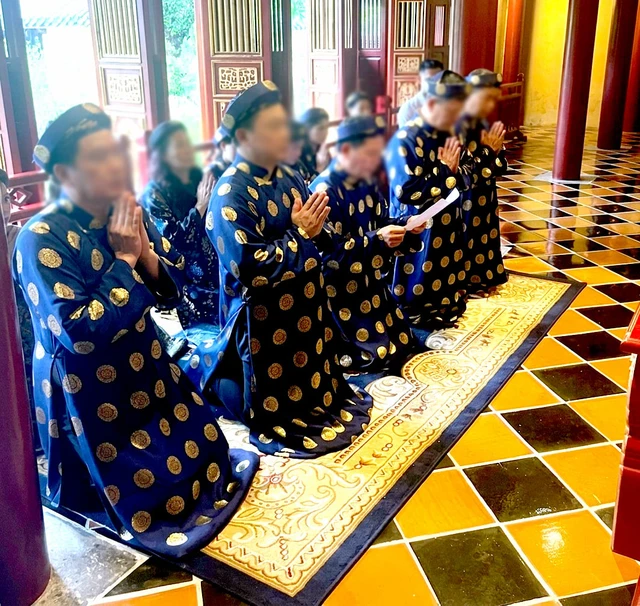
Visitors wishing to offer incense at Minh Thanh Palace inside King Gia Long Mausoleum in Hue City, central Vietnam can rent traditional 'ao dai' and khan dong attire for VND20,000 per set. Photo: C.S.
Khanh Hoa provides free replacement clothing for visitors
In Khanh Hoa Province, local authorities have long enforced dress and conduct guidelines for visitors at historical and cultural sites, according to Hoang Quy, deputy director of the provincial Center for Cultural Heritage Conservation.
Dress code signs are posted at the entrances to and throughout relic and heritage sites for visitors to follow.
At the Po Nagar Towers, one of the best-preserved ancient Cham architectural complexes in central Vietnam, signs in both Vietnamese and English remind visitors not to wear revealing clothing, to dress respectfully, and to avoid making excessive noise.
The site also provides a selection of garments that visitors can borrow free of charge if they arrive wearing clothing deemed inappropriate.

Free replacement clothing is available for visitors at the Po Nagar Towers in Khanh Hoa Province, south-central Vietnam. Photo: Hoang Quy
"Besides informing visitors about the regulations, we also make it easier for them to visit and appreciate the heritage site by providing suitable clothing," Quy said.
"In reality, many visitors, especially foreigners, are unfamiliar with these requirements and may leave their accommodation without dressing appropriately.
“All replacement garments are provided free of charge.”
'Da Nang Smile' code
Van Ba Son, deputy director of the Da Nang Department of Culture, Sports, and Tourism, said the city's 'Da Nang Smile' code of conduct clearly informs visitors to dress appropriately in public spaces and places of worship.
Hoi An has also introduced the 'Nhan Tinh Thuan Hau' (Kindness and Civility) initiative, which sets out guidelines on lifestyle, behavior, and attire for both residents and visitors to help preserve the ancient town's traditional cultural identity.
Under the initiative, visitors are encouraged to dress respectfully and in a manner appropriate to the solemnity of its heritage sites.
However, these regulations are intended more as cultural guidelines and standards of conduct than as rigid, punitive rules.
To help prevent incidents such as the recent one at Hoi An's Cau Bridge, Son said it is a shared responsibility.

A foreign tourist wearing a revealing outfit is politely asked by a tour guide to leave Hoi An's Cau Bridge heritage site in Da Nang City, central Vietnam. Photo: Screenshot from video
Accommodation providers, he said, should inform visitors of local dress expectations as soon as they check in.
Meanwhile, tour guides, who play a key role as 'ambassadors' connecting visitors with destinations, have a responsibility to advise tourists on appropriate attire and, when necessary, refuse to take them into heritage sites if they are not dressed appropriately.
Son noted that visitors are not always familiar with local customs. For example, some may wear an ao dai in a style they consider attractive but that does not conform to traditional norms.
That is why tactful yet firm reminders from tourism professionals are essential to preserving the image of local heritage sites and cultural values, he added.


Tran Thuong - Xuan Hoat - Nhat Xuan - Nha Xuan / Tuoi Tre News
Link nội dung: https://news.tuoitre.vn/planning-to-visit-vietnams-heritage-sites-mind-the-dress-code-103260806231626629.htm