
Property ownership certificates for overseas Vietnamese: 'Our home is in Vietnam!'
Vietnam's 2025 Land Law opens the door for millions of overseas Vietnamese to be legally recognized as homeowners in their homeland.
For many who have lived far from home for years, it is not merely a piece of property but a bond that reconnects them to their roots, a place to return to after years of living overseas for years.
A place for homecoming
One afternoon in early September 2025, Nguyen Thi Thu Trang, who has lived in Finland for 15 years, happily held in her hands the certificate of ownership for her home in Phan Thiet City, Lam Dong Province.
That evening, she excitedly called her husband and their 11-year-old daughter in Finland, "This is our home in Vietnam."
It was the first time in many years that she could say those words fully and confidently, without anyone correcting her.
In the past, whenever Trang told her daughter, "This year, let's go back to our home in Vietnam," the little girl would quickly remind her, "Mom, you have to say we're going to grandma and grandpa's house!"
But when the daughter heard about the new home, she became excited, "When I'm on school break, you have to let me go to our house. If you're busy, let me go back first. I'll stay with grandma and grandpa, then go to our house."
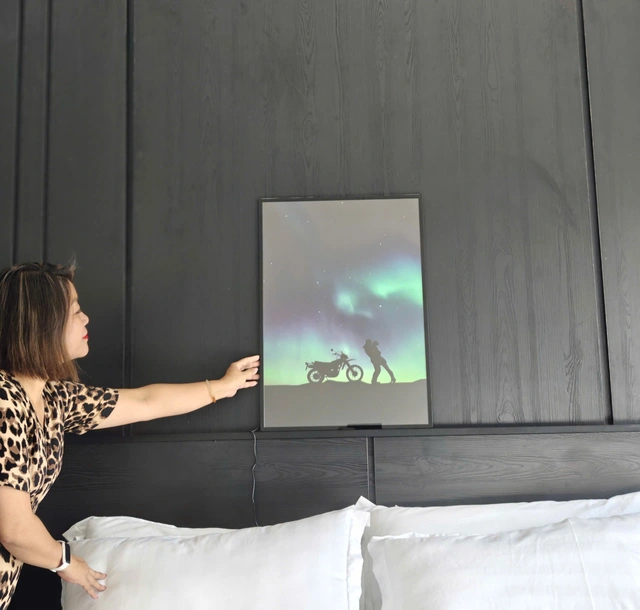
Nguyen Thi Thu Trang carefully tends to every detail of her home in Vietnam, incorporating distinctive features from her husband's homeland in Finland. Photo: Supplied
For those living far from their homeland, the utterance 'Our home is in Vietnam' carries a sacred sense of belonging, a connection to the land where they were born and raised, a place they long to return to no matter where life takes them.
Ngoc Nga, who has lived in Finland for more than 35 years, purchased a 79-square-meter apartment in Long Thanh Commune, southern Dong Nai Province so that she would have a place to return to in the future.
"I'm very pleased with the new law allowing overseas Vietnamese to own homes in their homeland without having to ask someone else to hold the title on their behalf, which reduces the risk of property disputes," she said.
"What matters most is that our children know they have a home to return to in Vietnam."
Elsewhere in Europe, Hanh Lund, originally from Hanoi and having now settled in Sweden for nearly 40 years, returns to Vietnam three to four times a year.
Her high-end apartment in the Chi Linh Urban Area in Ho Chi Minh City's Vung Tau, overlooking the sea, is where she finds peace.
"When I come home to Vietnam, the air feels fresh and the surroundings are clean," she said.
"It's absolutely wonderful to watch the sunset over the lake in the evenings and at night admire the city lights with a cup of coffee or a glass of wine."
For Trang, choosing a home close to nature was essential.
Her family loves the beautiful beaches of Nha Trang and Mui Ne, and now the dream of 'opening the door to see the sea' has become reality.
"If you want to buy a seaside home in Europe, it's extremely expensive, but in Vietnam it's entirely within reach," she said.
She envisions that when they retire, she and her husband will spend their later years there.
Her husband, a Finnish national who has lived and worked in Vietnam and can speak Vietnamese, fully shares that vision.
For Trang, having a home in Vietnam also carries deeper meaning in preserving her child's cultural identity.
"When we live in our home in Vietnam, my child steps outside and immediately hears Vietnamese being spoken, eats a bowl of bun ca [Vietnamese fish noodle soup], and sees fishermen going about their daily work, ordinary scenes, yet distinctly Vietnamese," she said.
"Over there, we had to make great efforts to create those experiences, but here everything comes naturally."
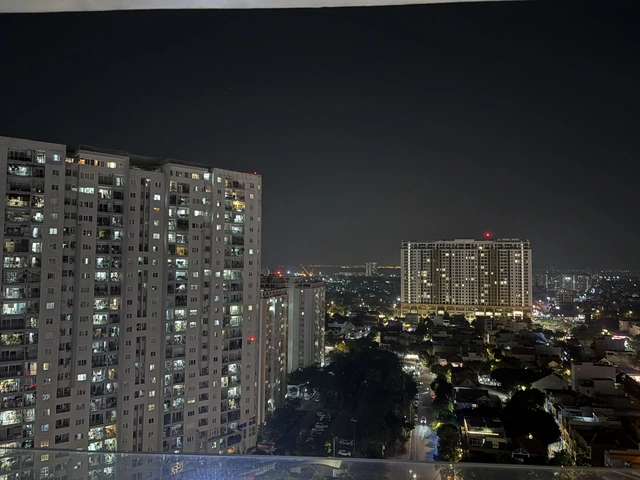
A luxury apartment in the four-to-five-star Chi Linh Urban Area in Ho Chi Minh City's Vung Tau, with panoramic sea views and a sparkling city skyline at night, is where Hanh Lund finds peace whenever she returns to Vietnam. Photo: Supplied
From policy to trust
Before the 2025 Land Law took effect, the path for overseas Vietnamese to own land and property in their homeland was long and complicated.
Legal consultant Vy An, who lives in California, likened it to "the traffic laws in New York -- complicated, yet full of loopholes."
In many cases, expatriates had to ask relatives in Vietnam to hold property titles on their behalf, which carried the risk of disputes or even loss of assets.
The new law has changed that.
"This signals innovation in the state's policy thinking, a step forward that promotes economic growth and encourages overseas investors to return to Vietnam," An said.
However, he also emphasized the need to further simplify administrative procedures and improve the dissemination of official information, so that real estate brokers cannot take advantage of buyers.
Trang stressed that trust is the key factor.
"Some of my friends have fallen victim to fraudulent projects, which has made many people hesitant to return to Vietnam to buy property," she said.
Nga, the owner of the apartment in Long Thanh, suggested building a national database to store information about assets owned by overseas Vietnamese, making it easier for future generations to manage inheritance.
She also hopes the government will issue electronic citizen ID cards to overseas Vietnamese who own homes in Vietnam.
Lawyer Lam Quang Quy, director of the Overseas Vietnamese Support Center under the Ho Chi Minh City Union of Associations for Overseas Vietnamese, affirmed that the 2024 Land Law and the 2023 Housing Law have significantly expanded land and housing rights for overseas Vietnamese who retain Vietnamese citizenship.
They are no longer restricted by land type or geographic area as before.
"The new regulations not only create favorable legal conditions but also rekindle the desire to return, contribute, and accompany the country's development," he said.
However, he acknowledged that a gap still exists between policy and implementation.
Differences in how local authorities apply the law have led to applications being rejected, delayed, or subjected to unnecessary documentation requirements.
He proposed standardizing procedures, developing a dedicated guidance manual, and ensuring consistent implementation from the central to local levels.
Overseas Vietnamese and the journey back to their roots
Within the overseas Vietnamese community Trang knows, many older individuals have lived abroad for 30-40 years.
Now that their children are grown, they nurture a desire to return.
"Perhaps after so many years there are no longer relatives in their hometowns, but I believe that in everyone's heart there remains the image of a banyan tree and a beloved communal house," she said.
The policy allowing overseas Vietnamese to purchase homes therefore has not only economic significance but also cultural value, helping younger generations better understand their roots.
Many have begun encouraging one another to return.
Trang cheerfully stated, "I told them, why don't we all come back and create a little Finnish village here together?"
Kim Thoa / Tuoi Tre News
Link nội dung: https://news.tuoitre.vn/property-ownership-certificates-for-overseas-vietnamese-our-home-is-in-vietnam-103260219131619215.htm