
Rabies’ nearly 100% fatality rate underscores need for prevention at source in Vietnam
Once symptoms appear, rabies is almost 100 percent fatal, posing a serious threat to human health and underscoring the urgent need to control transmission at its source through vaccination, stronger management of high-risk activities and community engagement, heard a recent experience-sharing session between Hanoi and a delegation from Dong Nai City, southern Vietnam.
The collection, transport, slaughter and sale of dogs and cats that have not been vaccinated increase the risk of disease spread, while those directly involved in trading, slaughtering and selling dog and cat meat are a high-exposure group, according to a press release recently issued by Vietnam Social and Behavior Change Communication for Sustainable Development Company (SBCC Vietnam).
As such, supporting these businesses in transitioning their livelihoods away from this activity helps to reduce the risk at the source of infection, rather than only responding once outbreaks have occurred.
Hanoi is adopting a model, designed following the One Health approach, to phase out dog meat trading towards rabies prevention and sustainable livelihoods.
The One Health direction is meant to address the risk of rabies transmission at its source while ensuring livelihoods for local people, contributing to the national goal of no human deaths from rabies by 2030.
The model connects three pillars, including human health, animal health and community and living environment.
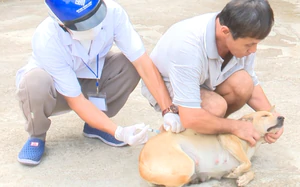
It aims to reduce exposure for those who slaughter and process meat, improve understanding of disease prevention, increase rabies vaccination rates for dogs and cats, and reduce unhygienic slaughter points.
The model operates through interagency coordination among the veterinary, health, police and market surveillance sectors, commune and ward authorities, and the residential community.
The model is part of the project ‘Pilot Model for Rabies Prevention and Control and Sustainable Economic Development, Phased-Transitioning Away from the Dog and Cat Meat Trade in 14 Wards of Hanoi,’ which was approved by the Hanoi People's Committee in July 2025.
It is led by the municipal Department of Agriculture and Environment and implemented by the Hanoi Sub-department of Livestock Production, Fisheries and Veterinary Medicine, in coordination with Soi Dog Foundation and SBCC Vietnam.
The project has achieved a number of positive results.
As many as 28 dog and cat meat slaughtering and trading facilities have ceased operations, while 25 facilities have registered to transition their business models.
Vietnam recorded 54 human deaths from rabies between January and September, while some 400,000 people required post-exposure prophylaxis following dog or cat bites or other potential exposure to the virus.
During the first half of 2026, nearly 20 rabies-related deaths were reported in the southern region, accounting for more than half of the total number recorded in the previous year, local media reported.

A delegation from Dong Nai City, southern Vietnam visits a household that has switched to a new livelihood in Hanoi. Photo: Supplied
Learning from Hanoi’s rabies prevention, control model
A delegation from the Dong Nai City Sub-department of Livestock Production and Fisheries, led by Nguyen Minh Hai, deputy director of the sub-department, visited Hanoi to learn from the city's experience in implementing the pilot model for rabies prevention and control from November 13 to 16.
During the session, Hanoi highlighted the combination of state management and support for people.
Business owners are encouraged to voluntarily stop trading, and are then accompanied through three steps: vocational training, start-up support and market linkage.
The delegation also visited several businesses that have switched to new livelihoods and listened to the household owners share their decision to change.
“Sustainable rabies prevention and control must begin at the source of infection,” said Ngo Dinh Loat, deputy director of the Hanoi sub-department.
“The slaughter and sale of dog and cat meat of unknown origin, without proper veterinary hygiene conditions, is a very great hazard for the spread of rabies.
“If we want those who slaughter and sell dog and cat meat to transition into other economic sectors, we must accompany people so that they have new livelihoods.”
Hai highly valued the One Health approach of the project in Hanoi, which places people at the center and closely combines disease prevention and control with support for livelihood transition.
“Dong Nai will study these experiences and apply them in a way that suits local conditions,” he said.

Tieu Bac / Tuoi Tre News
Link nội dung: https://news.tuoitre.vn/rabies-nearly-100-fatality-rate-underscores-need-for-prevention-at-source-in-vietnam-103261117133945543.htm