
Should smoking while riding be banned in Vietnam?
Smoking while riding is a familiar sight on Vietnam’s roads, exposing others to second-hand smoke while also raising questions about road safety and standards of behavior in public spaces.
Vietnam's Law on Prevention and Control of Tobacco Harms already prohibits smoking entirely on certain forms of public transport, including cars, aircraft and electric trains.
Under the government’s Decree No. 90/2026, smoking in places where smoking is prohibited is subject to a fine of VND 200,000-500,000 (US$7.7-19.2).
Organizations and individuals responsible for managing smoke-free premises who fail to install required signs, organize enforcement or inspect compliance can face fines of VND3-5 million ($115-192).
For passenger buses, taxis, and contract vehicles, the legal framework for a smoke-free transport environment is relatively clear.
The bigger challenge is enforcement.
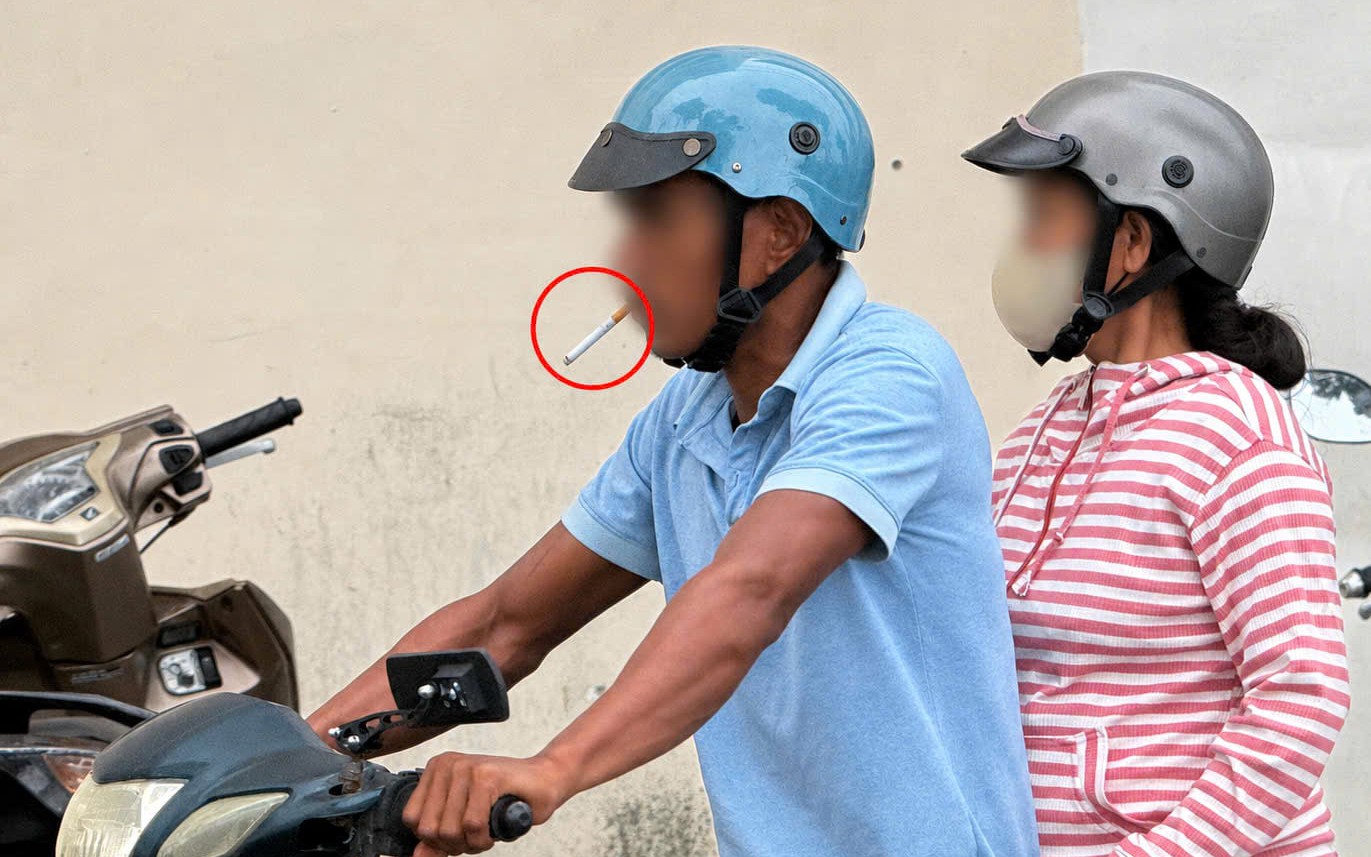
However, a notable gap remains with private vehicles, particularly motorcycles, where smoking while riding is still relatively common.
Smoking while driving should not simply be equated with using a mobile phone behind the wheel.
Whether smoking constitutes a significant traffic-accident risk and how it compares with other forms of driver distraction should be assessed on the basis of professional road-safety data and evidence from traffic authorities.
Shared ride, shared risk
From a public-health perspective, the first issue is exposure to tobacco smoke.
The World Health Organization states that there is no safe level of exposure to second-hand smoke.
Yet motorcycles and cars present different patterns of exposure and require somewhat different approaches.
Motorcycles remain Vietnam’s most common means of transport.
When a rider smokes, the person most directly exposed is often the passenger sitting behind them.
That passenger is only a short distance from the smoker and generally has little ability to escape the smoke during the journey.
In many cases, the passenger is the smoker’s spouse, child or parent.
For other road users, cigarette smoke disperses more quickly outdoors than in an enclosed room.
In Vietnam’s cities, vehicles can be packed closely together at traffic lights or during congestion.
Under such conditions, cigarette smoke can affect people nearby, including children being taken to school by their parents, street vendors, and traffic controllers.
There is another, more immediate hazard: a burning cigarette butt can be blown or thrown toward people traveling behind the smoker.
Also, discarded cigarette butts also create litter and add to a waste stream that is difficult to break down.
Cars present a different concern.
A car is an enclosed space with a relatively small cabin, and air-conditioning systems often operate in recirculation mode, allowing pollutants from tobacco smoke to accumulate.
A study published in Tobacco Control found that PM2.5 concentrations during journeys in which someone smoked were significantly higher than in smoke-free vehicles.
Opening the windows or increasing ventilation does not completely eliminate exposure.
Even after a cigarette has been extinguished, substances from tobacco smoke can remain on seats, carpets, and other surfaces inside the vehicle.
This is particularly concerning for taxis, ride-hailing vehicles and passenger buses, where subsequent passengers may also be exposed to these residual pollutants.
For smokers themselves, the habit of smoking while traveling may indicate a relatively high level of nicotine dependence: they are unable or unwilling to wait until they reach their destination or stop the vehicle.
This is a sign that they may need support to quit smoking, rather than simply being viewed as people who lack awareness or discipline.
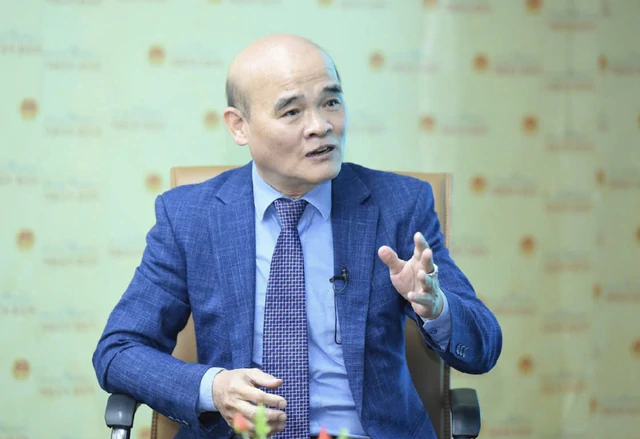
Dr. and lawyer Nguyen Huy Quang, head of the advisory, social criticism, and assessment board under the Vietnam Union of Science and Technology Associations, and former director of the Ministry of Health’s Legal Affairs Department. Photo: Supplied
Building culture of ‘No smoking around others’
International experience suggests that smoking while driving can be addressed not only as a road-safety issue but also as a matter of public health and social norms.
In Japan, some local authorities restrict smoking in public streets, including smoking while riding bicycles or motorcycles.
The notable feature of this approach is that smoking in a way that affects others is treated as a matter of public conduct and consideration, rather than solely as a traffic violation.
Meanwhile, some countries and territories including England, Wales, Scotland, France, Canada, and Australia restrict or ban smoking in cars when children are present.
These measures focus on protecting vulnerable groups from second-hand smoke.
Therefore, Vietnam could broaden the message beyond simply ‘Don’t smoke while driving’ to a more fundamental principle: ‘Don’t smoke where other people are exposed.’
Transport companies can lead the way.
Smoke-free requirements should be incorporated into internal regulations, drivers’ codes of conduct and service-quality standards.
Besides, drivers should be offered assistance in quitting smoking instead of being subjected only to penalties.
For motorcycle users, public messaging should emphasize responsibility toward those around them.
A simple message such as ‘Your cigarette smoke is blowing directly onto the person behind you’ may resonate more effectively than a list of long-term health consequences.
Most importantly, smokers need access to support for nicotine dependence.
Tobacco addiction is a problem that requires professional assistance and should not be viewed simply as a matter of poor awareness or insufficient willpower.
Ultimately, creating a smoke-free environment must become a social norm.
When people understand that smoking around others affects not only their own health but also infringes on other people’s right to breathe clean air, behavioral change is more likely to endure than when compliance depends solely on the threat of a fine.
A city where people can travel on the streets, use public transport or step into a taxi without having to breathe someone else’s cigarette smoke is also an indicator of quality of life and urban culture.
* This article is authored by Dr. and lawyer Nguyen Huy Quang, head of the advisory, social criticism, and assessment board under the Vietnam Union of Science and Technology Associations, and former director of the Ministry of Health’s Legal Affairs Department. He has spent many years working on policy development, including policies on tobacco harm prevention and control.
Dr. Nguyen Huy Quang
Link nội dung: https://news.tuoitre.vn/should-smoking-while-riding-be-banned-in-vietnam-103260830104153552.htm