
Sky alive with rare astronomical phenomena in 2026
This year is shaping up to be one of the most dynamic periods for skywatchers in the decade, marked by a remarkable series of astronomical events ranging from total solar and lunar eclipses to frequent meteor showers and striking planetary displays.
The year is expected to offer an unusually rich line-up of celestial appointments for both professional astronomers and casual stargazers.
Solar eclipse takes center stage
The most anticipated astronomical event of 2026 is the total solar eclipse on August 12.
According to NASA and Space.com, the moon's shadow will sweep across Greenland, Iceland, Spain, Portugal, and parts of Russia, plunging these regions into brief darkness as the sun is completely obscured for several rare minutes.
Researchers describe this as one of the most accessible total solar eclipses in years, particularly for Europe, where infrastructure, travel accessibility, and generally favorable weather conditions make it ideal for both scientific observation and eclipse tourism.
Earlier in the year, on February 17, the world will experience an annular solar eclipse.
In this phenomenon, the moon does not fully cover the sun, leaving behind a bright ring often referred to as a ‘ring of fire.’
Although the main viewing path lies over Antarctica and remote regions, the event will be still an important milestone in the year’s sequence of solar eclipses.
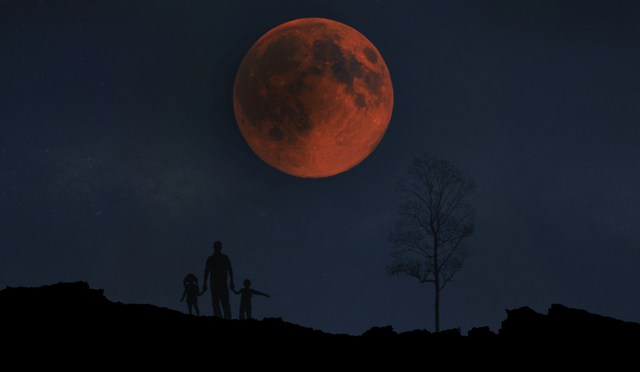
A blood moon will appear in March 2026. Photo: SPACE
Blood moon in March, lunar highlights
The moon will also take on a starring role in 2026.
A total lunar eclipse occurring on the night of March 2 and 3 will turn the moon a deep reddish hue, a phenomenon commonly known as a ‘blood moon.’
Data from Timeanddate and Asian and European observatories indicate that the eclipse will be visible across large parts of the world, including Asia.
Depending on location and weather conditions, observers in Vietnam and neighboring regions may be able to witness part or all of the eclipse.
Even without telescopes, the gradual darkening and color shift of the moon will be clearly noticeable to the naked eye throughout the event.
Supermoons are another lunar highlight of the year.
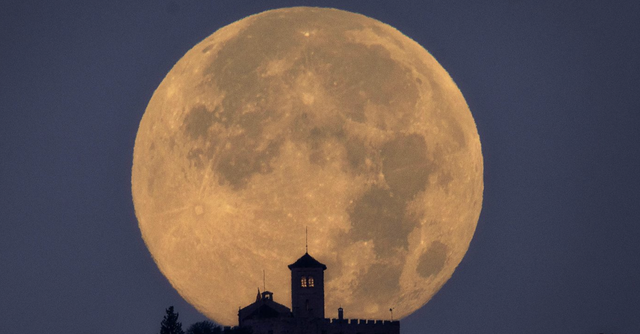
Stunning supermoons will light up the night sky throughout 2026. Photo: EARTH
International astronomical calendars such as Timeanddate and Space.com project at least three supermoons in 2026, with the first occurring on January 3, just days into the new year.
A supermoon happens when a full moon coincides with its closest approach to earth, making it appear about seven percent larger and up to 15 percent brighter than an average full moon.
While the difference may be subtle from a scientific standpoint, the visual impact is unmistakable, especially when the moon rises low on the horizon – an effect often dubbed the ‘giant moon.’
Under clear skies, supermoons are easily visible to the naked eye, making them among the most accessible astronomical events for the general public.
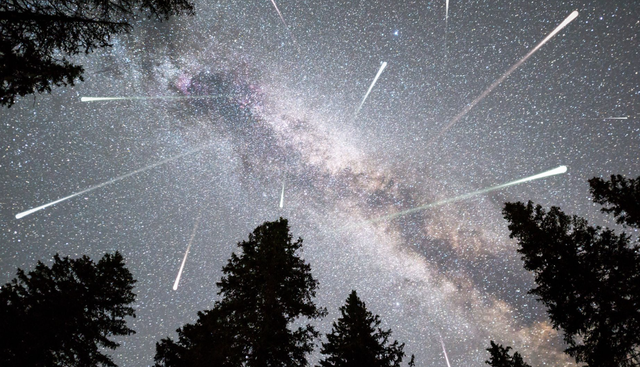
Meteor showers will occur regularly throughout the 2026 astronomical calendar. Photo: ABC7
Meteor showers light up the year
When eclipses are the dramatic peaks of 2026, meteor showers provide a steady rhythm throughout the year.
According to Space.com and international astronomical schedules, familiar showers will return as expected, including the Quadrantids in early January, the Lyrids in April, the Eta Aquariids in early May, and the Perseids in mid-August.
The Perseids, traditionally the most popular meteor shower of the year, are again expected to produce dense streaks of light across summer skies, although viewing conditions will depend on the moon's phase at the time.
As the year draws to a close, the Orionids, Leonids, and Geminids will continue the celestial display through December, ensuring that 2026 offers few quiet moments for those who enjoy looking up at night.
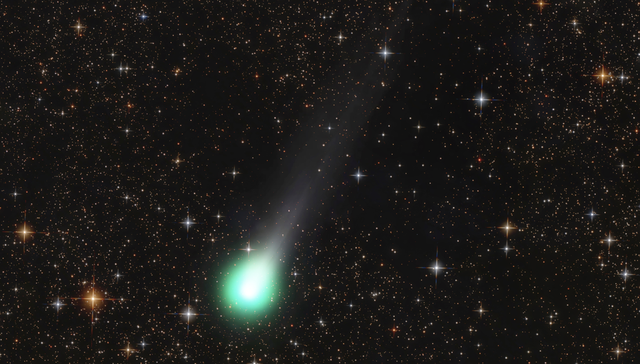
Comet C/2025 R3 (PanSTARRS) will make a close pass by earth in 2026. Photo: SPACE
Planets, possible comet surprise
Beyond eclipses and meteors, 2026 will also present favorable conditions for planetary observation.
Jupiter reaches opposition in January, shining especially bright and standing out clearly to the naked eye.
Venus and Mercury make notable appearances at various times during dawn and dusk, creating rare and picturesque scenes even above city skylines.
Astronomers are also closely monitoring Comet C/2025 R3 (PanSTARRS), which is expected to approach the sun and earth around April.
According to Space.com, if conditions align, the comet could become bright enough to be seen without optical aid, though its ultimate visibility remains uncertain.
Tieu Bac - Hoang Thi / Tuoi Tre News
Link nội dung: https://news.tuoitre.vn/sky-alive-with-rare-astronomical-phenomena-in-2026-103260105151833999.htm