
Slice of Mekong Delta hidden in billion-dollar industrial hub in central Vietnam
Surrounded by the billion-dollar Dung Quat Economic Zone in Quang Ngai Province, Bau Ca Cai Lagoon is an unlikely green oasis in central Vietnam, where lush mangrove forests and winding waterways have earned it the nickname ‘a mini Mekong Delta.’
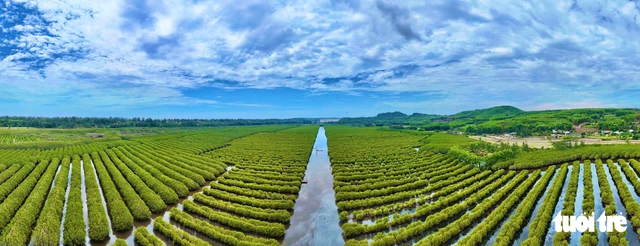
Bau Ca Cai’s mangrove forest spans nearly 200 hectares and is home to hundreds of rows of white mangrove trees in Quang Ngai Province, central Vietnam. Photo: Nguyen Yen
Few would expect to find a vast mangrove forest in the heart of the bustling Dung Quat Economic Zone.
Covering nearly 200 hectares, Bau Ca Cai lagoon and mangrove forest in Van Tuong Commune, Quang Ngai offers a rare stretch of largely untouched coastal wetlands in the central region.
The lagoon is framed by mountains and coastal sand dunes, with around 60 hectares of red mangroves and 50 hectares of Lumnitzera racemosa (white-flowered mangroves).
Long rows of mangroves line the waterways, while the intricate aerial roots of mature trees rise above the water, creating the distinctive landscape of a coastal mangrove ecosystem.
Gliding through narrow waterways beneath the dense canopy, visitors often compare the experience to exploring Vietnam’s Mekong Delta, despite being hundreds of kilometers away in central Vietnam.
From a small riverside jetty, local boatman Nguyen Su, 55, takes visitors into the forest aboard a traditional wooden boat.
The boat quietly winds through narrow channels shaded by mangroves. As it ventures deeper into the forest, the air grows cooler, and the surroundings become increasingly serene.
“Visitors today enjoy slowing down and immersing themselves in nature,” Su said.
Many visitors left impressed after the 30-minute boat ride.
“I came here by chance after a friend invited me, and I was genuinely surprised,” a visitor from Ho Chi Minh City said.
“The waterways and mangrove forests remind me so much of the Mekong Delta. Some visitors even wear traditional southern Vietnamese outfits for photos, making it feel as though they’ve traveled all the way to the delta.”
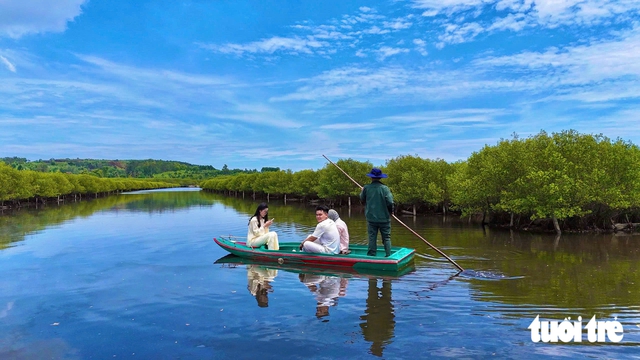
Visitors explore Bau Ca Cai Lagoon’s mangrove forest by traditional wooden boat. Photo: Nguyen Yen
Few visitors realize that Bau Ca Cai’s lush landscape is the result of years of restoration.
Since 2014, local authorities have planted millions of mangrove trees to restore the coastal wetland ecosystem.
More than a decade later, the once-young forest has matured into a thriving mangrove habitat, attracting a growing number of birds to nest and feed.
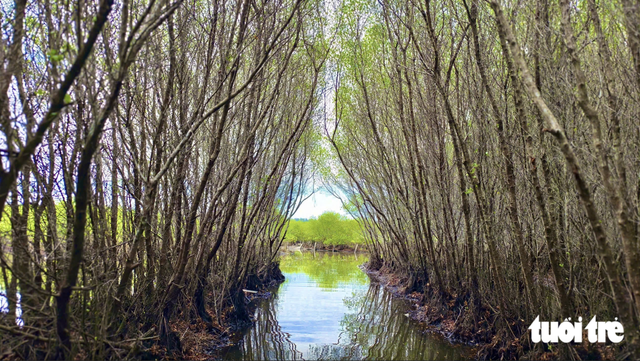
Mature white-flowered mangroves provide shade across Bau Ca Cai Lagoon. Photo: Nguyen Yen
Beyond protecting the coastline and restoring the local ecosystem, Bau Ca Cai’s mangrove forest has also become a driver of community-based tourism.
An increasing number of visitors come to explore the forest by boat and enjoy a rare sense of tranquility amid one of Vietnam’s largest coastal industrial zones.
As tourism grows, conservation efforts have continued alongside it.
In April 2026 alone, local authorities released more than one million black tiger shrimp juveniles and 18,000 juvenile mud crabs into the lagoon to help restore aquatic resources and preserve biodiversity.
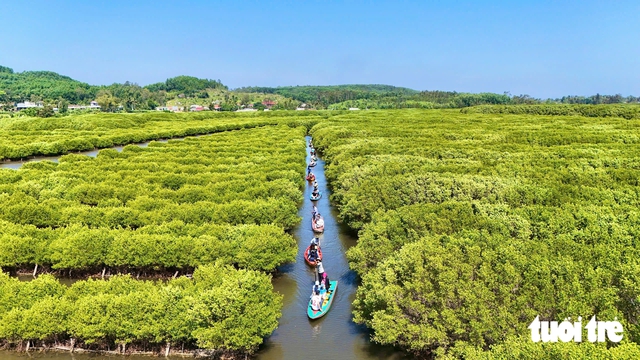
Bau Ca Cai Lagoon has become an increasingly popular destination for visitors. Photo: Nguyen Yen
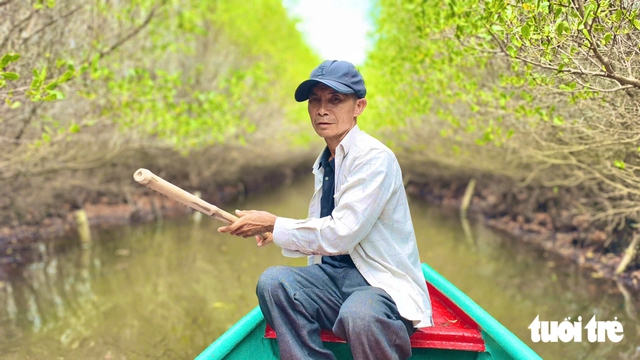
Community-based tourism at Bau Ca Cai Lagoon provides local residents with additional income while supporting the conservation of its mangrove ecosystem. Photo: Nguyen Yen
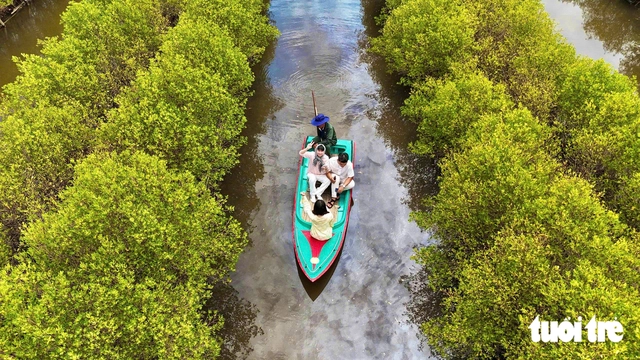
Bau Ca Cai Lagoon’s lush mangrove landscape has drawn comparisons to Vietnam’s Mekong Delta. Photo: Nguyen Yen
Van Giang - Nguyen Yen / Tuoi Tre News
Link nội dung: https://news.tuoitre.vn/slice-of-mekong-delta-hidden-in-billion-dollar-industrial-hub-in-central-vietnam-103260805102412379.htm