
Soft power gap: Why Vietnam must claim its place on global screens
As algorithmic feeds and global platforms dictate what gets seen, Vietnam faces a critical soft-power challenge: it must shift from being a passive consumer of international trends to building a coordinated, tech-driven ecosystem capable of turning its cultural heritage into sustainable global influence.
The influence of foreign entertainment is visible both online and at the box office. BTS, CORTIS, Detective Conan: The Movie 29 and The Odyssey have featured prominently in Vietnamese social media discussions.
The trend reflects Vietnam’s growing integration into global entertainment flows, but also the intensifying competition for audience attention, in which local culture risks being overshadowed by better-funded and more widely distributed foreign content.
This competition is not simply about the quality of individual works. It is also a race to capture attention, build intellectual property and turn cultural influence into economic value and soft power.
The question is whether Vietnam can turn its cultural assets into a competitive content industry, strengthen its soft power and compete on the global stage.
Fierce battle for visibility
TikTok, YouTube, Netflix and Spotify do more than distribute content. Their recommendation systems increasingly shape what audiences discover, watch repeatedly and eventually regard as popular.

K-pop act CORTIS has been a frequent presence in Vietnamese users’ social media feeds in recent weeks. Photo: STAR NEWS.
That gives globally established entertainment a powerful advantage.
A K-pop release or Hollywood film that is already generating strong engagement across markets can be pushed rapidly into Vietnamese users’ feeds, supported by large fan communities, promotional budgets and vast amounts of audience data.
Local content, by contrast, often enters the same contest with far fewer resources.
“Power in the digital space is not only about who produces more content, but whose content gets seen,” Tran Huu Nhan, a data and AI specialist and Aptech lecturer, told Tuoi Tre (Youth) online newspaper.
He said recommendation systems increasingly determine what appears, what is repeated and what becomes a trend.
This creates what Nhan described as an uneven battle for visibility in which Vietnamese culture can be overshadowed even in its own digital space.
Associate Professor Dr. Nguyen Van Thang Long, associate head of professional communication at RMIT University Vietnam, said competition for attention has intensified with the growth of social media.
Content that cannot be consumed quickly is more likely to disappear from view, he said.
This puts local cultural works, particularly those requiring context, depth or a slower pace of appreciation, at a disadvantage against short, accessible clips designed to generate an immediate emotional response.
Beyond algorithms
Yet the same platforms that make it harder for slower, context-heavy cultural works to surface have also carried Vietnamese content far beyond the country.
Hoang Thuy Linh’s See Tinh, which combines Vietnamese influences with modern pop, became a global TikTok dance trend.
More recently, Hoa Minzy’s Bac Bling, inspired by the folk music and cultural imagery of northern Bac Ninh Province surpassed 42 million YouTube views within 11 days, and 200 million within 81 days.
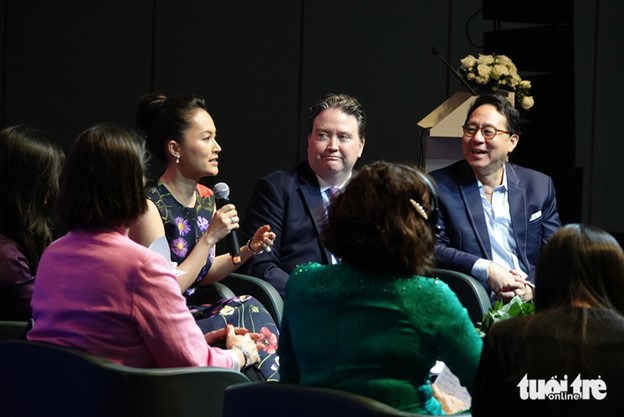
However, these remain isolated breakthroughs rather than part of a sustained trend.
Many other types of cultural content, including folk music, films, and regional festivals, are still presented in conventional ways and poorly packaged for digital audiences.
As a result, much of this heritage remains confined to older viewers or people already interested in traditional culture, instead of reaching the wider digital mainstream.
Part of the problem lies in how resources are allocated.
Funding tends to focus on producing the content itself, while partnerships, marketing and international promotion, often critical to reaching wider audiences, receive far less attention.
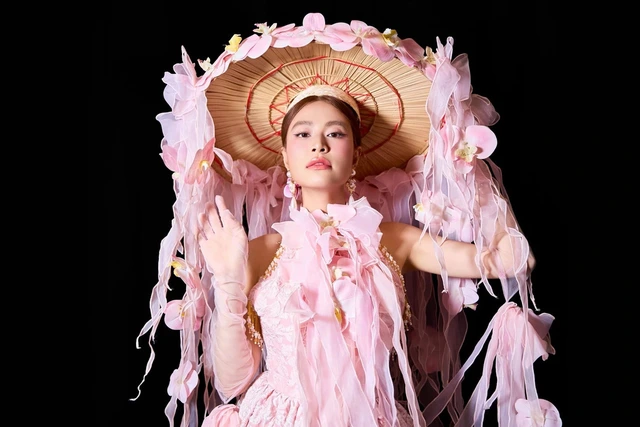
Hoang Thuy Linh is among the artists who have created distinctly Vietnamese content with lasting appeal through their music. Photo: Artist’s Facebook page
Associate Professor Dr. Long said many Vietnamese cultural products are competing for attention with 'rudimentary tools,' while foreign rivals benefit from more professional production systems, stronger distribution networks and far greater promotional resources.
Furthermore, Vietnam has yet to build a well-developed investment ecosystem.
Most local content still peaks in isolated viral moments, rather than evolving into a recognizable cultural DNA or intellectual property that can be repeatedly developed and sustained over time.
Vietnam’s weakness, Long said, is therefore not a shortage of talent or cultural material, but the absence of a coordinated creative, investment and media ecosystem.
Foreign competitors do not simply release individual songs or films; they build fan communities, licensing opportunities, merchandise and follow-up products around them.
Vietnam needs to move beyond celebrating occasional viral hits.
Lasting cultural influence will depend on whether it can consistently turn distinctive ideas into intellectual property that can be produced, promoted and commercialized across platforms and markets.

Conan Movie 29 further cements the franchise’s status as the king of anime at the Vietnamese box office. Photo: TMS
“What is missing is consistency, a strong community of cultural creators and a media ecosystem that can coordinate production and promotion,” he said.
“Without these, Vietnam will continue to rely on the chance of success of individual hits or short-lived, algorithm-driven trends instead of sustaining a continuous flow of content.”
For a stronger foothold at home and abroad
Dr. Mai Anh Tuan of Hanoi University of Culture said Vietnam must first identify the cultural and entertainment assets with the greatest potential to capture domestic audiences and resonate internationally.

The U.S. film The Odyssey has been among the hottest topics on social media in recent days. Photo: Universal Pictures
He pointed to the 2026 World Cup and The Odyssey as examples of global events and entertainment products that continuously generate news, commentary, fan creations and social media discussion.
Vietnam, by contrast, still lacks popular cultural products or events capable of sustaining a comparable flow of valuable content over time.
In a landscape increasingly shaped by global platforms, it is even more important to identify the right ‘Vietnamese content,’ Tuan said.
That requires more than promoting a broad range of cultural products.
Vietnam needs systematic research into audience behavior, online reach and international market potential to determine which areas could become recognizable national strengths.
Tuan suggested that a dedicated agency or specialized body could conduct market research, measure the online impact of cultural products and coordinate support for promising projects.
South Korea’s Korea Creative Content Agency, or KOCCA, offers one example through its work in developing talent, supporting production and promoting Korean content internationally.
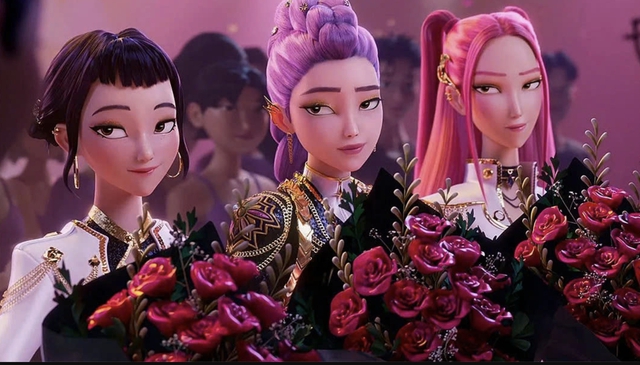
Following its Oscar win, the KPop Demon Hunters soundtrack scored another major victory at the American Music Awards, setting a record no K-pop act had previously achieved at the ceremony. Photo: Netflix
South Korea built its global imprint through K-pop and cinema, Japan through manga and anime, and the United States through Hollywood.
Vietnam needs not mirror their playbooks—it must forge its own, carving a distinct global presence from the depth of its own culture.
On July 22, The Korea Times reported that South Korea’s Ministry of Culture, Sports and Tourism and Financial Services Commission had launched a 150 billion won (US$108 million) Cultural Value Development Fund.
The initiative marks a structural shift in the country’s cultural policy, placing artificial intelligence and intellectual property at the center of the next wave of K-pop growth.
About two-thirds of the fund, or 100 billion won, will be allocated to AI and intellectual property.
Venture capital firms receiving the money must invest at least 25 percent in companies using AI to create content or adapt existing intellectual property across music, gaming and video.
The remaining 50 billion won will support the production and distribution of traditional content.
Ngoc Nguyen - Dau Dung / Tuoi Tre News
Link nội dung: https://news.tuoitre.vn/soft-power-gap-why-vietnam-must-claim-its-place-on-global-screens-103260731100008142.htm