
Starlink enters Vietnam: High costs, niche market
Licensed in mid-February to provide satellite Internet services in Vietnam, Starlink Services Vietnam Co., Ltd., the Vietnam unit of the U.S.-based Space Exploration Technologies Corporation (SpaceX), is expected to help enhance connectivity in remote and hard-to-reach areas, but its relatively high equipment and subscription costs might position the services as a premium, niche option rather than a mass-market alternative to the country’s affordable fiber-optic broadband.
The Radio Frequency Department under the Ministry of Science and Technology granted approval for the company to deploy four stations, located in Phu Tho Province, northern Vietnam, Da Nang City, central Vietnam, and Ho Chi Minh City.
The four stations form part of Starlink’s initial roll-out phase, which aims to provide satellite Internet access to up to 600,000 user terminals.
In markets where Starlink is already available, customers typically pay two main fees: a one-time purchase of satellite receiver equipment and a monthly subscription.
The hardware kit alone can cost from US$349, while monthly subscription fees range from several dozen to over $100, depending on the country and service package.
In the United States, fees for households hover around $120 per month, while in Japan, monthly fees range from 6,000 ($38) to 7,000 yen ($45).
In the Philippines, the service costs about 2,700 pesos ($46) per month.
If Vietnam follows a similar pricing structure, first-year expenses for a user could approach $1,000 (over VND26 million), including equipment and subscription fees.
This is significantly higher than traditional fiber-optic broadband packages for households in Vietnam, which often cost just a few million Vietnamese dong per year.
The monthly fees of Internet services provided by Vietnamese firms are highly competitive, typically ranging from VND165,000 ($6.3) to VND350,000 ($13.4), local media reported.
Different technological model
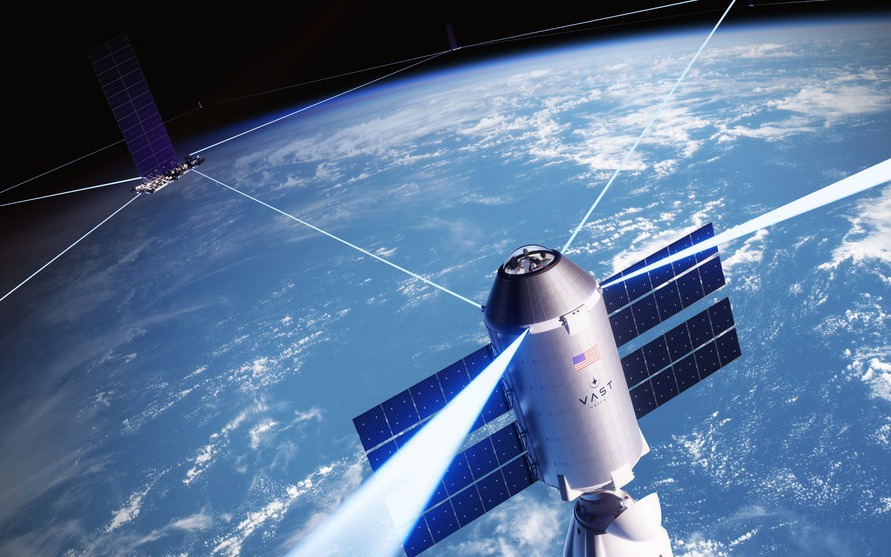
Unlike traditional fiber-optic Internet, which relies on physical cables and terrestrial base stations, Starlink operates a vast constellation of low Earth orbit (LEO) satellites, meaning that anywhere users can see the sky, they can access the Internet.
This is the key advantage of satellite-based connectivity.
In Vietnam, this could offer a practical solution for ‘white zones’ such as border regions, offshore islands, mountainous terrain, and other areas where mobile coverage remains patchy and laying fiber-optic cables is economically unfeasible.
Nguyen Ba Dung, director of the mobile virtual network operator sector at FPT Shop, described Starlink’s low Earth orbit model as a new technological direction in global telecommunications.
Similar deployments in other countries have focused on expanding connectivity in hard-to-reach regions.
“In Vietnam, Starlink’s market accessibility will depend on regulatory policies, actual user demand and the maturity of existing infrastructure,” Dung noted.
According to its license, Starlink will provide two categories of satellite-based telecom services: fixed satellite services (including Internet access and dedicated transmission channels for mobile base stations) and mobile satellite services (Internet access at sea and on aircraft).
The total number of subscribers is capped at 600,000 terminals.
Compared with Vietnam’s 25 million fixed broadband subscribers and more than 110 million mobile Internet users, this ceiling is modest.
Even if Starlink reaches its maximum permitted subscriber base, its market share would remain small relative to major domestic telecom operators.
Limited competitive pressure
Nguyen Minh Phuong, deputy general director of VNPT VinaPhone, believed the impact on domestic operators will be limited.
“Starlink’s fixed satellite service will offer additional choice and experience for users, but it is unlikely to significantly affect local providers, given its high price compared to domestic fixed broadband,” he said.
Potential customers may include ocean-going vessels, fishing boats, enterprises seeking backup connectivity, or businesses interested in testing new technology, he added.
A representative of another domestic telecom operator echoed this view, arguing that Vietnam’s Internet market, both fixed and mobile, is already highly competitive and price-sensitive.
Given that Starlink’s service is unlikely to match local pricing, it is not considered a direct rival but rather a complementary component within the broader telecom ecosystem.
“At this stage, satellite Internet, fiber-optic broadband, and mobile Internet each have distinct technical characteristics and use cases,” Dung said.
“Whether they compete directly depends on geography, user demand, and market structure.
“In many cases, these technologies can coexist and complement one another. In Vietnam, it will take time to assess the real impact of a new technology entering the market."
Supplement to national infrastructure
Vietnam’s telecommunications backbone currently relies heavily on terrestrial fiber-optic networks and 4G/5G base transceiver stations operated by major carriers such as Viettel, VNPT, and MobiFone.
While these networks serve a vast user base with high speeds and broad coverage, they face significant challenges in remote, mountainous and island regions, where infrastructure construction and maintenance costs are high.
As such, LEO satellite systems can function as a supplementary solution, offering wide coverage, rapid deployment, and relatively low latency.
Operating at altitudes between roughly 160 and under 2,000 kilometers above sea level, LEO satellites offer low latency (20-40 ms), high data transmission speeds (50-500 Mbps), and broad coverage without requiring extensive ground infrastructure.
Developed by SpaceX, founded by American billionaire Elon Musk, Starlink is a low-Earth-orbit satellite Internet network designed to deliver high-speed, low-latency broadband worldwide.
The system operates about 6,750 satellites and serves more than five million users across over 125 countries and territories.
Tieu Bac - Duc Thien / Tuoi Tre News
Link nội dung: https://news.tuoitre.vn/starlink-enters-vietnam-high-costs-niche-market-103260302170954065.htm