
The regional pitch: How football shaped modern Southeast Asian identity
Speaking to reporters on Tuesday following Singapore’s 2-1 second-leg victory over Thailand, which resulted in a 4-3 aggregate defeat in the ASEAN Championship semifinals, Lions head coach Gavin Lee shared a sentiment that resonated across the tournament.
“I think we have turned a few doubters into believers, and that's nice ... what’s so heartening is you go back to the first leg and we were down 3-0, and Satu Nada (one heartbeat) was being sung,” said Lee. “As players, it is just amazing because that is the fuel, that's the belief that we can ride on and build on.”
One hearbeat in the stands
Lee’s reference to Satu Nada is particularly telling. Sung in Malay, the anthem is a staple at Jalan Besar and the National Stadium, echoing themes of unity, solidarity, and relentless passion.
What makes it truly special is its defiance, unlike fair-weather chants that fade when things go south, the ultras belt it out even when the Lions are trailing heavily, reminding the players they never fight alone. In a broader sense, it captures how football continues to foster a shared collective identity across Southeast Asia.

All eyes on the return leg: Vietnam complete preparations ahead of their decisive semifinal clash with Malaysia. Photo: Anh Khoa
Football in Southeast Asia began not merely as recreation, but as an institutional battleground where colonized and modernizing societies negotiated sovereignty, identity, and civic coherence.
At its root, the sport was introduced across most of the region by Western powers as a by-product of colonization, a shared genesis for many modern Southeast Asian nations.
Even in Thailand, the region’s sole uncolonized state, football arrived via Siamese students returning from Britain in the late 19th century.
It quickly received royal patronage under King Vajiravudh (Rama VI, r. 1910–1925), becoming a cornerstone of state-led nationalism designed to project modernity and autonomy without falling under direct colonial rule.
Indonesia also holds a unique place in regional football history: playing under the name Dutch East Indies during the colonial era, it stands as the sole Southeast Asian representative in World Cup history, having featured at the 1938 finals in France.
As one of only three non-European entrants alongside Brazil and Cuba, the team’s campaign ended abruptly in the first round with a 6-0 loss to eventual finalists Hungary.
The squad that arrived on French soil was a vivid microcosm of the archipelago's complex social fabric. Predominantly indigenous, the team also drew talent from the colony’s Dutch and Chinese communities, bringing together players like goalkeeper Tan Mo Heng, Isaac Pattiwael, Franz Meeng, and captain Achmad Nawir.
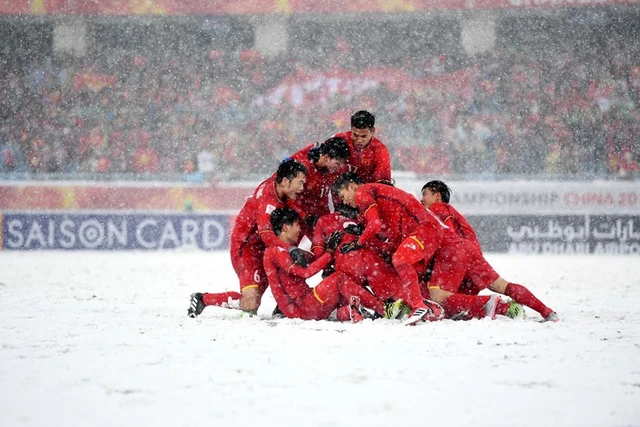
Vietnam U23s stunned Asian football with an unprecedented run to the finale of the 2018 AFC U-23 Championship. Photo: Nguyen Khoi / Tuoi Tre
These men were all amateurs who balanced football with their studies, civilian careers, and everyday livelihoods. In their multi-ethnic composition, this pioneering squad served as an early blueprint for modern Indonesian identity, prefiguring the pluralist ethos of Bhinneka Tunggal Ika ('Unity in Diversity') long before the nation achieved formal independence.
The introduction of football to French Indochina and British Malaya followed a remarkably similar trajectory: what began as an exclusive pastime for European colonizers was soon embraced by local populations, rapidly evolving into a popular grassroots phenomenon.
Football of the 'ASEAN 10' era
Throughout the Cold War, Southeast Asian football fractured along ideological fault lines. The ASEAN bloc maintained institutional continuity through the SEAP and SEA Games, while Indochinese nations were largely isolated from regional competitions, participating primarily in alternative anti-imperialist and socialist sporting networks.
The resolution of the Cambodian conflict through the 1991 Paris Peace Agreements and the subsequent accession of these nations into ASEAN (Vietnam in 1995, Laos in 1997, Cambodia in 1999) coincided almost exactly with their return to the regional pitch.
Across post-Cold War Southeast Asia, athletic re-engagement consistently outpaced diplomatic alignment, positioning football as an early bridge for regional integration. Vietnam's sporting return at the 1991 Manila SEA Games preceded its official accession to ASEAN by four years, functioning as an emotional pillar of the Đổi Mới transformation.

Soccer Football - World Cup - AFC Qualifiers - Group C - Indonesia v Australia - Gelora Bung Karno Main Stadium, Jakarta, Indonesia - September 10, 2024 Australia's Jackson Irvine in action with Nathan Tjoe a On. Photo: REUTERS/Ajeng Dinar Ulfiana
The momentum culminated in a silver-medal finish at the 1995 Chiang Mai Games and the hosting of the 1998 Tiger Cup. Anchored by 'Golden Generation' standouts such as Nguyen Hong Son and Le Huynh Duc, football provided a newly integrated populace with a shared civic identity that looked beyond historical conflict.
Similarly, Cambodia’s athletic re-emergence served as a harbinger of its return to the regional community. Having seen its sporting institutions and talent dismantled under the Khmer Rouge, the country's reappearance at the 1995 SEA Games after a two-decade hiatus, followed by the 1996 Tiger Cup, marked an essential step toward normalization, setting the stage for its formal entry into ASEAN four years later.
For Laos, rejoining regional competition served as a vital instrument of diplomatic visibility. Beginning with its return to SEA Games football in Singapore in 1993, four years prior to its 1997 ASEAN admission, and culminating in hosting the 2009 SEA Games in Vientiane, the country used the pitch to project international normalcy, cultivate civic solidarity, and weave deeper sporting ties with its maritime and mainland neighbors alike.
With the entry of Vietnam, Laos, and Cambodia, Southeast Asian football completed its shift from a sub-regional Anglo-Malay and Thai sphere to a comprehensive pan-regional architecture.
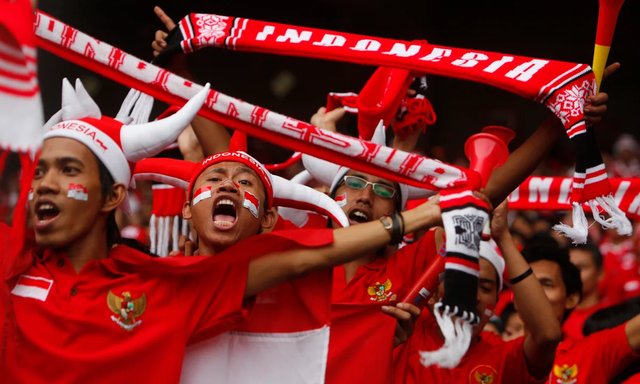
Indonesian fans at Gelora Bung Karno Stadium for a World Cup qualifier. Photo: Reuters
Beyond institutional expansion, the resulting 'ASEAN 10' tournaments generated a recurring civic ritual of coexistence, translating abstract notions of regional community into a visible, affective reality far more effectively than state-level diplomatic summits.
The clearest evidence of an emerging Southeast Asian collective identity surfaces whenever the region’s teams step onto the continental stage, whether at the AFC Asian Cup, the AFC Champions League, or World Cup qualifiers.
While intra-regional rivalries remain fiercely contested, they quickly dissolve into cross-border solidarity whenever Southeast Asian teams face the wider world.
This spirit of 'ASEAN Pride' has been on full display time and again, from Vietnam’s fairytale run to the 2018 AFC U-23 final in Changzhou and Indonesia’s historic charge in the 2026 World Cup qualifiers, to standout continental campaigns by regional clubs. On each occasion, supporters across Thailand, Indonesia, Malaysia, and the Philippines have set domestic rivalries aside to rally behind their regional peers.
Confronting the athletic and economic hegemony of East Asian and West Asian powerhouses, from Japan and South Korea to Saudi Arabia and Iran, Southeast Asia functions as a cohesive sporting bloc. United by a collective underdog identity, its shared quest for parity and global recognition carries clear resonances of the region's anti-colonial past.
Unlike elite-driven diplomatic initiatives, this regional identity is built and sustained from the bottom up through everyday cultural rituals. Across national borders, public football fandom is remarkably uniform: the collective energy of nonton bareng (communal public screenings) in Indonesia mirrors the ecstatic đi bão ('storming the streets') celebrations in Vietnam and the bustling open-air screenings of Thailand.
Parallel to this street culture, digital media has woven millions of supporters into a single, highly interactive public sphere. Through vibrant online banter, cross-border league tracking, and mutual enthusiasm for ASEAN talent competing abroad, football has fostered an organic, lived sense of regional belonging that thrives well beyond the pitch.
As this week’s ASEAN Championship heads into its decisive clashes, reigniting storied rivalries like Malaysia versus Vietnam, with the prospect of an electric Vietnam–Thailand final on the horizon, the competitive drama will naturally command the headlines.
Yet beneath the tactical battles and tribal loyalties lies a deeper truth: football in Southeast Asia has never been solely about who lifts the trophy. Threaded through a century of shared colonial encounters, anti-imperial modernization, and vibrant grassroots terrace rituals, the game has quietly forged a collective regional identity that connects ordinary fans far beyond national borders.
Hai Minh / Tuoi Tre News
Link nội dung: https://news.tuoitre.vn/the-regional-pitch-how-football-shaped-modern-southeast-asian-identity-10326081914575236.htm