
Tobacco smoke kills nearly 19,000 non-smokers annually in Vietnam
More than 103,000 people die from tobacco-related causes in Vietnam every year, including some 84,500 deaths attributed to active smoking and 18,800 resulting from second-hand smoke exposure, according to statistics.
Experts assert that protecting non-smokers is not simply a matter of personal comfort or individual choice.
It is an urgent public health imperative.
Under Vietnam’s 2012 Law on Prevention and Control of Tobacco Harms, certain indoor public places are still permitted to provide designated smoking areas.
These include isolated areas at airports, bars, karaoke venues, nightclubs, hotels, tourist accommodation establishments, and public transport such as ships and trains.
A study reviewing 13 years of implementation of the law between 2013 and 2025, conducted by Phan Thi Hai, former deputy director of the Vietnam Tobacco Control Fund, and her colleagues, found that exposure to second-hand smoke remained high in restaurants and bars.
The rates reached 67.3 percent in restaurants and 69.6 percent in bars.
These figures highlight the persistent problem of tobacco smoke exposure in venues where smoke-free regulations have been in place for years.
Smoking has also continued to occur in locations where it is prohibited, including hospitals and schools.
Meanwhile, passive exposure to tobacco smoke has declined significantly in other settings.
At workplaces, the rate fell from 55.9 percent to 22.4 percent.
At universities and colleges, it dropped from 54.3 percent to 35.6 percent, while exposure on public transport decreased from 34.4 percent to 22.9 percent.
Smoke-free policies have delivered positive results, but their effectiveness varies considerably across different settings.
In particular, restaurants and entertainment venues remain places where non-smokers struggle to avoid exposure to tobacco smoke.
No safe level of exposure to second-hand smoke
In a study examining policy gaps in tobacco control in Vietnam, Dr. Nguyen Tuan Lam, Mimi Brewer and Angela Pratt of the World Health Organization (WHO) in Vietnam also argued that existing regulations do not fully align with the universal protection principles set out in Article 8 of the WHO Framework Convention on Tobacco Control (WHO FCTC).
Article 8 requires member states to implement effective measures to protect people from exposure to tobacco smoke in indoor workplaces, public transport and indoor public places.
Its implementation guidelines stress that no exemptions are considered appropriate when the objective is to protect public health.
Dr. Angela Pratt, WHO representative in Vietnam, said there was no safe level of exposure to second-hand smoke.
“Second-hand smoke is extremely dangerous,” said Pratt.
“It causes a range of health impacts, including cancer, cardiovascular diseases and many other illnesses.
“The only way to protect people’s health from these harmful effects is to establish 100 percent smoke-free public environments, where every worker and anyone present has the right to breathe clean air free from second-hand tobacco smoke.”
In light of these concerns, WHO Vietnam has recommended that the country eliminate designated indoor smoking areas and move toward a complete smoking ban in these venues.
Universities, colleges, and academies should also be designated as completely smoke-free environments throughout their campuses, in line with the provisions of the 2019 Education Law.

Many restaurants ban smoking. Photo: Tuoi Tre
Stronger enforcement, greater accountability needed
According to Hai’s research team, the findings from 13 years of implementing Vietnam’s tobacco control law highlight the need to clarify the responsibilities of heads of agencies and organizations, as well as business owners and facility managers, in enforcing smoking restrictions.
Enforcement should not focus solely on individuals who smoke.
Instead, it should also hold those responsible for managing public facilities accountable for ensuring compliance with smoke-free regulations.
Experts have also hinted at exploring the use of technological solutions to detect violations and support enforcement.
In addition, mechanisms should be established to enable residents to report venues that fail to comply with smoking restrictions to the relevant authorities.
Creating smoke-free environments cannot be achieved simply by providing a separate room for smokers or putting up no-smoking signs at entrances.
As long as tobacco smoke can still affect people nearby, the right of non-smokers to breathe clean air remains inadequately protected.
Revising the law to eliminate indoor smoking areas, while strengthening the accountability of business owners and improving monitoring and penalties, will be essential to turning smoke-free policy commitments into meaningful public health protection.
Experts argue that indoor environments can only be genuinely protected when they are completely free of tobacco smoke, rather than merely separating smokers into designated areas.
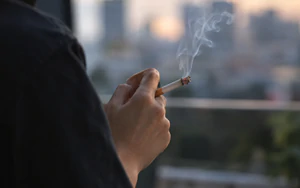
Tieu Bac - Duong Lieu / Tuoi Tre News
Link nội dung: https://news.tuoitre.vn/tobacco-smoke-kills-nearly-19000-non-smokers-annually-in-vietnam-103261111120442642.htm