
Traffic on Cong Hoa Street in Ho Chi Minh City improves after 3 days of reversible lane operation
Traffic on Cong Hoa Street in Ho Chi Minh City became noticeably smoother during Monday morning rush hour after three days of a reversible lane system coming on stream, although congestion remained at both ends of the route.
From 7:00 am to 8:30 am, traffic heading toward Tan Son Nhat International Airport and the city center remained heavy, but vehicles moved more steadily compared to previous days, with no prolonged traffic jams reported.
At around 7:00 am, two electronic traffic signs near C12 Street began displaying instructions allowing cars and motorbikes to enter the reversible lane toward Ut Tich Street.
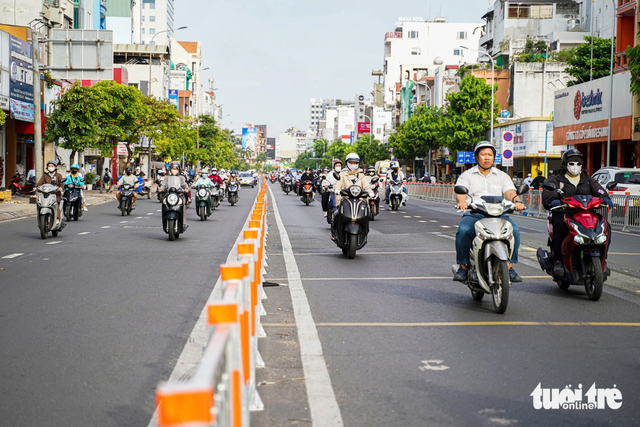
Vehicles move steadily along Cong Hoa Street in Ho Chi Minh City during the morning rush hour on May 18, 2026. Photo: Tri Duc / Tuoi Tre
At the same time, electronic signs on the opposite side near Ut Tich Street displayed one-way traffic warnings.
Compared to the first day of operation, traffic management on Monday was adjusted more flexibly.
Several sections of the movable median barriers were left open to allow pedestrians to cross the street more conveniently and to provide exits for vehicles traveling in the reversible lane when necessary.
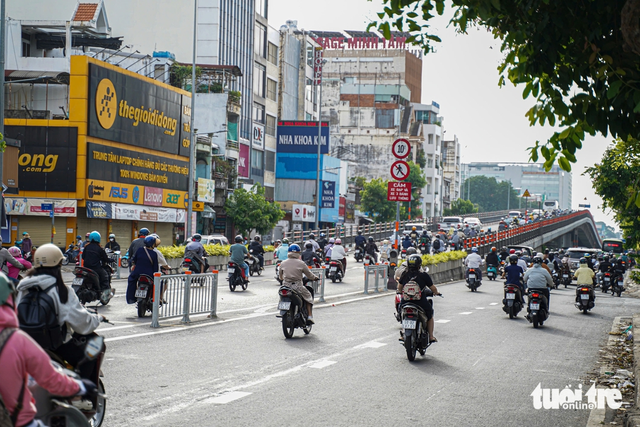
Traffic on both sides of the Hoang Hoa Tham overpass in Ho Chi Minh City is also less congested compared to previous days. Photo: Tri Duc / Tuoi Tre
However, traffic remained heavy at the two ends of the reversible lane near the intersections with C12 Street and Ut Tich Street.
Nevertheless, vehicles across all four lanes continued moving steadily, with the severe congestion and overcrowding previously seen on the route were significantly reduced.
Since May 15, the city has operated a reversible lane system on Cong Hoa Street during morning rush hour, with four lanes allocated for traffic traveling from An Suong toward downtown Ho Chi Minh City and two lanes for the opposite direction.
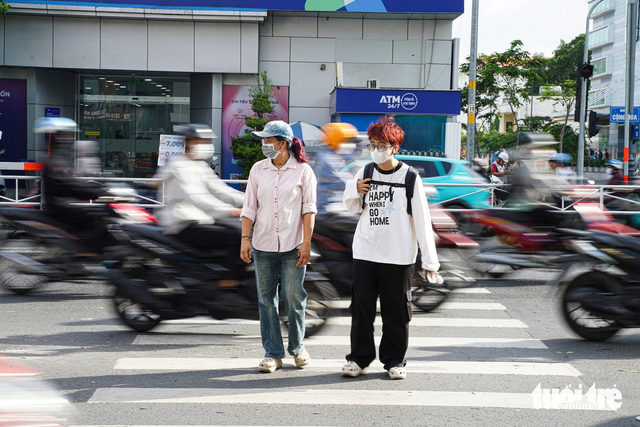
Many pedestrians said crossing Cong Hoa Street in Ho Chi Minh City remained difficult due to the lack of traffic lights, forcing them to weave through moving vehicles. Photo: Phuong Nhi / Tuoi Tre
In the afternoon, the arrangement is reversed, giving priority to outbound traffic with four lanes, while two lanes are reserved for vehicles heading into the city center.
The system allows lane allocation to be adjusted according to actual traffic flow at different times of the day, instead of maintaining a fixed three-lane division in each direction.
Authorities expect the measure to help ease congestion on one of the city’s most overloaded traffic corridors.
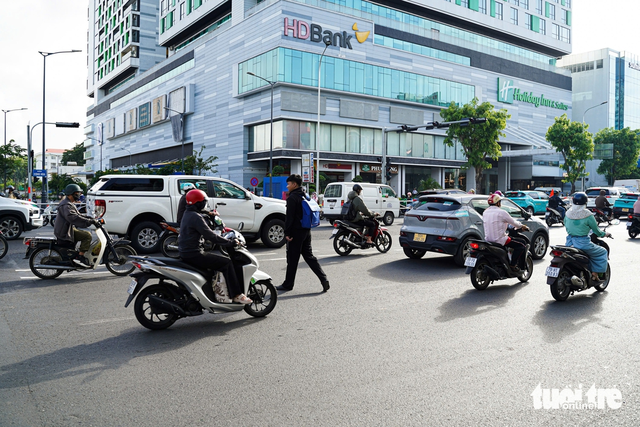
Le Minh Hoang, 19, said crossing Cong Hoa Street in Ho Chi Minh City to get to school was difficult and potentially dangerous, and he hoped authorities would soon introduce measures to support pedestrians. Photo: Tri Duc / Tuoi Tre
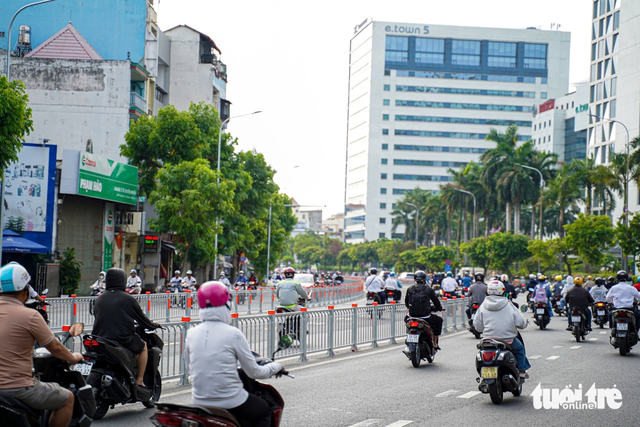
Vehicles move steadily across all four lanes of Cong Hoa Street toward downtown Ho Chi Minh City on the morning of May 18, 2026. Photo: Tri Duc / Tuoi Tre
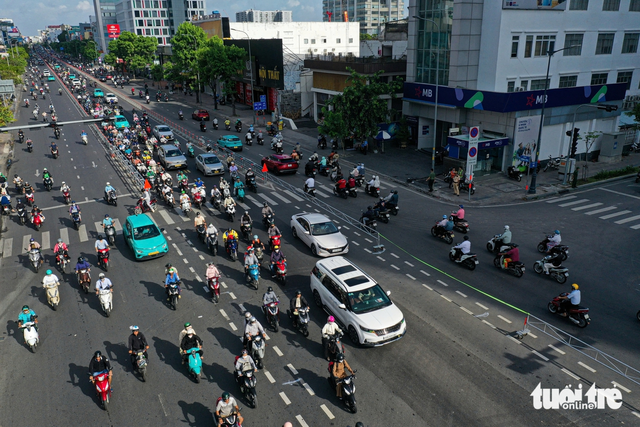
Traffic on Cong Hoa Street in Ho Chi Minh City becomes more stable compared to the first day of the reversible lane operation. Photo: Tri Duc / Tuoi Tre
Thanh Ha - Phuong Nhi - Tri Duc / Tuoi Tre News