
Vietnam aims to make MICE tourism national brand
Vietnam is seeking to turn MICE (meetings, incentives, conferences, and exhibitions) tourism into a national tourism brand to tap the global MICE market, heard a high-level tourism forum, held in Ho Chi Minh City on Thursday.
In Vietnam, MICE tourism is identified as a strategic product capable of generating substantial revenue, enhancing the country’s destination brand, attracting high-value visitors and strengthening regional tourism links.
Speaking at the forum, titled ‘MICE Tourism in the New Era: Sustainability - Connectivity - Opportunities,’ Minister of Culture, Sports and Tourism Lam Thi Phuong Thanh said international travelers’ preferences are changing, with growing demand for high-quality, green and smart tourism products aligned with sustainable development.
Destinations can no longer rely solely on natural resources or price advantages, she said.
They must compete through service quality, distinctive experiences and the capacity to innovate.
MICE tourism is one of the segments capable of driving this transformation, according to Minister Thanh.
The domestic MICE market approaches US$6 billion.
Meanwhile, the global MICE market is projected to reach $2.4 trillion by 2031, offering Vietnam significant room for growth.
Also, MICE travelers typically spend three to six times more than conventional tourists.
“Our goal is to develop MICE into a national brand for Vietnamese tourism,” she said.
“Vietnam will also strengthen strategic cooperation with reputable international organizations so that it can proactively host major international conferences and socio-economic forums.”
Each international event held in Vietnam is expected to serve as a platform to promote the country and forge stronger links with global markets.
Standing vice-chairman of the Ho Chi Minh City People’s Committee Nguyen Loc Ha said the value of MICE tourism should not be measured simply by the number of events.
It should also be assessed through the quality of visitors, their spending, length of stay and spillover effects across other economic sectors.
“The segment is also where tourism meets trade, investment, technology and innovation,” he said.
“It is capable of attracting high-spending visitors, generating substantial added value and enhancing a destination’s position.”
Ho Chi Minh City aims to strengthen its position in regional and global MICE networks.
He said Resolution No. 02, which provides policies to support the attraction of MICE groups, is an important foundation for the city to develop the segment.
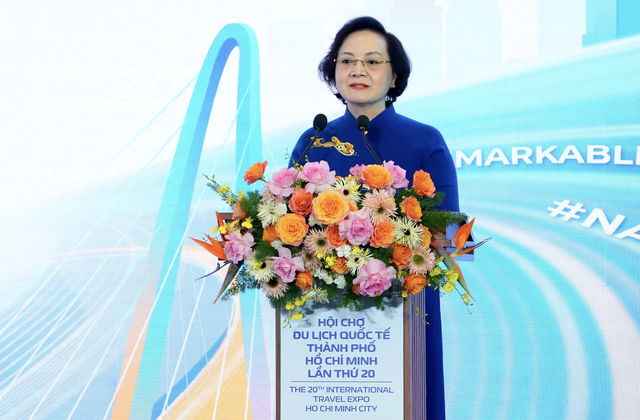
Vietnam’s Deputy Prime Minister Pham Thi Thanh Tra speaks at a high-level tourism forum in Ho Chi Minh City, August 27, 2026. Photo: The Kiet / Tuoi Tre
Building regional MICE space
Southeast Asia and the Greater Mekong Subregion possess considerable advantages for MICE tourism, but the individual strengths of each destination are not enough to compete in the global market, said Deputy Prime Minister Pham Thi Thanh Tra.
Countries need to move from fragmented development toward jointly creating a highly competitive regional MICE space, with three key priorities, she underlined.
The first is to expand the market by connecting destinations, air services, tourism products and promotional activities.
Rather than competing for individual visitor flows, countries should develop multi-country MICE itineraries.
The second is to raise overall quality by promoting greener, smarter and more professional MICE tourism while strengthening the sharing of standards, technology, data, expertise and human resources.
The third is to create new value by linking MICE tourism with trade, investment, science, technology, cultural industries and innovation, while jointly developing regional products, event brands and value chains.
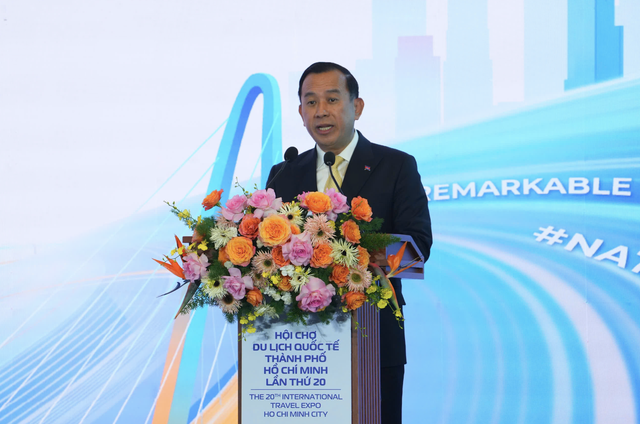
Cambodia’s Minister of Tourism Huot Hak expects Vietnam and Cambodia to jointly develop MICE tourism for Southeast Asia. Photo: The Kiet / Tuoi Tre
Turning MICE visitors into regional tourism opportunity
Cambodia’s Minister of Tourism Huot Hak noted that modern tourism connectivity extends beyond air routes to include infrastructure, digital platforms, businesses and institutions.
He said Vietnam, Cambodia, the Greater Mekong Subregion and ASEAN have significant room to develop multi-destination tourism products, particularly by leveraging MICE visitors who have already traveled long distances to reach the region.
“A conference in Ho Chi Minh City could be combined with an incentive tourism itinerary to dynamic Phnom Penh or heritage-rich Siem Reap in Cambodia,” Hak said.
“Likewise, an international event in Cambodia could create an opportunity for delegates to continue their journey to Vietnam and other nearby destinations.”
The Cambodian tourism minister hinted at expanding joint MICE activities between Cambodia, Vietnam and other nations.
Through innovation, sustainable development and stronger international connectivity, countries in the region can build a MICE industry that is more competitive, resilient and inclusive, he stressed.
Tieu Bac - Nghi Vu / Tuoi Tre News
Link nội dung: https://news.tuoitre.vn/vietnam-aims-to-make-mice-tourism-national-brand-10326082719075876.htm