
Vietnam Airlines crew’s account of what happened to Munich flight
A preliminary report by the aviation authority has revealed that flight VN34’s speed briefly stopped increasing during its take-off roll in Munich before dropping after the aircraft reached V1.
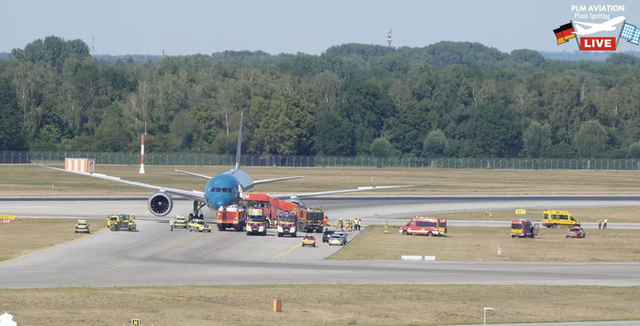
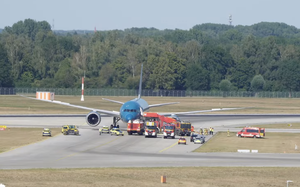
Vietnam Airlines flight VN34 returned to Munich Airport shortly after take-off. Photo: PLM aviation
Speed stalls for about two seconds
One of the most notable details in the Civil Aviation Authority of Vietnam’s preliminary report is the flight crew’s account of what happened during the final seconds on runway 26L before the Boeing 787-9 became airborne.
According to the captain’s report, the Boeing 787-9 was about halfway down runway 26L at Munich Airport on August 15 when the crew noticed that its speed stopped increasing for around two seconds.
The aircraft then resumed accelerating and continued its take-off roll until reaching V1, the decision speed at which the crew had to decide whether to continue or abort the take-off.
Shortly afterward, however, the crew again observed a decrease in speed.
The pilots determined that there was no longer enough runway to safely abort the take-off and decided to continue, pushing the engine thrust levers to maximum.
With about 300 feet, or 91 meters, of runway remaining, the pilot flying raised the aircraft’s nose and took off.
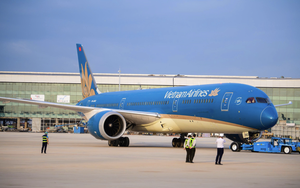
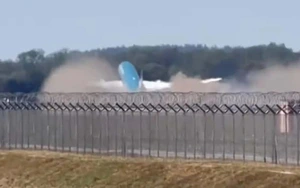
Flight VN34 was carrying 271 passengers and 16 crew members. Its take-off weight was about 240 metric tons, below the Boeing 787-9’s maximum take-off weight of 247.2 metric tons.
Weather conditions at Munich were reported to be good at the time.
The flight crew consisted of four Vietnamese pilots, including three captains and one first officer.
Two of the captains had logged 22,000-27,000 flight hours each as of July, while another had accumulated more than 12,000 hours.
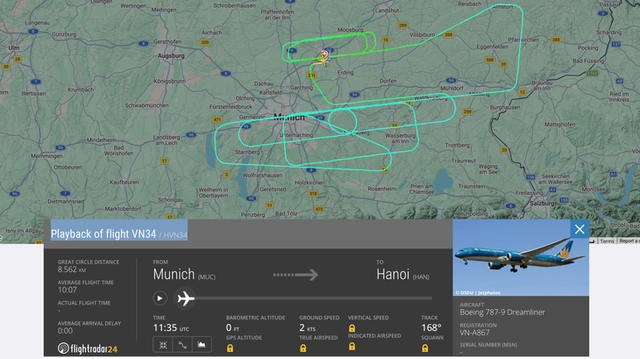
Flight VN34 circled several times before returning to Munich Airport. Photo: Flightradar24
Tail-strike, tire warnings reported after take-off
After becoming airborne, the aircraft issued warnings indicating a tail strike and tire-pressure problems.
The crew informed air traffic control and decided to return to Munich Airport for technical checks.
As the aircraft was carrying a large amount of fuel for its long-haul flight to Hanoi, the pilots dumped the fuel to reduce its weight before landing.
The system subsequently showed a loss of pressure in four of the eight main landing-gear tires.
Before landing, the aircraft flew at low altitude and made two circuits around the airport so air traffic controllers could visually check the landing gear from the ground.
After no visible abnormalities were reported, the crew landed safely on runway 26R at 3:57 pm local time, about two hours after departure.
All 271 passengers were later taken off the aircraft safely after checks confirmed there was no fire or smoke.
Initial inspections found four burst main landing-gear tires: Nos. 1, 5 and 6 on the left side and No. 3 on the right.
Inspectors also found longitudinal scrape marks on the underside of the rear fuselage and several areas where the aircraft skin had been torn, indicating that the tail had struck the runway during take-off.
The Boeing 787-9, registration VN-A867, remains grounded at Munich Airport for technical assessment and investigation.
Vietnam’s Ministry of Construction has asked the Civil Aviation Authority of Vietnam to coordinate with German authorities and participate in the investigation.
Vietnam Airlines has also been instructed to work with German investigators and the aircraft and engine manufacturers to determine the cause, while reviewing its training, operational and maintenance procedures.
The aviation authority stressed that the findings remain preliminary.
VN34 incident at a glance
The Vietnamese aviation authority said Vietnam Airlines flight VN34 suffered a tail strike during take-off from Munich Airport in Germany on August 15.
The flight, bound for Noi Bai International Airport in Hanoi, took off at 1:57 pm local time. Shortly afterward, the crew received warnings indicating a tail strike and abnormal tire pressure, prompting the pilots to return to Munich for technical checks.
The aircraft landed safely, with no injuries reported among the 287 people on board. It was subsequently grounded for technical inspection and investigation.
What happens next to the Boeing 787-9?
Aviation safety expert Dang Duc Dung told Tuoi Tre (Youth) online newspaper that the aircraft is likely to remain at Munich Airport while German authorities investigate the incident.
Germany’s Federal Bureau of Aircraft Accident Investigation is expected to examine all relevant data, including the take-off, the aircraft’s technical condition, and the damage sustained.
Vietnam Airlines can begin repairs only after investigators complete the necessary procedures and release the aircraft.
Munich has extensive aircraft maintenance and repair capabilities, including Lufthansa Technik facilities equipped to handle complex repairs.
Dung said the damage to VN-A867, including several burst tires, signs of a tail strike and torn aircraft skin, would require a thorough structural assessment rather than simply replacing the tires or repairing surface damage.
“The aircraft can only return to service after all repairs are completed, specialists confirm that it meets safety standards, and the necessary approvals are obtained from the manufacturer and relevant authorities,” he said.
Once VN-A867 is declared airworthy, Vietnam Airlines will decide how to return it to Vietnam based on its operational plans.
The aircraft could make a non-revenue ferry flight to a maintenance base. If it meets all operational requirements and receives the necessary approvals, it could also be used for a commercial or additional flight carrying passengers back to Vietnam.
Ngoc Nguyen - Cong Trung / Tuoi Tre News
Link nội dung: https://news.tuoitre.vn/vietnam-airlines-crews-account-of-what-happened-to-munich-flight-103260818203931488.htm