
Vietnam and the 10% growth target
What Vietnam would need is a modern financing architecture shared among the state, private investors, and citizens.
Traveling through Vietnam from mid-July to early August, it is hard to miss the sheer pace of construction. Ring roads are nearing completion around Ho Chi Minh City. Metro lines are expanding.
Long Thanh International Airport is visibly taking shape. Provincial governments are being pushed hard to clear land for infrastructure far faster than they are used to.
Vietnam's leadership wants the country to move at a speed that matches its ambition of a 'national rise'—a historic transformation meant to propel Vietnam past the middle-income trap that has caught so many of its neighbors.
An ambitious race
The headline figure attached to that ambition is double-digit growth: roughly 10 percent a year. Vietnam entered 2026 with real momentum. GDP expanded by about 8.2 percent in the first half of the year, placing the country among the fastest-growing emerging economies in the world.
But that impressive figure also underscores the scale of the challenge. To reach 10 percent for the full year, growth would need to accelerate to nearly 12 percent in the second half—a pace well above most foreign forecasts, and one that raises an obvious concern: growth that fast, sustained for too long, risks sparking destabilizing inflation.
That risk does not make the target irrational. Vietnam is racing against demography just as much as it is competing with its neighbors.
The country is aging rapidly and could become an aging society by the late 2030s, leaving a narrow window to accumulate capital, expand its welfare system, and boost productivity before the workforce begins to shrink.
Set against this demographic clock, the 2045 high-income objective gives the double-digit target a clear rationale. A stretch goal can force ministries and provinces to clear bottlenecks in power, transport, and digital infrastructure that a more comfortable target would allow them to delay indefinitely.
Vietnam’s central question, then, is not whether to build, but how to finance what it builds, who bears the risk, and whether the resulting assets enhance productivity.
How to fund the surge
Estimates for 2026–2030 put total social investment at roughly VND38.5 quadrillion (US$1.46 trillion).
The state is expected to supply about VND8.5 quadrillion ($324 billion), leaving nearly VND30 quadrillion ($1.14 trillion) to be mobilized from financial markets, foreign investors, businesses, and households. While not all of this capital will go directly to infrastructure, transport, energy, and urbanization projects will absorb the lion's share.
This figure highlights a core structural limitation: Vietnam cannot finance a generational infrastructure push by treating commercial banks as bottomless funding sources.
A metro system or an airport may operate for half a century, whereas bank deposits are predominantly short- and medium-term. Banks must participate, but they should neither supply all the capital nor absorb the bulk of the long-term risk.
Vietnam has been through credit-driven expansions before. Policymakers are more experienced today, but the channels through which excess liquidity can flow into real estate have also multiplied.
What Vietnam would need is a modern financing architecture shared among the state, private investors, and citizens. Assets with predictable revenue streams—such as seaports, airports, or select toll highways—are natural candidates for public-private partnerships (PPPs).

The manufacturing and processing sector was a bright spot in the Vietnamese economy during the first half of 2026. Photo: N.KH
Strategic projects with high social value but weak direct cash flows may require transparent government borrowing via sovereign bond markets. Metro systems could be paired with transit-oriented development (TOD), allowing the public sector to capture a share of surrounding land value increases to help fund the underlying transit infrastructure.
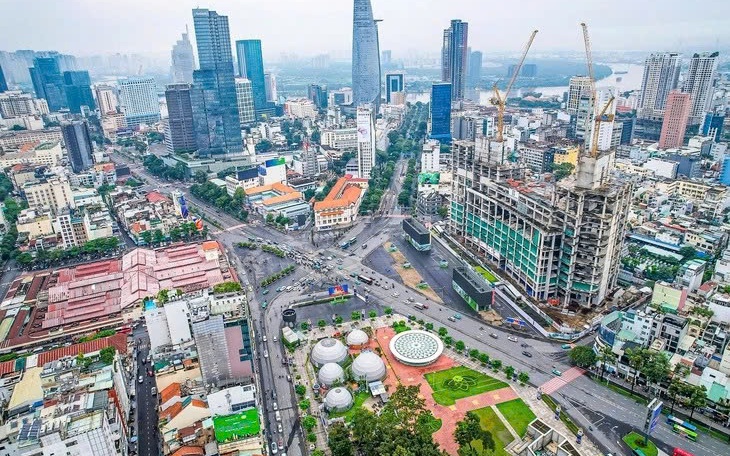
None of these instruments is a magic bullet. Past controversies over build-operate-transfer (BOT) roads arose precisely because private investors were expected to earn commercial returns while toll rates and regulatory decisions remained constrained.
A workable contract must explicitly state who bears which risks, how compensation is calculated, when revenue-sharing mechanisms kick in, and how disputes are resolved. The government should not guarantee private profits, but neither can it expect private capital to absorb every operational and market risk of major public works.
The same logic applies to land surrounding TOD projects: well-designed frameworks capture publicly created value, support affordable housing, and foster productive commercial districts.
Furthermore, Vietnam still lacks a mature market for long-term project bonds—instruments tied to identifiable assets with verified cash flows and transparent disclosures, rather than generic corporate debt.
Clear project-level accounting, independent credit ratings, and dedicated maintenance reserves will be essential to make such bonds attractive to pension funds, insurers, and international institutional investors.
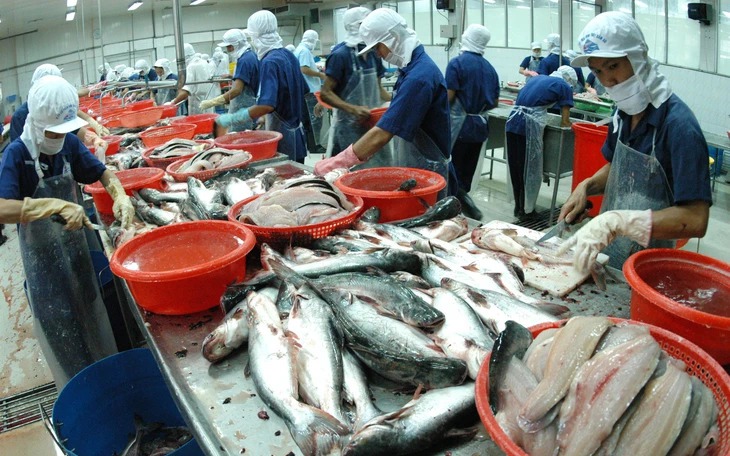
Finance, however, is only half the equation; the other half is productivity. Vietnam's growth model still relies heavily on foreign direct investment (FDI), exports, and public capital expenditure.
Foreign manufacturers create jobs and export surpluses, but their broader domestic spillover remains limited as long as local suppliers are confined to low-value activities and FDI profits are repatriated overseas.
Domestic retail spending momentum remained sluggish through the first half of 2026, revealing a widening gap between export performance and household income growth.
Achieving sustainable double-digit growth requires more than just construction cranes and credit growth, as it demands stronger domestic suppliers, better technical education, deeper capital markets, and financially resilient banks and households.
Back on the ring roads circling Hanoi and Ho Chi Minh City, the construction cranes speak for themselves: Vietnam has no shortage of ambition or political resolve. What remains to be proven is whether that physical momentum can be matched by the financial plumbing and institutional discipline required to sustain it.
Whether Vietnam’s national rise becomes a story of durable growth or an expensive cautionary tale will be decided not on the day the annual GDP numbers are announced, but in the years that follow—in how the debt is serviced and whether the bridges being built today are still paying for themselves in 2045.
One roadmap to 10 percent growth, proposed by Dragon Capital, indicates that hitting the mark would require annual credit expansion of 16–20 percent, consumption growth of 11–12 percent, a fiscal deficit of 4–5 percent of GDP, and export growth above 12 percent—all while keeping inflation capped near five percent. Taken together, that represents an intricate policy balancing act.
HO QUOC TUAN
Link nội dung: https://news.tuoitre.vn/vietnam-and-the-10-growth-target-103260806133303841.htm