
Vietnam, Australia join forces on mRNA vaccines, cancer therapies
Vietnam's Tam Anh Research Institute and Australia's UNSW RNA Institute have signed a memorandum of understanding (MoU) to collaborate on RNA technologies, with initial projects focusing on mRNA vaccines for influenza and personalized therapies for lung and colorectal cancers.
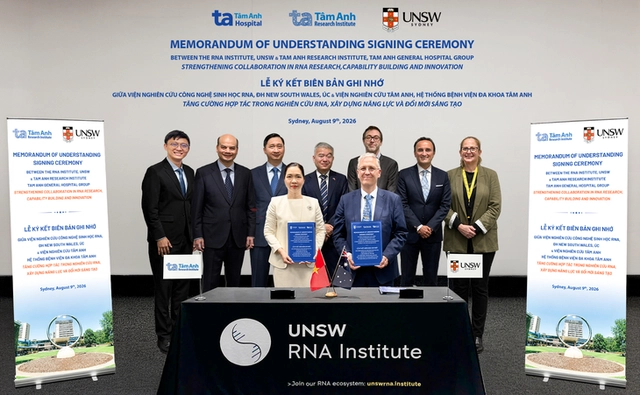
Representatives of the Tam Anh Research Institute and the UNSW RNA Institute sign a memorandum of understanding at the University of New South Wales in Australia. Photo: Tam Anh Research Institute
The MoU was signed on Sunday during Party General Secretary and President To Lam's state visit to Australia, as the two countries continue to deepen their comprehensive strategic partnership.
The collaboration will focus on research, scientific publications, and the development of advanced biomedical technologies.
It marks the first time a Vietnamese research institute has entered into a partnership on core biomedical technology with a leading Australian research institution.
The UNSW RNA Institute is currently developing mRNA vaccines against influenza and personalized cancer vaccines for lung and colorectal cancers. It is also working to advance RNA technologies that underpin many modern vaccines, biologic drugs, and next-generation therapies.
According to the two institutes, the partnership aims not only to transfer technology but also to generate data and develop solutions tailored to disease characteristics in Vietnam and Southeast Asia.
One of the key research areas under consideration is the creation of mutation maps for lung and colorectal cancers, which remain major health burdens in Vietnam.
The data could help support the development of RNA-based therapies and personalized cancer vaccines.
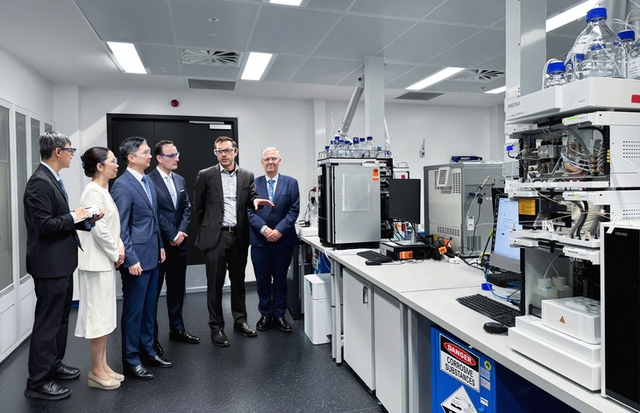
Researchers from the UNSW RNA Institute introduce the University of New South Wales' laboratories and preclinical research center. Photo: Tam Anh Research Institute
As an initial step, the UNSW RNA Institute has proposed two flagship projects: developing an mRNA influenza vaccine for Vietnam and creating a prototype personalized cancer vaccine for patients with lung or colorectal cancer.
The initiatives are expected to deliver direct benefits to Vietnam while expanding the RNA research capabilities and data resources of both institutions across the Asia-Pacific region.
The two institutions plan to launch hands-on training programs in Australia, exchange experts, establish research protocols, and gradually build capabilities in RNA design, synthesis, purification, quality control, and packaging.
Rather than accessing finished vaccines and biologic drugs as in the past, the partnership with the UNSW RNA Institute will enable Vietnamese scientists to participate in the development of core RNA technologies from the outset.
Whereas Vietnam previously gained access to vaccines and biologic medicines only after the underlying technologies had been fully developed, the partnership with the UNSW RNA Institute opens a new chapter by allowing local scientists to engage in core technology research from an early stage.
The collaboration is expected to support the development of safer vaccines and therapies, strengthen Vietnam’s capabilities in RNA technology, enhance national health security, and contribute to the global biomedical innovation ecosystem.
RNA technology at the core of next-generation therapies
RNA, or ribonucleic acid, is a biological molecule that carries genetic information within cells.
Often described as the messenger that translates DNA's instructions into proteins, RNA has become the foundation of many modern vaccines, biologic drugs, and advanced therapies.
Scientists have developed a range of technologies based on RNA. Messenger RNA (mRNA) is used in vaccines and certain treatments, small interfering RNA (siRNA) can silence disease-causing genes, while guide RNA (gRNA) plays a key role in gene-editing technologies.
These advances have opened new possibilities for treating cancer, genetic disorders, immune-related diseases, rare conditions, and other health challenges.
Professor Pall Thordarson, director of the UNSW RNA Institute, said Vietnam has the potential to become an important driver of RNA innovation in the Asia-Pacific region.
He cited Vietnam's experience in conducting mRNA vaccine clinical trials and its achievement of the World Health Organization's Maturity Level 3 recognition for vaccine regulatory oversight as factors that make the country an attractive partner for Australian researchers.
Ngoc Nguyen - Thao Nhi - Phuc Dat / Tuoi Tre News
Link nội dung: https://news.tuoitre.vn/vietnam-australia-join-forces-on-mrna-vaccines-cancer-therapies-103260810165228506.htm