
Vietnam, China seek deeper agricultural trade ties through supply chains, logistics
Vietnam and China are seeking to deepen agricultural trade cooperation through closer supply-chain integration, improved logistics, digitalization, and higher quality standards, officials and industry representatives said at a forum in Ho Chi Minh City on Wednesday.
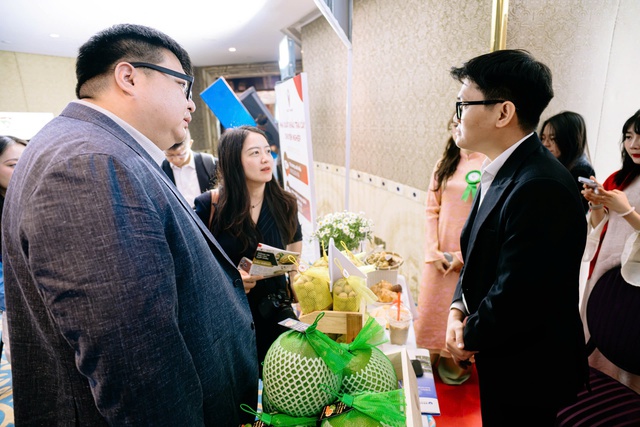
Participants attend the first Vietnam-China Agricultural Trade Connectivity Forum and explore cooperation opportunities among agricultural production and processing companies in Ho Chi Minh City, Vietnam, June 24, 2026. Photo: Thanh Hiep / Tuoi Tre
Agricultural trade has become a key driver of economic ties between the two countries, Chinese Ambassador to Vietnam He Wei said at a press briefing held on the sidelines of the first Vietnam-China Agricultural Trade Connectivity Forum.
He said bilateral trade exceeded US$290 billion in 2025, with agricultural products posting strong growth.
Vietnam's exports of agricultural products and food to China rose 37.4 percent in the first quarter of 2026 from a year earlier, outpacing the country's overall export growth rate of 5.9 percent, He said.

Vietnam is China's second-largest supplier of fruit and vegetables, accounting for a 22.55-percent market share.
Exports of fruit and vegetables to China reached $5.5 billion in 2025, according to the ambassador.
He said agricultural cooperation was evolving from simple commodity trade to the development of integrated supply chains, supported by cross-border logistics networks combining road, rail, sea, and air transport.
Fast-track customs clearance mechanisms, dedicated 'green lanes' for agricultural products, and expanded cold-storage facilities at border crossings have improved transportation and clearance efficiency, he said.
The development of smart customs and smart border gates has reduced customs clearance times by about 30 percent and inspection and quarantine procedures by 40 percent, allowing some Vietnamese fresh fruit to reach Chinese supermarkets on the same day or within one day of shipment, He said.
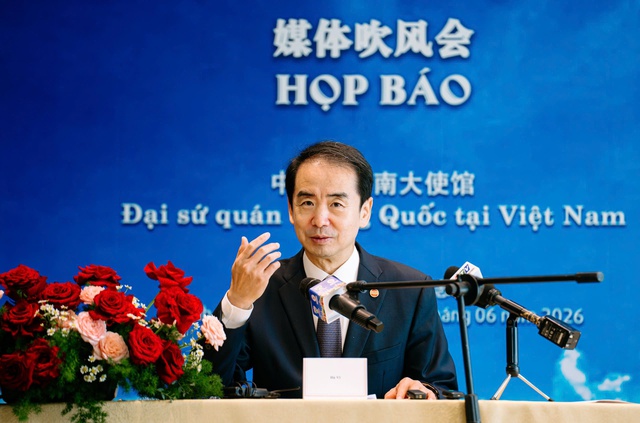
Chinese Ambassador to Vietnam He Wei speaks to reporters during a press briefing on the sidelines of the first Vietnam-China Agricultural Trade Connectivity Forum in Ho Chi Minh City, Vietnam, June 24, 2026. Photo: Thanh Hiep / Tuoi Tre
Permanent Deputy Minister of Foreign Affairs Nguyen Minh Vu said significant room remained for expanding cooperation between the two countries.
He called for greater efforts to build sustainable production, supply and distribution chains, accelerate market-access procedures, and make better use of e-commerce and digital platforms to reduce intermediary costs.
Industry representatives said further measures were needed to facilitate trade.
Nguyen Dinh Tung, vice-chairman of the Vietnam Fruit and Vegetables Association, called on Chinese customs authorities to expand online inspections of registered growing areas and packing facilities and to consider priority treatment for exporters with standardized production zones and strong compliance records.
He also urged both countries to strengthen data sharing on growing areas, packing facilities, and product origins, while reducing physical inspections at border checkpoints to help preserve the freshness of Vietnamese produce.
Vo Huy Hoang, director of Lam Dong-based exporter Hoang Tho Company, said many Vietnamese agricultural shipments to China were still sold on a consignment basis, leaving exporters dependent on Chinese buyers for pricing and sales decisions.
He Wei said Chinese consumers and regulators place particular importance on product traceability and quality standards.
He added that Chinese and Vietnamese authorities had worked together to identify and address technical issues affecting some shipments, including factors related to farming practices, soil and water quality, and the use of fertilizers and crop-protection chemicals.
More than 20 Vietnamese fruit and vegetable products, including pomelos, coconuts, and chili peppers, are currently approved for official export to China.
Businesses at the forum said they hoped additional products would gain access to the market through formal export channels.
Bao Anh - Nguyen Tri - Ngoc Duc / Tuoi Tre News
Link nội dung: https://news.tuoitre.vn/vietnam-china-seek-deeper-agricultural-trade-ties-through-supply-chains-logistics-103260625153330913.htm