
Vietnam considers cutting fuel taxes amid global price hike
The Vietnamese government has proposed reducing environmental and special consumption taxes on gasoline, diesel, kerosene, jet fuel, and mazut to zero, as global energy prices continue to rise due to instability in the Middle East.
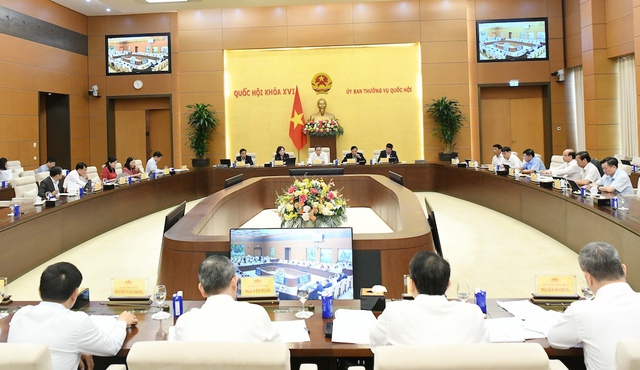
Vietnamese lawmakers attend a National Assembly Standing Committee session, April 2026. Photo: Lam Hien
The proposal was discussed on Thursday morning by the National Assembly Standing Committee, which reviewed a draft resolution on environmental protection tax, value-added tax (VAT), and special consumption tax for fuel.
According to the government, the conflict involving the U.S., Israel, and Iran in the Middle East, which erupted on February 28, has caused sharp fluctuations in global energy prices, especially crude oil and natural gas.
Supply disruptions have pushed global oil prices upward, directly affecting Vietnam’s domestic fuel market and creating short-term price spikes that burden businesses and consumers.
The government and prime minister have used short-term fiscal measures to stabilize fuel prices.
However, officials said a longer-term policy is needed to maintain macroeconomic stability, control inflation, and protect consumer confidence.
The Ministry of Finance has submitted the draft resolution for consideration at the ongoing first session of the 16th National Assembly.
Under the proposal, fuel products would not be subject to VAT declaration or payment, though input VAT could still be deducted.
The special consumption tax on gasoline would also be set at zero.
The measures would apply from April 16 through June 30, with the prime minister authorized to shorten or extend the timeline depending on global oil market conditions.
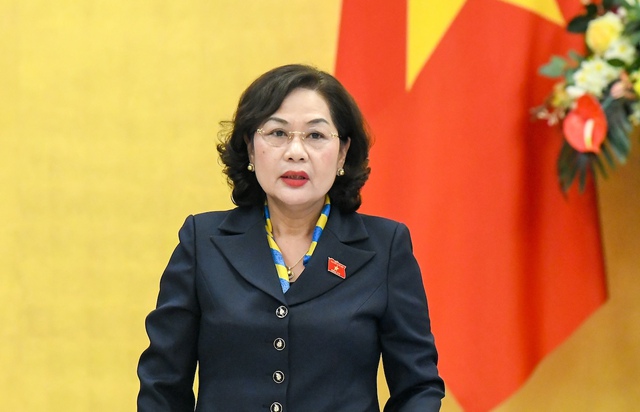
Nguyen Thi Hong, deputy chairwoman of Vietnam’s law-making National Assembly. Photo: Lam Hien
Phan Van Mai, chairman of the National Assembly’s Committee for Economic and Financial Affairs, said the committee supports the need for such tax adjustments.
Lawmakers also urged the government to adopt comprehensive solutions, including transparent fuel pricing, supply chain security, and strict enforcement against hoarding and speculation.
Nguyen Thi Hong, deputy chairwoman of the National Assembly, concluded that the Standing Committee agrees in principle with issuing a resolution to adjust fuel taxes.
She emphasized that the move would help mitigate the negative impact of fuel shortages and price volatility, safeguard production and livelihoods, and stabilize Vietnam’s economy.
The Standing Committee agreed to submit the proposal to the National Assembly for consideration and approval, with provisions allowing the government to adjust the policy in emergency situations and report back to lawmakers at the nearest session.


Minh Duy - Thanh Chung / Tuoi Tre News
Link nội dung: https://news.tuoitre.vn/vietnam-considers-cutting-fuel-taxes-amid-global-price-hike-103260409182416271.htm