
Vietnam exporters urged to strengthen origin traceability amid US transshipment crackdown
Vietnamese exporters are being urged to strengthen supply-chain transparency and demonstrate genuine production in Vietnam as the U.S. steps up efforts to detect illegal transshipment and scrutinize goods linked to China.
The warning comes as the White House Office of Trade and Manufacturing Policy has identified illegal transshipment as a growing challenge to the U.S. tariff system and trade-remedy measures.
Its recent report describes a global network involving more than 40 countries and territories that allegedly facilitates the rerouting of China-linked goods to the U.S.
For Vietnamese businesses, the report is particularly significant because Vietnam is placed in a group of countries and territories with sufficient manufacturing scale, port infrastructure, supply chains and logistics capacity to handle significant volumes of China-linked goods.
Do Ngoc Hung, trade counselor and head of the Vietnam Trade Office in the U.S., said the report highlights the need for businesses to be able to demonstrate their actual production capacity and supply-chain activities when exporting to the U.S.
The U.S. definition of “China-linked goods” is also relatively broad. It can cover products made using Chinese raw materials or components, as well as goods involving Chinese ownership, financing, suppliers or manufacturers.
Production processes, transportation histories and other trade data may also be used to establish significant links with China.
Vietnam has become deeply integrated into regional supply chains, while many domestic industries continue to rely on raw materials and components imported from China.
Hung said this means U.S. authorities need to distinguish legitimate manufacturing in Vietnam from illegal transshipment by examining the actual production process.
The White House report also refers to a “Ho Chi Minh City corridor,” but Hung said this is an illustration of potential transshipment risks associated with certain production areas, rather than an investigative conclusion about any specific company or manufacturing facility in Ho Chi Minh City.
How US targeting illegal transshipment
The White House report says companies in countries or territories facing high tariffs may exploit tariff differences by routing goods through third countries before importing them into the U.S. to obtain lower tariff rates.
Such activities increased significantly after the U.S. imposed Section 301 tariffs on Chinese goods in 2018, according to the report.
It describes a “Shadow Transshipment Network” involving more than 40 countries and territories, with participants performing various roles ranging from manufacturing and processing to logistics, bonded warehousing, free-trade zones, transshipment ports and re-exporting.
The report nevertheless acknowledges that a decline in U.S. direct imports from China accompanied by increased imports from third countries does not mean that all of the shifted trade represents illegal transshipment.
Estimates of the scale of trade affected by such shifts vary considerably. The U.S. Department of Commerce's Office of Trade and Economic Analysis estimates the amount at around US$109 billion, while U.S. data company Altana puts the figure as high as $303 billion, based on supply-chain links at the manufacturing-facility level.
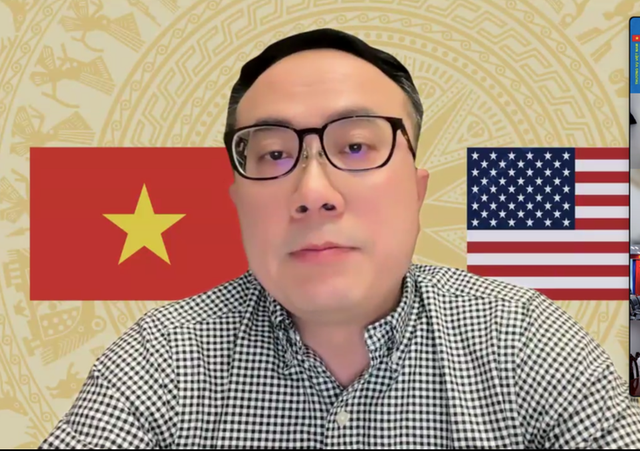
Do Ngoc Hung, trade counselor and head of the Vietnam Trade Office in the U.S.
What Vietnamese exporters need to do
Hung said the U.S. is moving toward making anti-transshipment measures a broader component of its trade policy rather than treating them solely as customs or trade-remedy issues.
Vietnamese exporters therefore need to pay greater attention to stronger customs enforcement requirements, including measures under Executive Order 14411. These include tighter requirements for importers of record, guarantees, assets, disclosure of ownership and corporate relationships, compliance status and data transparency.
The U.S. is also developing an AI-enabled system, described in the White House report as a “Detective Border,” that could integrate trade, customs, transportation, product and manufacturing data to detect illegal transshipment.
The system could compare customs declarations with transportation records and the actual capacity of manufacturing facilities to identify potential signs of transshipment and distinguish legitimate production from illegal activity.
If violations are detected, the White House report says the findings could lead to enforcement actions such as inspections, cargo detention, recovery of unpaid duties, sanctions, punitive tariffs and exclusion from the U.S. market.
Against this backdrop, the Vietnam Trade Office in the U.S. has sought to strengthen cooperation with Altana, a U.S. company specializing in supply-chain data.
The trade office has invited Altana to participate in Vietnam International Sourcing 2026, organized by Vietnam’s Ministry of Industry and Trade.
The aim is to demonstrate the scale of genuine manufacturing activities in Vietnam, help Vietnamese businesses prepare for verification requirements, and draw on Altana’s experience and technology to improve origin rules, traceability mechanisms and measures to combat origin fraud in Vietnam.


Thanh Ha - Ngoc An / Tuoi Tre News