
Vietnam faces ENSO shift in 2026 with risk of stronger storms
Vietnam is expected to see the El Niño–Southern Oscillation (ENSO) shift toward a warmer phase in 2026, increasing the risk of stronger storms and heavier rainfall even as overall storm numbers may not rise, according to the National Center for Hydro-Meteorological Forecasting.
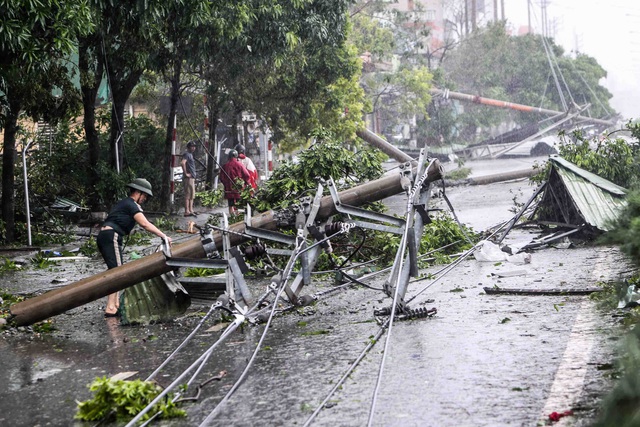
Damage is seen after storm Yagi made landfall in Quang Ninh Province, northern Vietnam, September 2024. Photo: Nguyen Khanh / Tuoi Tre
ENSO is currently in a La Niña state, with sea surface temperature anomalies in the central Pacific at around minus 0.5 degrees Celsius in early March, Mai Van Khiem, the center’s director, told Tuoi Tre (Youth) newspaper on Wednesday.
The system is forecast to move to neutral conditions over the next three months with a probability of 80–90 percent, while the likelihood of La Niña persisting has fallen to 10–20 percent, he said.
From June to August, ENSO is expected to remain neutral, with a 55–65 percent probability, while the chance of a shift to El Niño rises to 35–45 percent.
The warming phase could emerge more clearly from early fall and develop into El Niño by late 2026 or early 2027.
The transition period is likely to bring more volatile and less predictable weather patterns across Southeast Asia, including Vietnam.

Mai Van Khiem, director of the National Center for Hydro-Meteorological Forecasting. Photo: C. Tue / Tuoi Tre
Storm activity in the East Vietnam Sea from April to July is expected to be near the long-term average, while the number of storms from August to December could be below average, Khiem said.
On average, the sea region sees about 9.6 storms during the August–December period, including around 3.8 that could make landfall.
Storm impacts are expected to focus on northern Vietnam between August and September, before shifting toward central and southern regions from September to December, though tracks and timing are becoming harder to predict.
“Despite potentially fewer storms, warmer sea surface temperatures could allow storms to intensify more rapidly and produce heavier rainfall, raising the risk of flooding, flash floods, and landslides,” Khiem said.
Temperatures in 2026 are also expected to be higher than average, with more frequent and intense heatwaves compared with 2025.
Khiem warned that extreme weather events, including localized heavy rain, thunderstorms, lightning, and hail, could still occur even in years with fewer storms, particularly during seasonal transition periods such as March to May and September to October.

Bao Anh - Chi Tue / Tuoi Tre News
Link nội dung: https://news.tuoitre.vn/vietnam-faces-enso-shift-in-2026-with-risk-of-stronger-storms-103260318145725511.htm