
Vietnam faces shortage of Russian-speaking tour guides as arrivals soar
Vietnam is facing a shortage of Russian-speaking tour guides as the number of Russian tourists surged 185.8 percent year on year in the first half of 2026, with travel businesses struggling to find enough personnel to serve this market.
Vietnam welcomed about 742,700 Russian tourists in the first six months of this year, making Russia the country's third-largest international source market.
However, the country has only 462 Russian-speaking tour guides.
Vietnam welcomed nearly 12.3 million international visitors in the first half of 2026, up 14.9 percent from the same period last year, according to data from the National Statistics Office under the Ministry of Finance.
China remained the largest source market, with about 2.7 million visitors, followed by South Korea with 2.16 million.
The surge in Russian visitor arrivals has been attributed to the restoration and expansion of direct flights, rising demand for beach holidays, and Vietnam's advantages in climate, tourism products, and affordable costs.
Shortage of Russian-speaking tour guides
For years, Vietnam's tourism industry has seen steady growth in visitor numbers from Europe, South Korea, Japan, India, and other markets.
Travel companies have focused on training personnel to serve these key markets.
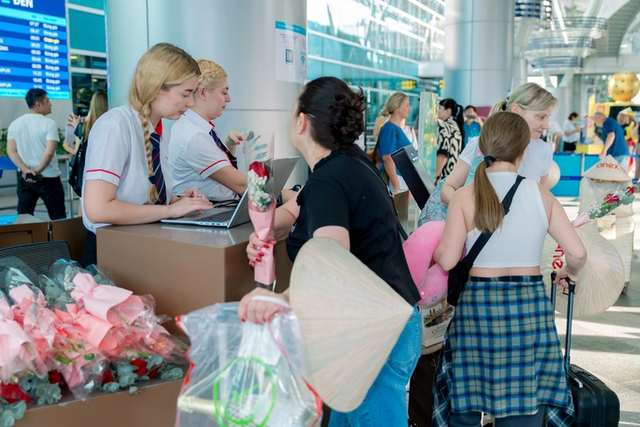
A team welcomes and serves a group of Russian tourists visiting Da Nang City. Photo: B.D. / Tuoi Tre
However, the strong return of Russian tourists over the past few years has caught many businesses off guard.
In some destinations where Russian visitors are arriving in large numbers, the supply of tour guides and other personnel serving this market has failed to keep pace with demand.
Many businesses are trying various ways to address the shortage and are willing to pay higher to secure Russian-speaking tour guides.
According to travel companies, most Russian-speaking tour guides currently working in Vietnam are people who previously studied or worked in the former Soviet Union or Russia.
They have experience and a good understanding of the language and culture, but many are now older and may find it difficult to cope with the heavy workload over the long term.
Meanwhile, there are not enough younger Russian-speaking guides entering the profession.
One reason is that the Russian tourist market went through a period of decline, leading to a drop in the number of students studying Russian, while businesses were also reluctant to recruit staff for the long term.
Addressing problems
Nguyen Duc Quynh, vice-chairman of the Vietnam Hotel Association, said a sustainable tourism industry needs to meet the diverse requirements of different markets.
Rather than preparing only for peak periods, Vietnam needs accurate forecasts and appropriate preparation plans, particularly for human resources serving large source markets in the future.
"Foreign language skills in tourism go beyond basic communication. Workers also need to understand the culture, history, and behavior of visitors, as well as have the ability to handle situations and convey the values of destinations.
Flight routes can be launched in a short time and markets can recover quickly, but training a tour guide who is proficient in a foreign language and understands the market requires a long process,” Quynh said.
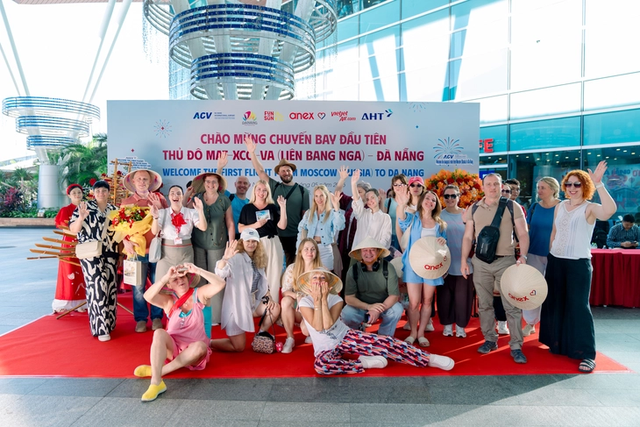
Da Nang is currently experiencing rapid growth in Russian tourist arrivals. Photo: B.D. / Tuoi Tre
Quynh said businesses should prepare in advance to strengthen their own workforce.
"Companies can get involved from the stage of developing training programs, provide scholarships, accept interns, and recruit them after training.
For languages with relatively few learners, such as Russian, specialized training linked to actual market demand would be more effective than mass training.
Making use of Vietnamese people who previously studied or worked in Russia, as well as Russians legally residing in Vietnam, could help support interpretation, customer service, and cross-cultural communication training, Quynh suggested.
As of June 15, Vietnam had nearly 45,800 active tour guides, including more than 27,600 international guides, around 15,900 domestic guides, and 2,300 on-site guides.
English-speaking tour guides were the largest group, at 15,200, followed by Chinese-speaking guides at 6,900. Meanwhile, only 462 tour guides spoke Russian.
Thanh Ha - Thai Ba Dung / Tuoi Tre News
Link nội dung: https://news.tuoitre.vn/vietnam-faces-shortage-of-russian-speaking-tour-guides-as-arrivals-soar-103260722154057975.htm