
Vietnam ministry urges reduced private vehicle use, remote work amid fuel supply concerns
The Vietnamese Ministry of Industry and Trade has warned of possible localized fuel shortages and urged residents and businesses to reduce fuel consumption, including limiting private vehicle use and increasing remote work, as tensions in the Middle East threaten global energy supplies.
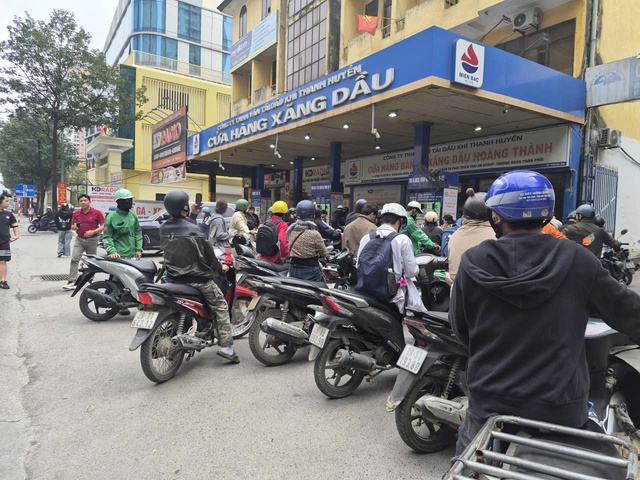
Motorcycle riders line up to refuel at a gas station in Hanoi. Photo: Ngoc An / Tuoi Tre
The escalating military conflict involving the U.S., Israel, and Iran erupted on February 28.
Iran has reportedly blocked the strategically important Strait of Hormuz, through which about 13 million barrels of oil per day, or 31 percent of global seaborne crude, are transported.
Global oil prices have already risen about 20 percent since the beginning of the year.
Analysts warn Brent crude could surge to US$120-140 per barrel if disruptions continue, hitting Asia and Southeast Asia hardest due to heavy reliance on Middle Eastern imports.
According to the ministry, Vietnam consumed about 28.6 million cubic meters of fuel in 2025, averaging 2.2-2.3 million cubic meters per month.
While the Nghi Son and Binh Son refineries meet a significant share of demand, the country still depends on imports, raising the risk of localized shortages in some areas.
In response, the Vietnamese government has formed a task force to safeguard national energy security, directing refineries and distributors to maintain maximum output, diversify sources, and ensure reserves.
Authorities are also implementing tax adjustments and using the national fuel price stabilization fund to ease domestic pressure.
The ministry said fuel prices have also risen across the region, including in Laos, Thailand, China, and Singapore.
Several countries in Asia have already begun restricting fuel exports to protect domestic supply.
The ministry cautioned against panic buying or hoarding, stressing that such behavior worsens shortages and violates the law.
Instead, it advised residents to limit private vehicle use, carpool, rely on public transport or bicycles for short trips, and maintain vehicles properly to cut fuel consumption by 10-15 percent.
Drivers are encouraged to adopt fuel-efficient habits such as steady speeds and avoiding sudden acceleration.
Consumers are also urged to consider electric, hybrid, or biofuel-powered vehicles, with E5 and E10 blends promoted from June 1.
Businesses should optimize logistics, adopt ISO 50001 energy management standards, and invest in renewable energy for auxiliary operations.
Remote work is recommended where possible to reduce commuting.
The ministry emphasized collective responsibility, “Residents, businesses, and the media must unite, no panic, no hoarding, use fuel efficiently, for the nation’s benefit and a sustainable energy future.”
The ministry also urged residents to report fuel stations that stop selling without explanation, violate listed prices or show signs of hoarding to market surveillance agencies or the ministry’s hotline 1900 888 655 for investigation.
- REFERENCE MORE
Minh Duy - Ngoc An / Tuoi Tre News
Link nội dung: https://news.tuoitre.vn/vietnam-ministry-urges-reduced-private-vehicle-use-remote-work-amid-fuel-supply-concerns-103260310113607778.htm