
Vietnam smartphone shipments rise as Southeast Asian market plunges in Q3 2026
Vietnam remained the only Southeast Asian market to record growth in smartphone shipments in the third quarter of 2026, bucking a sharp regional downturn as rising memory chip costs put upward pressure on smartphone prices.
According to a newly released report by market research firm Omdia, smartphone shipments in Vietnam rose one percent year on year, while those across Southeast Asia fell 36 percent to 16.5 million units.
The regional decline was driven mainly by memory chip shortages and rising component costs, which forced manufacturers to adjust shipment volumes and product portfolios.
All other Southeast Asian markets recorded double-digit declines, with shipments in Indonesia, the Philippines, Malaysia, and Thailand falling more than 30 percent.
Supply constraints have also pushed up smartphone prices.
Counterpoint Research, a global technology market research firm, said worldwide retail smartphone prices had risen by an average of 15 percent since the beginning of 2026, while prices in the Asia-Pacific region had climbed 19 percent.
In Vietnam, the 256GB versions of the iPhone 18 Pro and iPhone 18 Pro Max are priced at around VND39 million (US$1,521) and VND42 million ($1,638), respectively, up VND4 million ($156) from their predecessors.
Samsung's Galaxy S26 models are also about VND4 million ($156) more expensive than their launch prices in March.
Vietnam bucks regional downturn
Le Xuan Chiew, research manager at Omdia, attributed Vietnam's resilience partly to its relatively positive macroeconomic fundamentals.
He said economic growth had been supported by foreign direct investment, manufacturing, and exports linked to global demand for artificial intelligence (AI) hardware, helping sustain domestic consumer demand.
The competitive landscape has also shifted, with Xiaomi, a Chinese consumer electronics company known for its smartphones and smart devices, taking the lead in Vietnam's smartphone market for the first time in the third quarter.
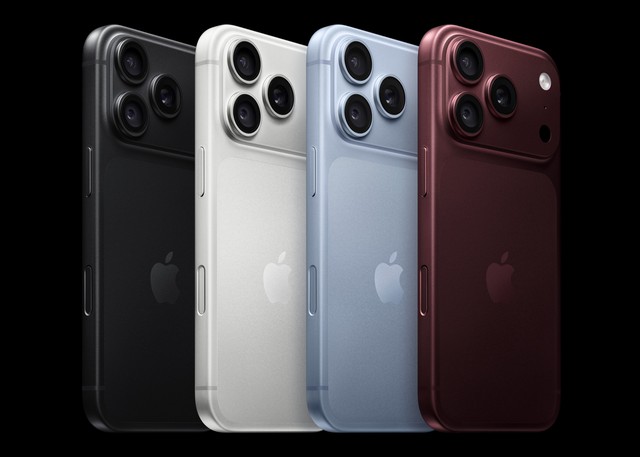
The iPhone 18, which is in high demand in Vietnam, is pictured in four colors in this illustrative photo.
The Chinese brand's shipments surged 50 percent year on year, giving it around 27 percent of the market, roughly level with Samsung after rounding.
Its growth was driven largely by competitively priced mass-market devices.
The Redmi Note 15 starts at VND5.99 million ($234), while the Redmi Note 15 Pro+ 5G costs around VND12.99 million ($507).
At the premium end, the Xiaomi 18 Pro Max is priced between VND43.99 million ($1,715) and VND47.99 million ($1,871), while the Xiaomi 18 Pro costs VND39.99 million ($1,559) to VND44.99 million ($1,754).
Samsung's Galaxy S26 series starts at VND25.99 million ($1,013) for the base model, VND29.99 million ($1,169) for the S26+ and VND36.99 million ($1,442) for the S26 Ultra, with the top configuration priced at VND51.99 million ($2,027).
Vietnamese consumers maintain appetite for iPhones
Vietnam was also one of only two Southeast Asian markets, alongside Malaysia, to contribute to Apple's positive regional performance.
Omdia said Apple was the only brand among Southeast Asia's five leading smartphone vendors to record shipment growth in the third quarter.
Strong demand for premium iPhones was reflected in pre-orders at local retailers.
On the first day of iPhone 18 sales in September, Apple retailer TopZone expected to hand over up to 20,000 pre-ordered devices nationwide, while electronics retailer Minh Tuan Mobile had received more than 13,000 deposits before the phones went on sale, as recorded by Tuoi Tre (Youth) online newspaper's reporters.
The iPhone 18 Pro Max accounted for around 70-88 percent of total pre-orders at some retail chains, despite listed prices for the iPhone 18 Pro and Pro Max ranging from VND38.99 million ($1,520) to VND80.99 million ($3,158).
In October, Apple put the iPhone Duo, its first foldable smartphone, on sale in Vietnam, with prices starting at VND64.99 million ($2,534) and reaching VND103.99 million ($4,055) for the highest-end version.
Despite the high prices, the device continued to attract buyers. At Di Dong Viet, the 256GB version represented 72 percent of orders, while the 512GB model made up another 20 percent.
Omdia said Apple's focus on premium devices made it less vulnerable to memory chip shortages than manufacturers heavily reliant on smartphones priced below $200.
The growing popularity of buy-now, pay-later services, including SPayLater, has also made expensive smartphones more accessible to Vietnamese consumers.


Vinh Tho - Nghi Vu - Duc Thien / Tuoi Tre News
Link nội dung: https://news.tuoitre.vn/vietnam-smartphone-shipments-rise-as-southeast-asian-market-plunges-in-q3-2026-103261119214752662.htm