
Vietnamese coffee giant’s urban area project puts 30 households in Dak Lak at disadvantage
The project has caused over 30 households to live temporarily in their own houses for 20 years
A long-delayed eco-cultural urban area project of Vietnamese coffee giant Trung Nguyen Group Corporation has caused over 30 households in the Central Highlands province of Dak Lak to live temporarily in their own houses and face multiple difficulties for 20 years.
The Dak Lak People’s Committee has required the People’s Committee of Buon Ma Thuot City and relevant units to report the case, a leader of the committee office said on Monday.
In particular, more than 30 households in Tan Loi Ward, Buon Ma Thuot City, which is the capital of Dak Lak, who are living next to the World Coffee Museum, said that they have had to suffer from a shortage of roads, electricity, and clean water for many years.
Their houses and roads in the neighborhood have deteriorated and wells have been polluted, but they cannot repair or transfer their houses or use them as collateral for loans.
Local residents have repeatedly complained about the situation but their efforts have so far been in vain.
|
|
| Hermetic and dank houses of residents next to the World Coffee Museum in Dak Lak Province, located in Vietnam's Central Highlands. Photo: Trung Tan / Tuoi Tre |
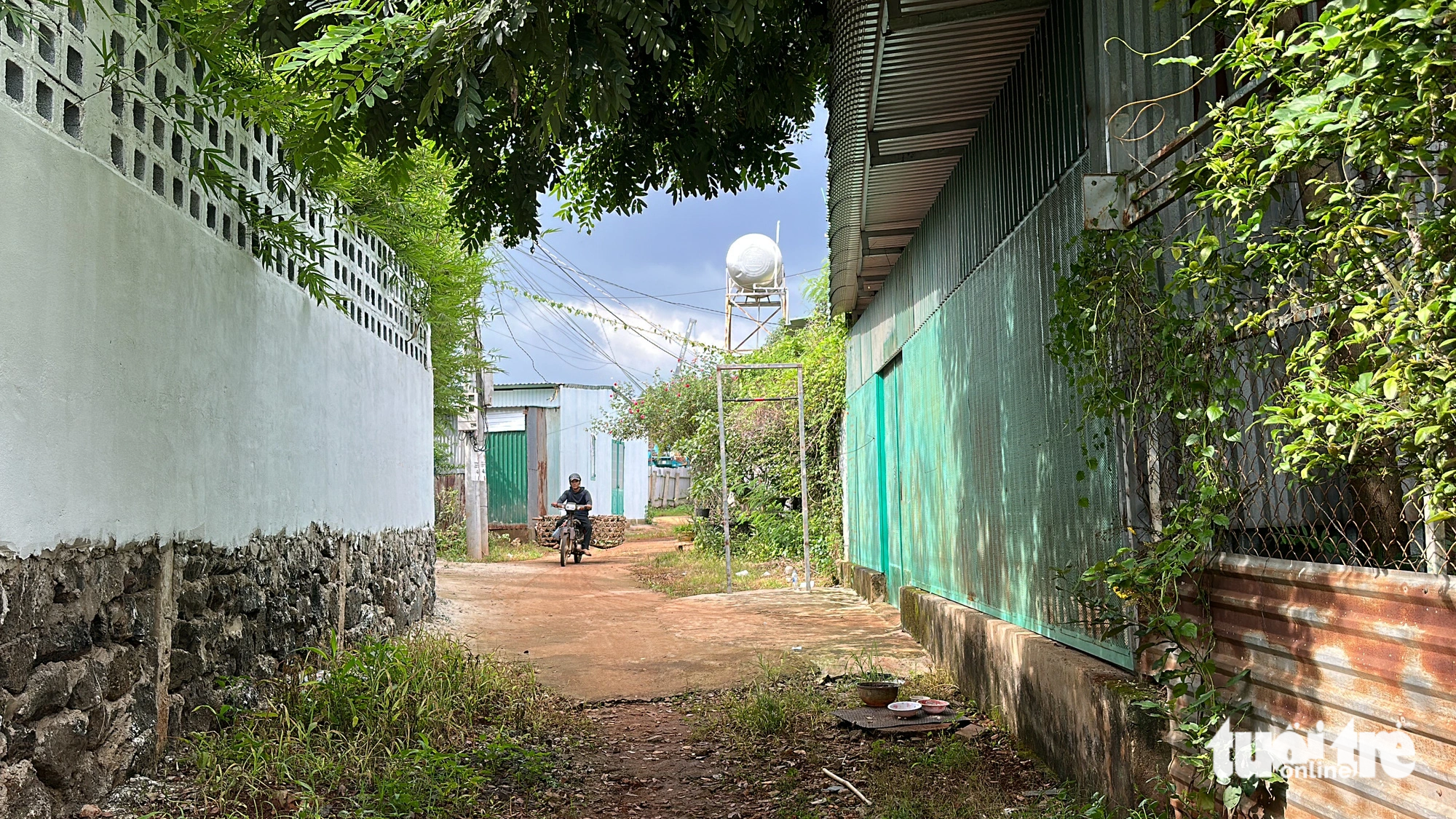
Nguyen Thi Noi Ha, a 62-year-old resident in Tan Loi Ward, said that her family members and neighbors were mainly workers of Buon Ma Thuot Coffee Co. Ltd., so the company allocated land lots around Suoi Xanh Lake to them for house construction and vegetable and fruit farming.
Those who were not workers of the company bought land from these workers.
In 2003, the area was planned to accommodate the Suoi Xanh eco-cultural urban area project initially carrying a price tag of more than VND2.1 trillion (US$88 million) and developed by Trung Nguyen Group Corporation.
“We were informed that the area was inside the project’s boundaries, so we could not apply for the land use right certificates for our land lots, mortgage them, or transfer them,” Ha moaned.
Residents in the area have not been supplied with clean water.
They have to use water from wells, while the area is adjacent to a hospital, a landfill of Trung Nguyen Group Corporation, and pig farms, she added.
Local residents proposed the government should take action if Trung Nguyen continues putting the project on hold.
“We had to live in the dark for dozens of years although we are dwelling in the city center. Power has just been supplied in the last three years," Truong Nguyen, a 52-year-old resident, complained.
|
|
| Dozens of households have to suffer hardships due to the long-delayed eco-cultural urban area project of Trung Nguyen Group Corporation in Dak Lak Province, located in Vietnam's Central Highlands. Photo: Trung Tan / Tuoi Tre |
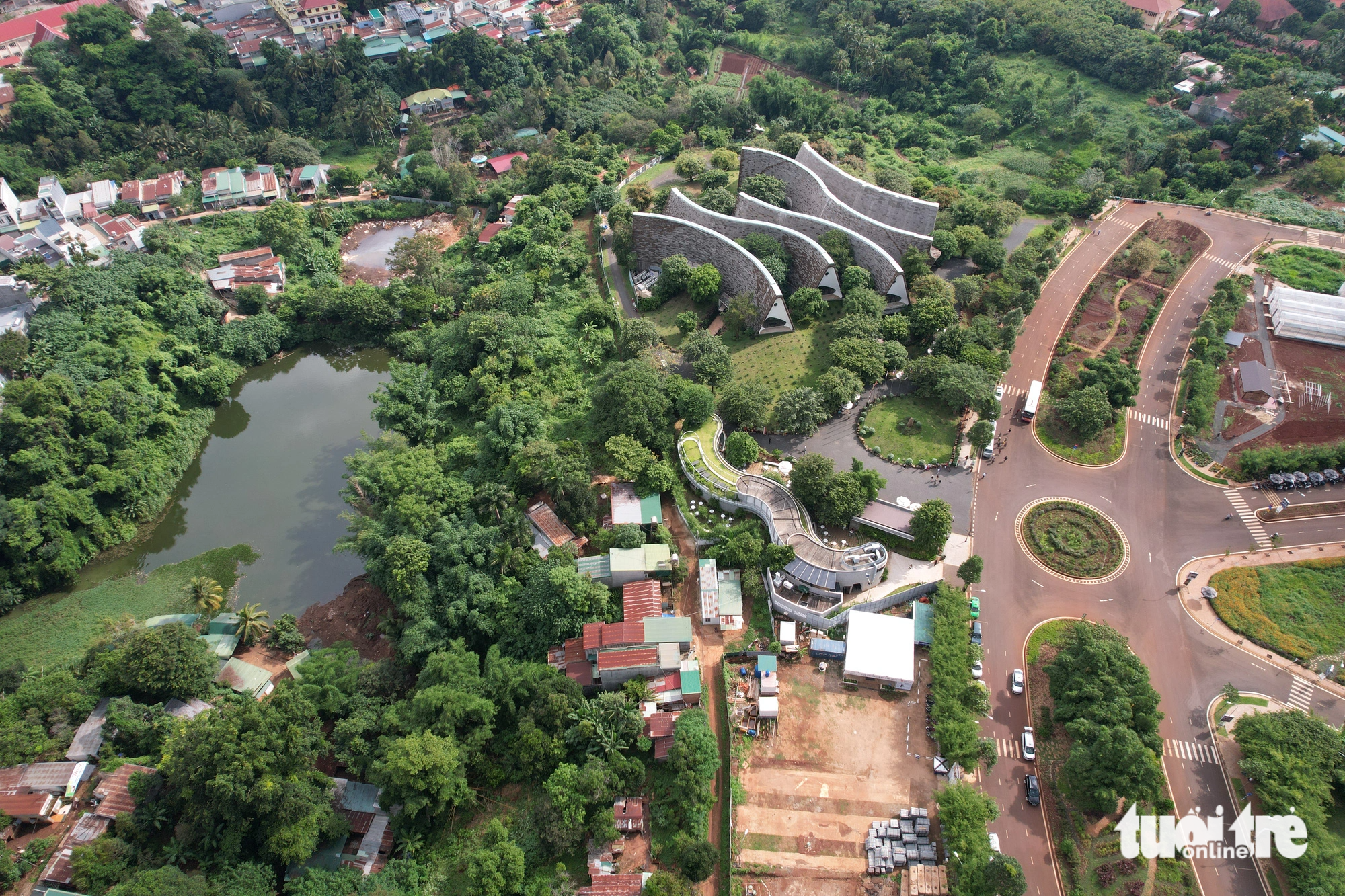
The People’s Committee of Dak Lak Province gave the green light to the Suoi Xanh eco-cultural urban area project which would cover an area of 45.45 hectares in September 2009.
The provincial People’s Council approved the project on December 13, 2014.
In a report submitted to the Dak Lak People’s Committee in August 2015, the provincial Department of Planning and Investment reported that it had completed a site clearance plan for the project in March 2011.
The project’s total investment has increased to nearly VND2.8 trillion ($117.3 million), according to a report by the Dak Lak Department of Construction.
In the first phase, which needs over VND1.2 trillion ($50.4 million), Trung Nguyen has completed the development of technical infrastructure, a museum, a green park, and 200 out of 611 commercial apartments.
The firm started the second phase of the project with an investment of over VND1.5 trillion ($62.8 million) in the first quarter of 2018 and is expected to complete it on December 31, 2023.
However, Trung Nguyen has put work on the phase on hold as the compensation and site clearance work remains incomplete.
|
|
| Residents in Tan Loi Ward, the center of Buon Ma Thuot City under Dak Lak Province, face difficulties in travel and clean water supply. Photo: Trung Tan / Tuoi Tre |
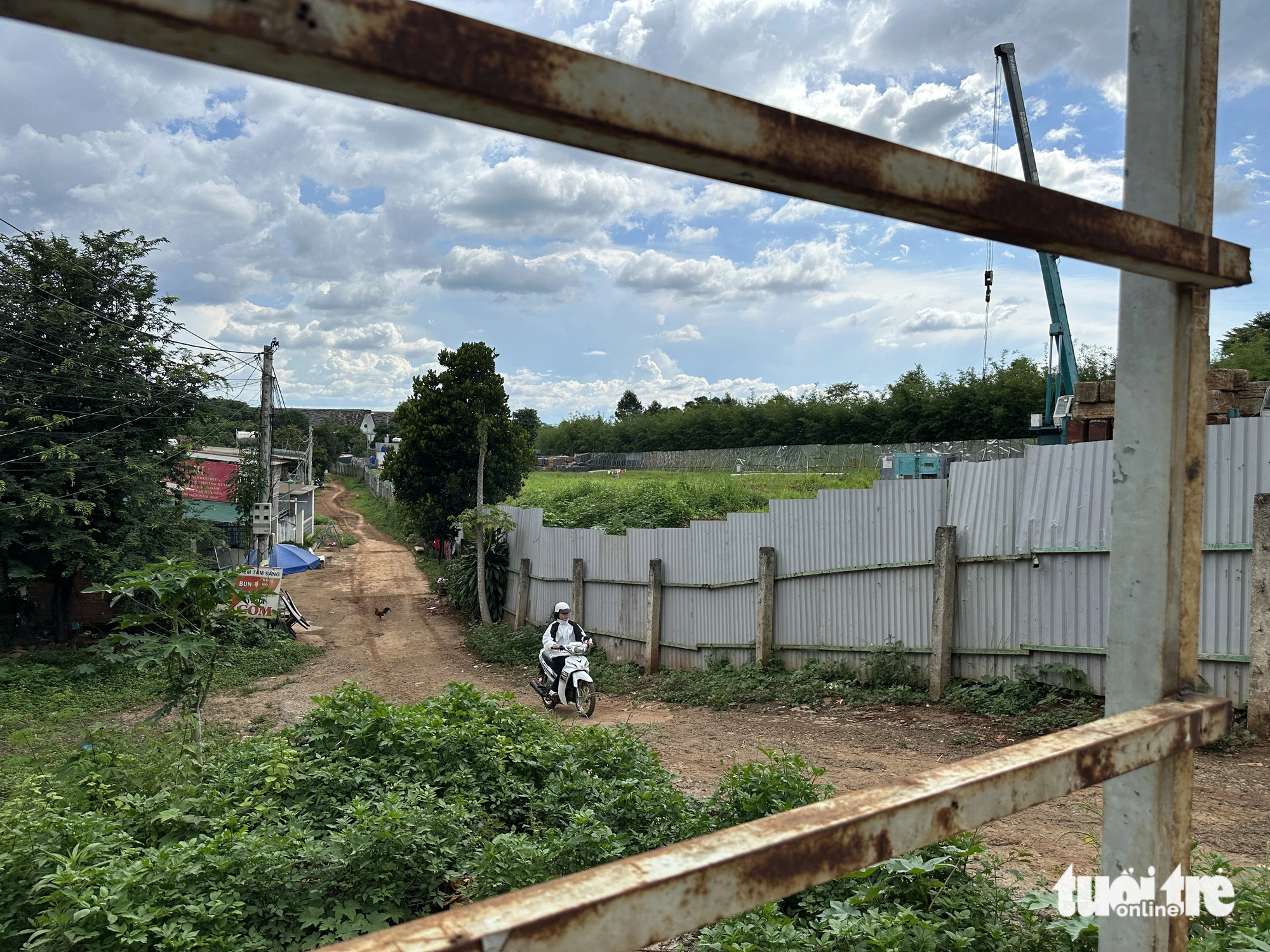
Le Dai Thang, vice-chairman of the People’s Committee of Buon Ma Thuot City, said that the long delay in the project has significantly affected the lives of residents in the neighborhood.
The city has reported these residents’ difficulties to the provincial authorities.
City officials expected the second phase of the project to be completed by the end of this year.
However, Trung Nguyen has not arranged capital for the provincial land fund development center, so work cannot begin on the phase, Thang added.
Regarding reasons for the delay, Thang assumed the local authorities’ responsibility for ineffectively speeding up the progress of the project.
Moreover, Trung Nguyen repeatedly complained about the land use fees, saying that they were high.
In reality, the fees for the land in the first phase reached VND11-13 million ($460-544) per square meter, while those for adjacent land lots were VND29 million ($1,214) per square meter, Thang said.
Like us on Facebook or follow us on Twitter to get the latest news about Vietnam!
Thanh Ha - Trung Tan / Tuoi Tre News
Link nội dung: https://news.tuoitre.vn/vietnamese-coffee-giants-urban-area-project-puts-30-households-in-dak-lak-at-disadvantage-10374328.htm