
Vietnamese entrepreneurs share lessons from building businesses in France
A growing number of Vietnamese entrepreneurs are viewing France not only as an export market but also as a destination for investment and business expansion, following the entry into force of the EU-Vietnam Free Trade Agreement in 2020 and the elevation of Vietnam-France ties to a comprehensive strategic partnership in 2024.
Although the number of Vietnamese making direct investments in France remains limited, the trend signals that more Vietnamese entrepreneurs are beginning to establish, own, and operate businesses in France, a country of nearly 70 million people.
"According to the Ernst & Young 2026 report, France has retained its position as one of the most attractive destinations for foreign investors for the seventh consecutive year," Etienne Ranaivoson, French Consul General in Ho Chi Minh City, told Tuoi Tre (Youth) online newspaper.
Building business from scratch
Vietnamese entrepreneur Vu Nguyet Anh, founder of the Strasbourg-based travel consulting company COvivu, said the biggest challenge of starting a business in France was not a lack of opportunities or business ideas, but accepting that she had to 'reset from zero.'
Before moving to France, she had spent about seven years building her business in Vietnam, establishing her own brand and an extensive professional network across multiple sectors.
However, everything changed once she arrived in France.
"I entered a new market and a new industry, and I had to build everything from scratch. What I had done well in Vietnam did not automatically translate into credibility in a new country," Anh said.
She said building partnerships, understanding how the market works, and earning the trust of customers and the local community all require considerable time in France.
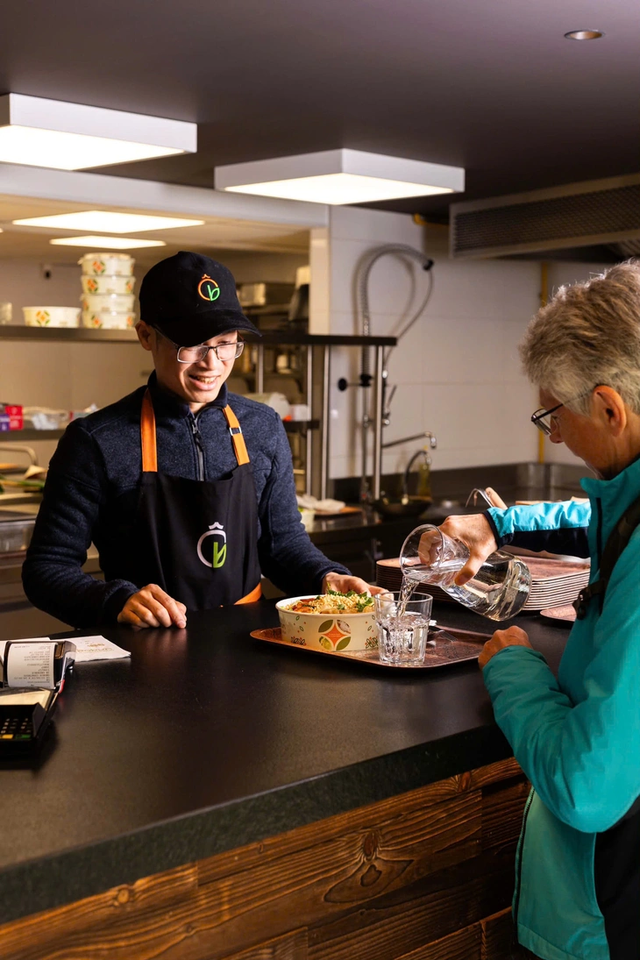
Vietnamese businessman Phan Viet Phong, owner of the Obobun restaurant chain in France, serves a customer at one of his restaurants. Photo: Supplied
She also faced skepticism from members of the Vietnamese tourism community in France and elsewhere in Europe.
After initially testing its customized travel itinerary planning service, COvivu shifted to the premium segment when Anh realized the original business model was too resource-intensive and not well suited to France's operating costs.
The company now provides consulting services for private tours.
"When I first arrived in France, I had to establish my company while also learning how to live in a completely new environment, from administrative procedures, laws, taxes, and insurance to even the smallest aspects of daily life," Anh recalled.
She chose to develop the company with a long-term, sustainable approach, saying stability and transparency are valued more highly than rapid growth in France.
Along the way, she learned to adapt her communication style, build credibility, manage resources, and maintain a healthy work-life balance.
In addition to COvivu, Anh has expanded into projects related to education technology, personalized gift services, and content creation about life in France.
"I've come to realize that there are still many untapped opportunities in Europe. The question is whether you are patient enough to understand real market demand and stay long enough to build trust. I still see many interesting problems waiting to be solved," she said.
Acquiring and managing existing businesses
Vietnamese businessman Phan Viet Phong, owner of the Obobun restaurant chain in France, said the restaurant he acquired in the country has remained relatively stable because of his disciplined management approach.
"The difference is not having a unique product but maintaining operational discipline. I closely control ingredient costs, train my staff according to standardized procedures, and build a strong brand instead of simply selling food," Phong said.
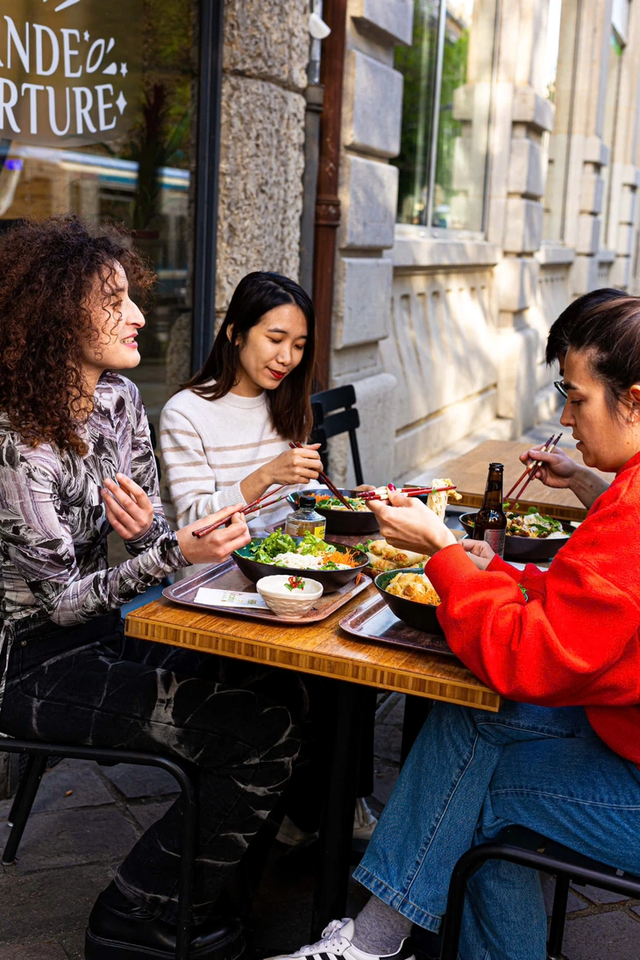
Customers dine at a Vietnamese restaurant in France. Photo: Supplied
Inflation has prompted consumers to tighten their spending, forcing restaurants to carefully manage profit margins to survive.
France's food service industry is also under pressure from rising ingredient costs, labor shortages, and the repayment of COVID-19 support loans, leading many businesses to restructure or put their operations up for sale.
Phong said many businesses have closed because underperforming establishments that had survived thanks to French government COVID-19 support were eventually forced out of the market.
Rising operating costs have also made many small-scale business models no longer viable, while some owners have retired without successors.
He said these conditions have created opportunities for foreign investors, including Vietnamese entrepreneurs, to acquire existing businesses, reducing initial investment costs while making it easier to recruit employees.
"Any restaurant without a distinctive identity will struggle to survive because customer visits have declined by 15-20 percent. However, 73 percent of customers still prefer dining in," Phong said.
Businesses that successfully combine dine-in and takeout services can gain advantages in speed, customer experience, and cost control, he added.
He advised investors seeking to acquire businesses in France to carefully study operating costs, labor regulations, and market conditions, while ensuring they have sufficient financial resources to sustain operations for at least the first six to 12 months before turning a profit.
In addition to developing a unique business identity, investors should consult experienced accountants and lawyers and spend time understanding the market before making investment decisions.
France promotes business-friendly investment environment
French Consul General Etienne Ranaivoson told Tuoi Tre that he was pleased to see France attracting growing interest from entrepreneurs and innovators across Southeast Asia, particularly from Vietnam.
He said foreign investors may initially encounter challenges navigating France's legal framework and administrative procedures because they are unfamiliar with the European legal system.
To address these challenges, the French government has introduced measures to simplify administrative procedures, promote innovation, and attract highly skilled international talent, making it easier for foreign investors to establish operations in the country.
With its position as a gateway to the European market, a stable investment environment, modern infrastructure, and a well-developed innovation ecosystem, France offers an attractive base for Vietnamese businesses seeking to expand across Europe.
Vinh Tho - Ha An / Tuoi Tre News
Link nội dung: https://news.tuoitre.vn/vietnamese-entrepreneurs-share-lessons-from-building-businesses-in-france-103260712173731481.htm