
Vietnamese exporters struggle as surging oil prices drive up logistics costs
Escalating tensions in the Middle East are pushing global oil prices higher, placing new pressure on Vietnam’s exporters as transportation and logistics costs surge at a time when orders are already difficult to secure.
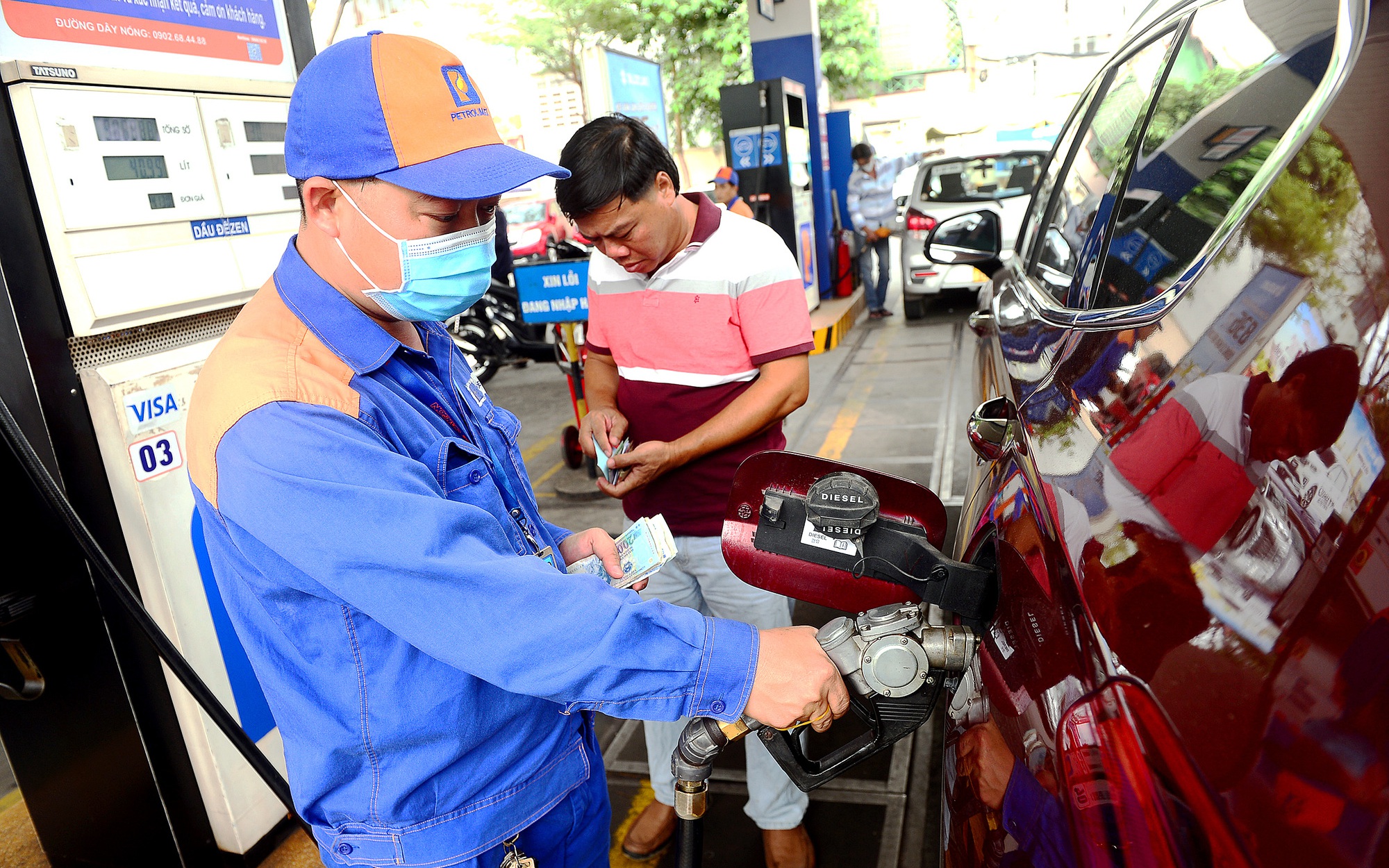
The Ministry of Industry and Trade on Thursday announced a sharp increase in domestic fuel prices effective from 3:00 pm.
The lowest increase was VND1,807 (US$0.07) per kilogram for mazut 180CST 3.5S, while kerosene saw the highest rise of up to VND7,132 ($0.27) per liter.
Gasoline prices also climbed, with the highest rise reaching VND2,189 ($0.08) per liter.
Nguyen Van Thinh, director of ALP Logistics Joint Stock Company - Hai Phong Branch, said that the conflict in the Middle East has already begun to affect Vietnam’s import-export transportation and logistics sector.
Some shipping bookings bound for Middle Eastern markets have been nearly suspended, while shipments to other destinations are also showing signs of disruption.
Shipping lines are closely monitoring the evolving conflict, particularly the security of the Suez Canal, a critical maritime trade route.
However, a more pressing concern for logistics companies is the anticipated increase in fuel costs.
Suppliers have warned that fuel prices used for transportation could soon be adjusted to around VND30,000 ($1.1) per liter.
Besides, fuel supplies may become limited in the coming period, depending on how the conflict unfolds.
Under such circumstances, Thinh said logistics companies face significant risks.
Many transport contracts were signed earlier with fixed prices, leaving firms exposed to soaring costs and the possibility of insufficient fuel supplies.
His firm is entering negotiations with customers, but it may be very difficult given the complexity of the situation.
“Some contracts have already been signed for the entire year," Thinh said.
“Though we are willing to share the burden with clients, such steep price increases make it extremely challenging for the firm.
“Transport accounts for a large portion of our logistics services, so price adjustments may be unavoidable."
Nguyen Dinh Tung, vice-chairman of the Vietnam Fruit and Vegetable Association and CEO of Vina T&T Group, said overseas buyers have begun to hesitate when signing long-term contracts, fearing that rising logistics costs will push up product prices and reduce consumer demand.
“If transport times become too long, spoilage rates increase significantly, raising the risk that partners may reject shipments, which could cause heavy losses,” Tung said.
Nguyen Tuan Viet, CEO of export consultancy service supplier VietGo Export Promotion Company, also voiced concerns over the prolonged delivery and the sharp rise in shipping costs.
Agricultural and food products may particularly be impacted by logistics disruptions, he said, urging exporters to consider temporarily suspending certain shipments or choosing other products to avoid losses.
“Companies should also consider exporting under the free-on-board method–selling goods at the port of departure and receiving payment immediately,” Viet said.
“They should pay greater attention to insurance and carefully select shipping lines, including purchasing war-risk insurance,” he said.
Longer shipping routes raise concerns
Although the Middle East is not yet a major export market for Vietnamese fruit, it remains a strategic niche market with strong growth potential, said Tung from Vina T&T Group.
Demand for high-end tropical fruits in the region is strong, and buyers are willing to pay premium prices for quality products.
The Middle East also acts as a gateway and transshipment hub for Vietnamese goods entering the United Arab Emirates and North Africa.
Maintaining a presence in the region is seen as an important long-term strategy to diversify export risks and reduce dependence on a few traditional markets.
However, recent developments around the Red Sea have dealt a heavy blow to global supply chains.
With ships avoiding the Suez Canal and rerouting around the Cape of Good Hope, shipping times have increased by 12 to 15 days, and in some cases up to 20 days.
At the same time, sea freight rates have surged, occasionally doubling compared to pre-conflict levels.
Additional costs are also mounting, including war-risk surcharges and higher cargo insurance premiums.
Le Tien Truong, chairman of Vietnam National Textile and Garment Group (Vinatex), said it is still too early to fully assess the impact, but the conflict has already disrupted logistics routes through key chokepoints such as the Strait of Hormuz and the Suez Canal, which are major shipping corridors to Europe.
For shipments to North America, alternative routes across the Pacific Ocean and through the Panama Canal exist, but these routes have limited refueling points and are typically used only by very large vessels.
As a result, delivery time could lengthen further, while rising fuel prices continue to push up transport costs.
For consumer goods industries such as textiles and garments, Truong warned that the biggest concern during periods of conflict is changing consumer behavior.
“Vietnam’s two largest markets, the United States and Europe, tend to curb spending during geopolitical tensions,” he said.
“If the conflict drags on, the risk of reduced consumption will become more pronounced, which could negatively affect our exports.”
Calls to control shipping surcharges
Facing the possibility of a prolonged conflict in the Middle East, many local exporters are seeking solutions to minimize losses.
Truong said Vinatex is working with its partners to renegotiate delivery schedules, insurance coverage, and transportation costs.
“We are striving to accelerate production in Vietnam to offset longer logistics timelines,” he said.
Meanwhile, Tung from Vina T&T Group said his company is shifting promotional efforts toward nearby markets less affected by Red Sea shipping routes, including ASEAN countries, China, Japan, and South Korea.
The firm is also investing more heavily in deep processing technologies to extend product shelf life to one or two years, helping reduce risks associated with long transport times or port congestion.
Tung also urged Vietnam’s trade offices and embassies in the Middle East to provide regular updates on market conditions, payment risks and maritime security so businesses can prepare appropriate responses.
Exporters are calling on the Ministry of Construction and other relevant agencies to work with international shipping lines to closely monitor the imposition of additional surcharges, preventing carriers from introducing excessive fees that could further burden exporters.
The Middle East conflict escalated on Saturday last week after the U.S. and Israel carried out air strikes on multiple targets in Iran.
Tehran later responded with attacks on Israeli territory and missile launches targeting dozens of U.S. bases in Gulf countries, including the United Arab Emirates, Kuwait, Saudi Arabia, Qatar, Bahrain, and Oman, resulting in casualties and property damage.
Tehran declared the Strait of Hormuz, through which around a fifth of global oil consumption passes, closed and warned it would attack ships attempting to pass through it.
The closure of the narrow, strategically vital waterway made it difficult for shipping lines as they had to reroute their vessels, prolonging transport time.
Tieu Bac - Ngoc An / Tuoi Tre News
Link nội dung: https://news.tuoitre.vn/vietnamese-exporters-struggle-as-surging-oil-prices-drive-up-logistics-costs-103260306150403071.htm