
Vietnamese real estate developer fined over failure to report 136 apartment sales to foreign buyers
The Ho Chi Minh City People’s Committee has imposed an undisclosed administrative fine on Son Kim Land Corporation for failing to report the sale of 136 apartments at Gateway Thao Dien to foreign individuals and organizations.
According to information published on the Ho Chi Minh City Portal, the penalty relates to Son Kim Land’s failure to fulfill its reporting obligations concerning the sale of housing at the commercial, office and apartment complex, located in An Khanh Ward, to foreign buyers.
The property developer failed to submit the required transaction information to the municipal Department of Construction by both email and written notification.
Under the city’s decision, Son Kim Land must strictly comply with the penalty.
Within 10 days of receiving the decision, the company is required to pay the fine at a commercial bank where the State Treasury of Area II maintains an account and submit proof of payment to the relevant authorities.
If the firm fails to voluntarily comply within the stipulated period, the authorities may take enforcement measures in accordance with the law.
The Gateway Thao Dien project was developed on a site of over 10,940 square meters and comprises 439 apartments.
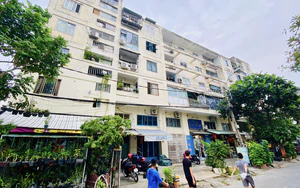

The project had total investment capital of more than US$100 million.
It was launched in 2015 and completed in 2017, targeting the high-end residential segment.
Current transaction prices are reported to range from some VND150 million to VND161.5 million ($5,760-6,210) per square meter.
Son Kim Land is part of the Son Kim ecosystem founded by businesswoman Nguyen Thi Son.
Corporate records show that Lau Hoong Chew, born in 1974 and a Malaysian national, currently serves as chairman of Son Kim Land’s board of directors and its legal representative.
What are the current rules for selling apartments to foreign buyers?
The Son Kim Land case highlights the importance of reporting requirements in Vietnam’s tightly regulated framework for foreign ownership of residential property.
A real estate expert in Ho Chi Minh City told Tuoi Tre (Youth) online newspaper that strict action against developers for late or missing reports should not be viewed merely as a matter of routine administrative paperwork.
The reporting requirement is closely linked to the authorities’ ability to monitor foreign ownership limits at individual projects.
Under current regulations, apartment projects offering units for sale to foreign individuals or organizations must be commercial housing projects included in the category approved by competent authorities.
They must also be located outside areas where restrictions are required for national defense and security, as identified through notifications from the Ministry of National Defense and the Ministry of Public Security.
In addition, the provincial-level People’s Committees must determine and publicly announce which housing projects are eligible for sale to foreign buyers on the localities’ official electronic portal and through the provincial housing management authorities.
Foreign ownership is also subject to a strict quota.
In an apartment building, including a building developed for mixed-use purposes, the total number of apartments that may be owned by foreign individuals and organizations cannot exceed 30 percent of the total number of residential apartments in that building.
Where an apartment complex consists of multiple units or blocks sharing a common podium, foreign individuals and organizations may own no more than 30 percent of the residential apartments in each individual unit or block.
Another important distinction concerns the duration of ownership.
While Vietnamese buyers may own apartments on a long-term basis where applicable, foreigners are generally subject to a maximum ownership period of 50 years under the relevant regulations.
The expert said the 30-percent ownership cap makes developers’ obligation to report transactions to the municipal or provincial Departments of Construction by both written notification and email a critical link in the regulatory system.
Without timely and complete data from developers, authorities would have difficulty determining the actual level of foreign ownership in each project.
This could create a risk of the statutory 30-percent ceiling being exceeded, undermining the mechanism designed to control foreign ownership in Vietnam’s residential property market.
Tieu Bac - Cong Trieu / Tuoi Tre News