
Vietnamese search-and-rescue dog unit honored with Venezuelan medal for earthquake mission
Venezuelan authorities have awarded a Medal of Merit to Vietnam’s search-and-rescue dog unit in recognition of its outstanding contributions to earthquake response efforts in the South American country.
Late on Friday local time, Senior Lieutenant General Nayade Solovenly Lockiby Belmontes, commander-in-chief of Venezuela's Militia Forces, visited the Vietnamese rescue contingent at an earthquake-hit site to commend its members for their dedication.
Venezuela's Acting President Delcy Rodriguez also visited the contingent's base camp to personally thank the team and present it with a letter of appreciation.
The 124-member Vietnamese rescue contingent was deployed to Venezuela on June 28 with a unit of eight search-and-rescue dogs and dozens of metric tons of relief supplies to support the country's response to the devastating double earthquakes that struck on June 24.
In recognition of the dog unit's outstanding contributions to post-earthquake recovery efforts, Acting President Rodriguez awarded it the Medal of Merit.
Xukip, which distinguished itself throughout the mission, was chosen to wear the medal on behalf of the unit.
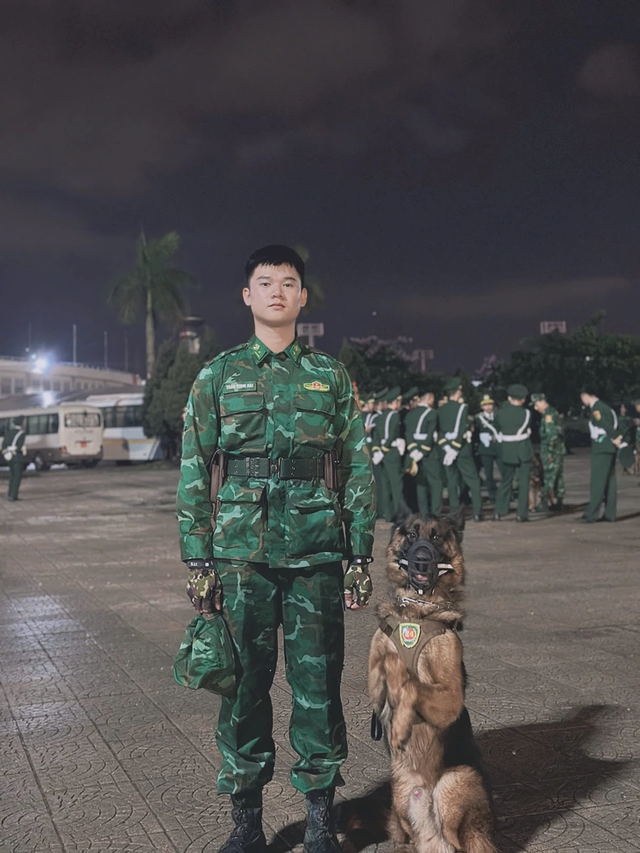
Search-and-rescue dog Xukip is seen beside a Vietnamese rescue officer during a mission.
According to a Tuoi Tre (Youth) newspaper source, the deployment marked Xukip's first overseas mission.
Throughout the mission, Xukip proved to be the Vietnamese team's standout search-and-rescue dog, consistently demonstrating exceptional scent-detection abilities and repeatedly locating human scent beneath the rubble.
Four-year-old Xukip completed a two-year intermediate training program at Vietnam's Border Guard Intermediate School No. 24 before taking part in rescue missions, field exercises, and further training under realistic operating conditions.
Before traveling to Venezuela, Xukip participated in rescue efforts in a village in Vietnam's Lao Cai Province, which was devastated by typhoon Yagi in September 2024.
In Venezuela, Xukip was joined by three other working dogs that had previously taken part in search-and-rescue missions following earthquakes in Turkey in 2023 and Myanmar in 2025.
The performance of such dogs reflects years of specialized training and preparation.
Training effective search-and-rescue dogs requires handlers to develop a thorough understanding of the animals' behavior, temperament, and mental state so they can adapt their training methods accordingly.
They also focus on building the dogs' discipline and physical endurance to prepare them for the demands of rescue operations.
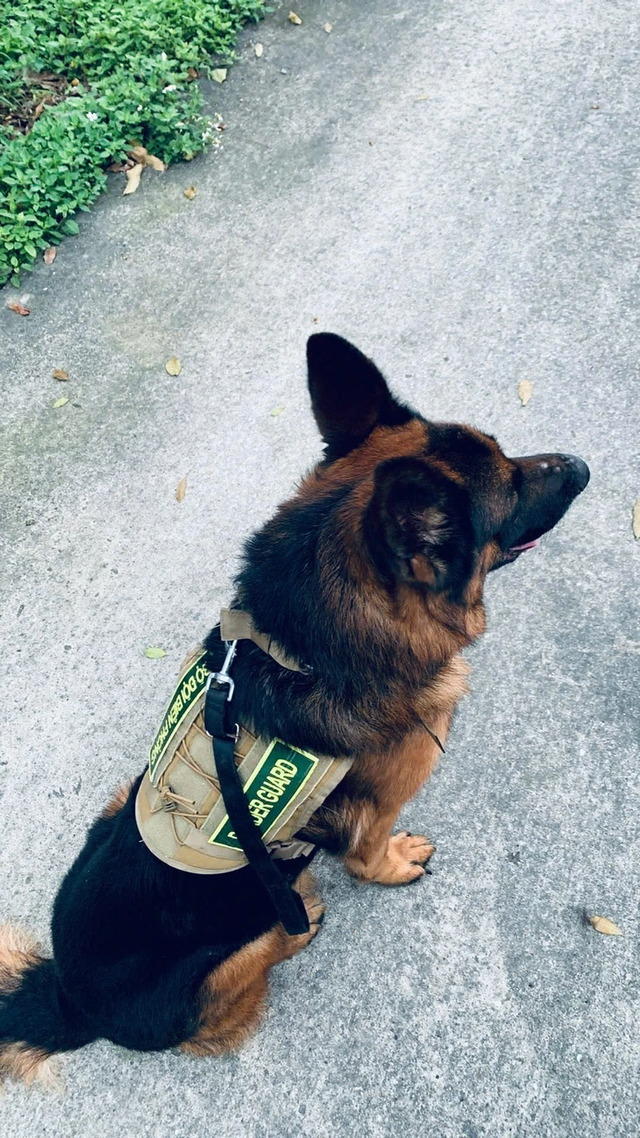
A photo of Xukip, a search-and-rescue dog trained in a two-year intermediate program in Vietnam
Under Vietnamese regulations, working dogs engaged in search-and-rescue missions, combat readiness duties, or training exercises are provided with an enhanced diet that includes fresh meat, canned meat, balut, and nutritional supplements.
The eight working dogs accompanying the Vietnamese rescue contingent are considered 'special weapons,' working alongside their handlers and making indispensable contributions to the mission's success.
To date, the Vietnamese rescue contingent, drawn from the Ministries of National Defense and Public Security, has recovered the bodies of 45 earthquake victims from the rubble in Venezuela.
In her letter of appreciation, Acting President Rodriguez said the Vietnamese working dogs' tireless scent-detection efforts have become a beacon of hope amid the rubble during the darkest hours after the earthquake, helping reunite countless families with their loved ones.
She said the Vietnamese rescue contingent had reminded Venezuelans that courage knows no borders or language barriers.
She added that the loyalty and instincts of the contingent's extraordinary canine companions could overcome even the greatest obstacles.
Vinh Tho – Nam Tran – Thanh Hien / Tuoi Tre News