
Vietnamese traveler explores world’s second-largest island in search of remote adventures
Driven by a passion for diving, hunting rare fish, and living off the grid, Vietnamese traveler Nguyen Ba Nguyen has made three trips to New Guinea to explore remote islands, survive like locals, and experience one of the world’s most biodiverse regions.
Nguyen, from Phu Quoc in An Giang Province, southern Vietnam, is known among friends for his unusual travel style.
Instead of visiting famous tourist destinations, he prefers isolated islands in the Pacific Ocean with little information available online.
For Nguyen, the less information he can find on Google, the more appealing the destination becomes.
He said he often scans Google Maps for islands located far away from towns or populated areas.
If he discovers a place with little to no online presence, he immediately becomes interested.
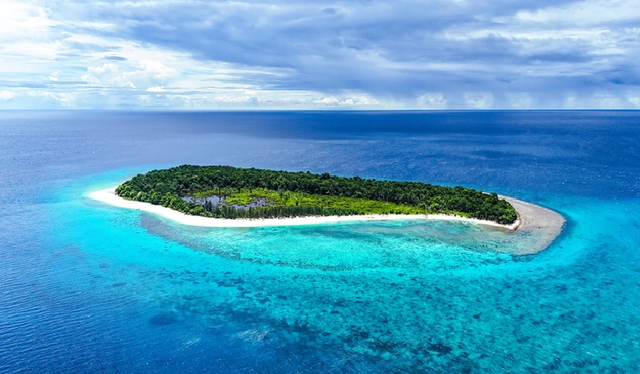
Nguyen Ba Nguyen is passionate about exploring remote and untouched islands across the Pacific Ocean. Photo: Supplied
Nguyen started scuba diving at 18 and now plans most trips around fishing and underwater exploration.
His journeys usually last about a month and involve traveling from one remote island to another, ranging from tiny villages with only a few houses to completely uninhabited islands.
Nguyen especially enjoys staying alone on deserted islands, where he spends his days diving for fish, lobsters, and coconut crabs to cook for himself.
At night, he sleeps in a hammock tied between coconut trees and watches the stars while reflecting on his travels.
During his latest trip to New Guinea at the end of 2025, Nguyen spent 10 out of 30 days exploring a chain of coral islands located around 200 kilometers from the nearest city.
The islands had no electricity, Internet access, markets, or restaurants, meaning he had to rely entirely on fishing and diving for food.
He described his daily routine as simple: eating three meals, diving, and enjoying the scenery.
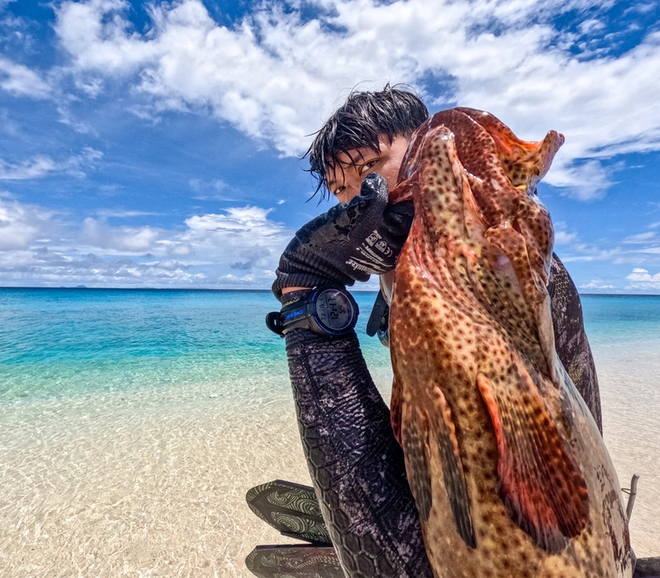
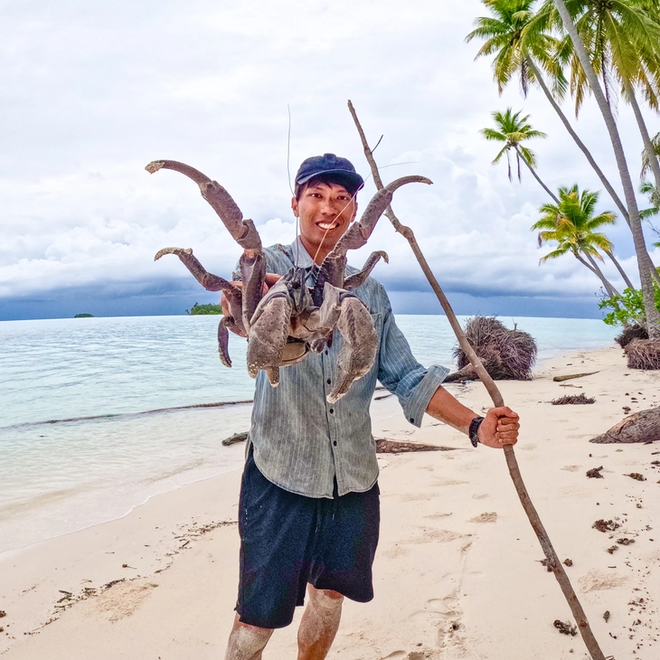
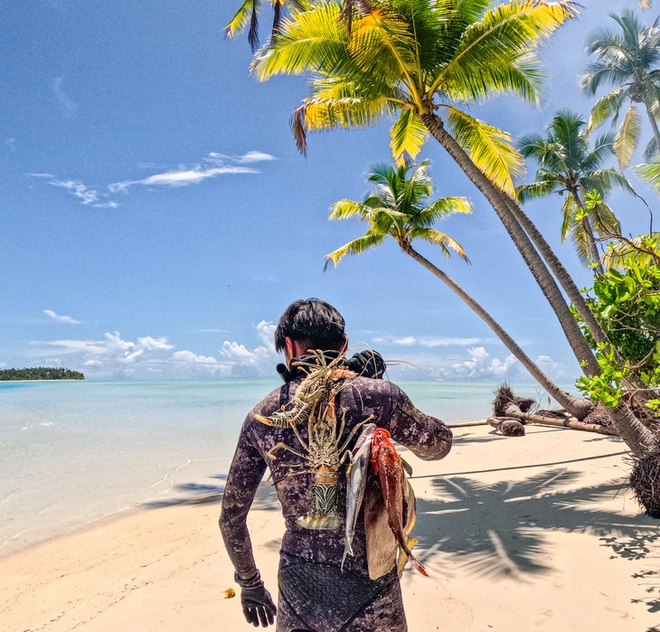
Giant grouper fish and coconut crabs were among the catches from his journey. Photo: Supplied
Nguyen said New Guinea fascinates him because of its extraordinary biodiversity and untouched natural environment.
The island, divided between Indonesia and Papua New Guinea, is the second-largest island in the world after Greenland.
Although it accounts for only about one percent of the Earth’s land area, New Guinea contains an estimated five to ten percent of the world’s biodiversity.
The island is also home to around 1,500 languages spoken among numerous indigenous tribes.
Nguyen estimated that even if he traveled to New Guinea once or twice every year for month-long trips, it would still take him at least 30 years to fully explore the island.
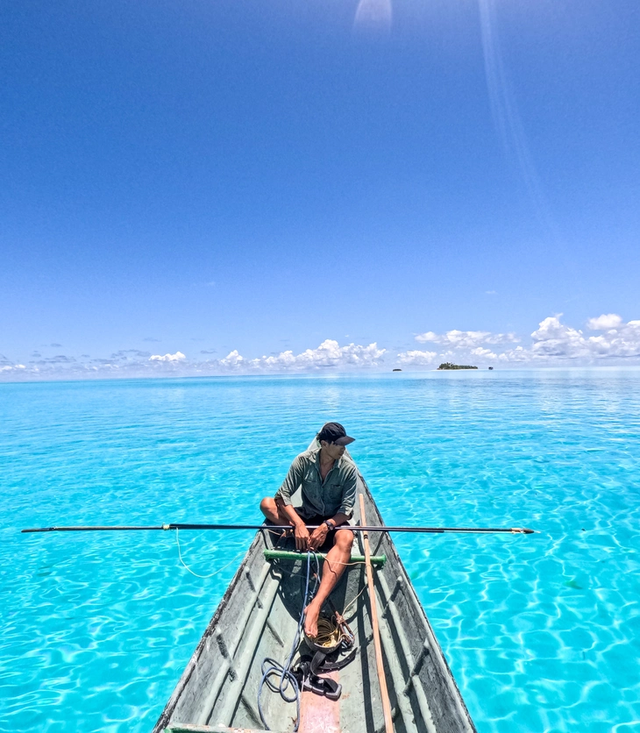
Nguyen Ba Nguyen spent time alone on a deserted island during his adventures. Photo: Supplied
According to him, the most valuable thing about New Guinea is that many of its islands remain largely untouched by modern technology.
Its coral reefs still maintain exceptional biodiversity, with dense populations of fish, crabs, and marine life considered among the richest in the world.
Nguyen also expressed fascination with the Pacific’s historical headhunting tribes.
He said he enjoyed listening to village elders telling stories about the region’s past, including tales of victories commemorated by caves displaying human skulls collected from defeated enemies decades or even centuries ago.
Each trip costs Nguyen between VND100 million (US$3,798) and VND150 million ($5,697).
Still, he joked that eating fresh lobsters and rare fish every day made the experience worth every penny.
Advice for Vietnamese tourists
Such journeys are only suitable for adventurous travelers with survival skills and a willingness to face risks in remote wilderness areas.
Vietnamese travelers can visit parts of New Guinea under Indonesian territory without a visa.
However, for certain remote forest regions and sensitive areas, visitors must obtain a Surat Jalan travel permit from local police stations.
Thanh Ha - Nguyen Hien / Tuoi Tre News
Link nội dung: https://news.tuoitre.vn/vietnamese-traveler-explores-worlds-second-largest-island-in-search-of-remote-adventures-103260512120329038.htm