
Vietnamese youth well positioned for global change: Dutch consul general
Raissa Marteaux, consul general of the Netherlands in Ho Chi Minh City, has said that Vietnamese youth stand out for their adaptability, strong drive to learn, and entrepreneurial energy, qualities that she believes position them well in an era of rapid global change.
In a recent interview with Vietnamese students at the Consulate General, Marteaux reflected on her international career and shared advice on the 'invisible skills' young people need to navigate a fast-changing world shaped by technology and globalization.
The conversation with student journalists was inspired by her visit to Tuoi Tre (Youth) newspaper in late March, when she toured hands-on media training classes and expressed interest in holding a professional exchange with students.
Following the visit, four students from Van Lang University and Nguyen Tat Thanh University in Ho Chi Minh City were selected to conduct the interview with the Dutch diplomat on April 14.
Adaptability, entrepreneurial spirit
Asked what qualities of Vietnamese youth impressed her the most, Marteaux said adaptability is perhaps the most striking.
“Vietnam has transformed very rapidly over the past decades,” she said.
“Growing up in such a fast-changing environment means young people are very comfortable with change.”
In some societies, she noted, rapid change can create anxiety, especially among older generations. But for many young Vietnamese people, adapting to new circumstances has become a natural skill.
“This means you learn quickly how to adjust your path when opportunities appear,” she said, adding that flexibility will be very valuable in the future.
Another quality she highlighted is the strong willingness to learn.
“The young people I have spoken to are hardworking and put a lot of effort into education,” Marteaux said, pointing out that many students pursue additional learning outside the classroom, such as online courses in English or professional skills.
She also noted a strong entrepreneurial energy among young people across the country.
“When you walk around, you can see how busy everyone is,” she said.
“Many young people run small businesses or side projects and try to turn opportunities into something meaningful.”
Marteaux said she is often impressed by creative business ideas she encounters in Vietnam, such as themed cafés designed for board games or Lego enthusiasts, concepts she rarely sees in Europe.
“These ideas create spaces for people with shared interests,” she said. “They show a willingness to build something new from small opportunities.”
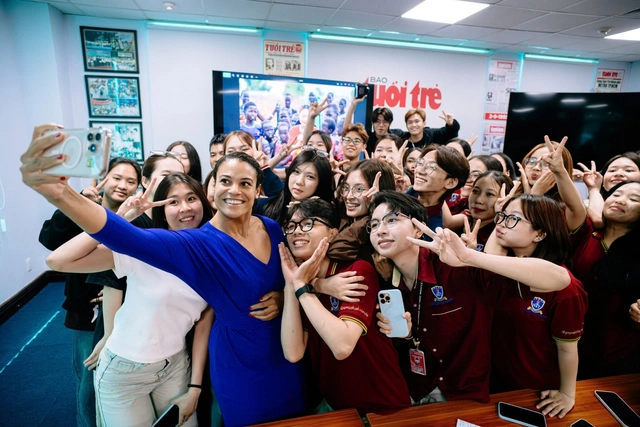
Consul General of the Netherlands Raissa Marteaux interacts with students from Nguyen Tat Thanh University during their practical studying at Tuoi Tre (Youth) newspaper in Ho Chi Minh City in March 2026. Photo: Thanh Hiep / Tuoi Tre
Value of ‘invisible skills’
Reflecting on her own life, Marteaux said her experiences studying and living abroad helped shape the skills she values most today.
She moved to Singapore at the age of 16 to study and lived there independently for two years.
“That experience really opened my eyes and changed my life,” she said.
According to Marteaux, international environments often help young people develop 'invisible skills,' abilities that are rarely taught directly in classrooms.
One of these is cultural intelligence, the ability to understand and navigate different cultural contexts.
“You learn how to read social signals, both visible and invisible,” she said.
“It’s not something you learn from books. It comes from experience.”
Exposure to different education systems and perspectives also helps build multidimensional thinking.
“When you encounter different approaches to learning and problem-solving, you begin to question assumptions,” she said. “You realize there isn’t always just one correct answer.”
Living abroad also strengthens independence and confidence, she added.
“When you have to solve problems on your own, you learn how to move forward even when you don’t fully understand everything yet.”
At the same time, international experiences often deepen people’s awareness of their own identity.
“I have never felt more Dutch than when I was abroad,” Marteaux said, noting that being outside one’s home culture often makes personal values and habits more visible.
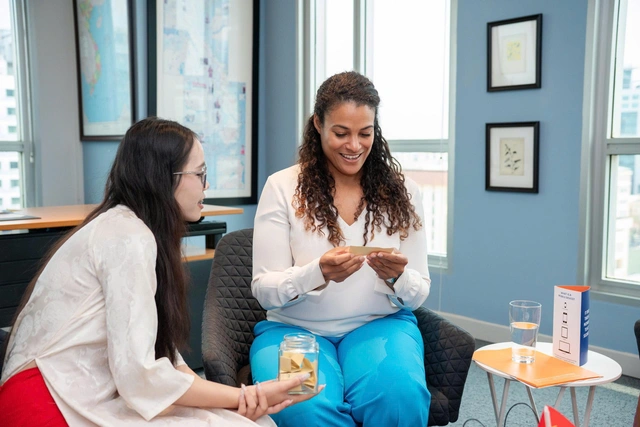
Raissa Marteaux found it quite fun answering questions drawn at random from a 'mystery bag' for the first time. Photo: Vo The Dat
Human skills in age of AI
With artificial intelligence transforming industries and reshaping the job market, many students worry about how quickly things are changing.
Marteaux acknowledged these concerns but emphasized that certain human abilities will remain essential.
“I grew up in a time when we didn’t even have computers at home,” she said. “Computers were huge machines that filled entire rooms. Today everything fits in the palm of our hand.”
While AI will likely replace tasks that rely on memorization or repetitive processes, she said human skills such as creativity and judgment will become even more valuable.
“For example, I studied law. Memorizing legal texts is not very useful,” she said. “What matters is understanding how to apply them, and sometimes applying them creatively.”
Creativity, she explained, often lies in seeing connections or possibilities that others might miss.
“AI can generate information, but humans give meaning to that information,” she said.
Another crucial skill is judgment, the ability to evaluate information and make decisions.
“AI can support decision-making, but it cannot truly make decisions,” Marteaux said.
She also encouraged students to focus on learning how to ask better questions.
“If you learn how to ask the right questions, you can adapt no matter how the job market changes.”
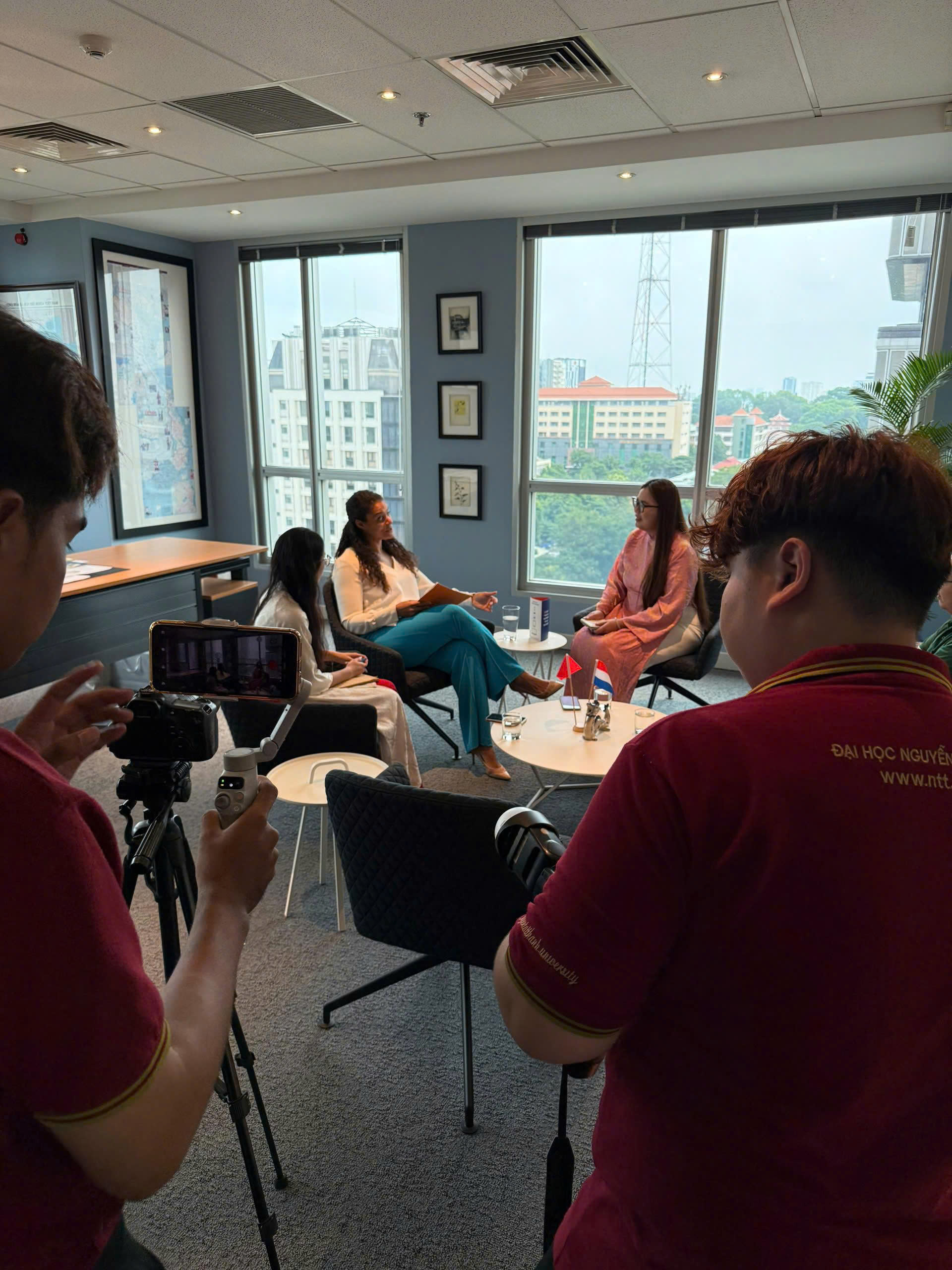
Students from Van Lang University and Nguyen Tat Thanh University conduct the interview with Dutch Consul General Raissa Marteaux. Photo: Anne Bui
Digital habits, focus
Marteaux also addressed the growing influence of digital technology on young people’s daily lives.
The challenge of excessive screen time, she said, is not limited to one country.
“I think this is a global issue,” she said.
One important priority is protecting young users, who are often exposed to addictive digital content from an early age.
Children today gain access to smartphones much earlier than previous generations and may encounter algorithms designed to keep them online for longer periods.
“That is why digital literacy is so important,” she said.
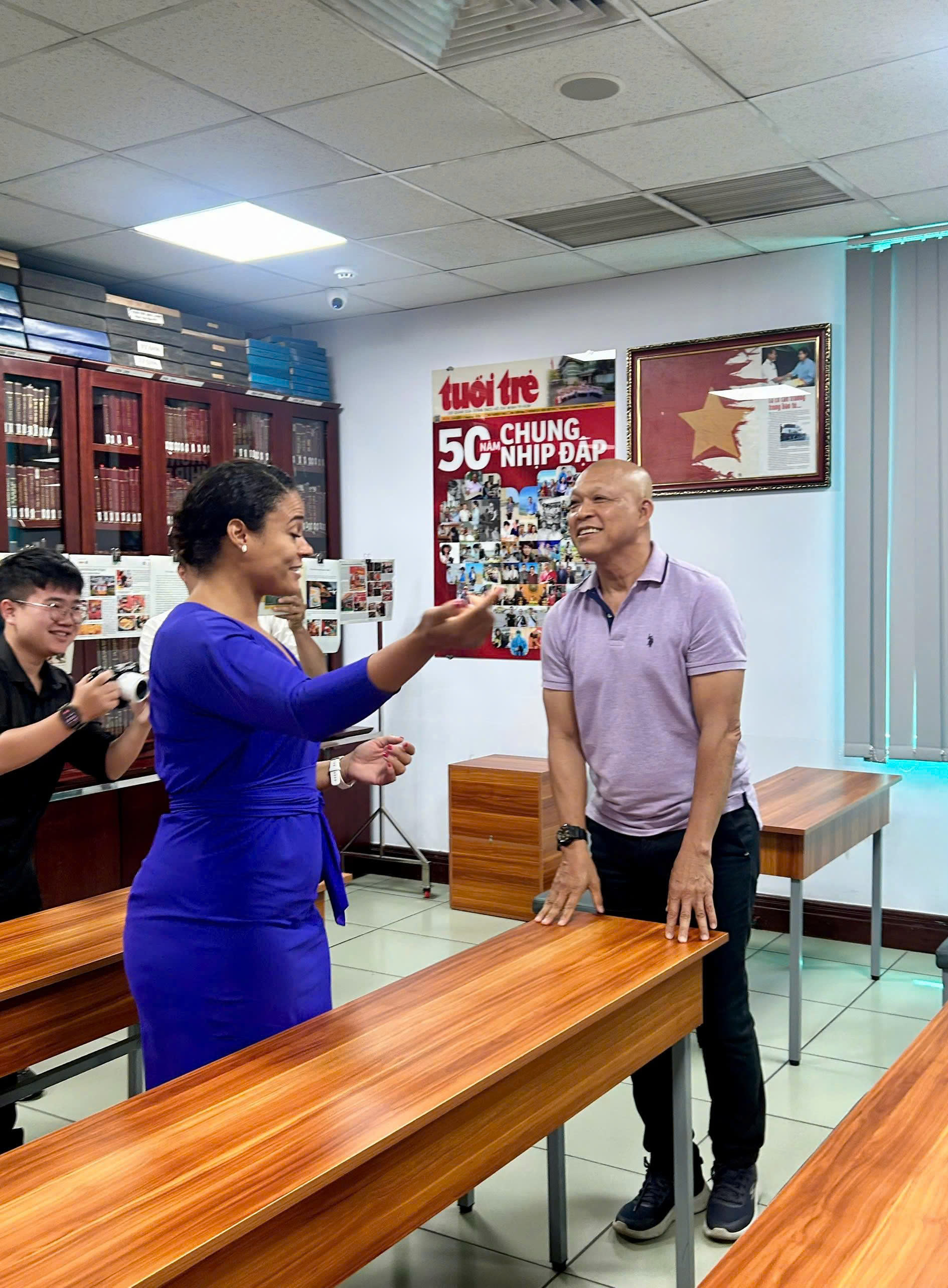
Raissa Marteaux speaks with photographer Nguyen A during a photojournalism training session for Nguyen Tat Thanh University students at Tuoi Tre (Youth) newspaper in Ho Chi Minh City in March 2026. Photo: Dinh Thi Minh Ngoc
While many students already know how to use digital tools, Marteaux believes education should focus more on helping them understand how algorithms shape the information they see and how to evaluate it critically.
Managing attention is another important skill.
“Phones are designed to capture your attention,” she said. “Notifications constantly interrupt your focus.”
On a personal level, she suggested several simple habits, such as limiting notifications or avoiding keeping phones nearby during sleep.
She also warned about the psychological impact of social comparison on social media.
“Most of what we see online is filtered,” Marteaux said. “You only see the best moments, not the full reality.”
“Comparing your everyday life to those curated moments is simply not healthy.”
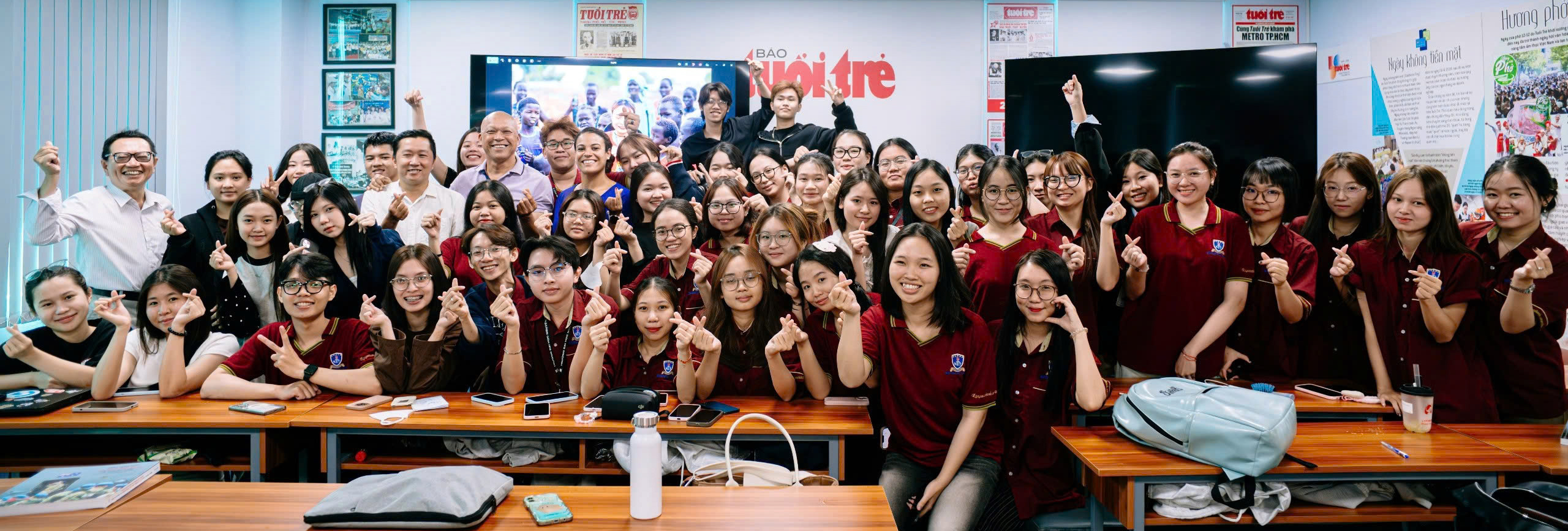
Dutch Consul General Raissa Marteaux interacts with students from Nguyen Tat Thanh University currently doing hands-on training at Tuoi Tre (Youth) newspaper in Ho Chi Minh City in March 2026. Photo: Thanh Hiep / Tuoi Tre
Thu Ngan - Nhu Quynh (Students of Public Relations - Communications, Van Lang University)
Link nội dung: https://news.tuoitre.vn/vietnamese-youth-well-positioned-for-global-change-dutch-consul-general-103260422121158257.htm