
Vietnam’s 200-year-old tile village keeps tradition alive amid modern challenges
Nestled between steep limestone mountains in Vietnam’s northern province of Cao Bang, Lung Ri Village has spent more than 200 years producing traditional yin-yang roof tiles, a craft that continues to attract buyers from across the country despite rising costs and a shrinking workforce.
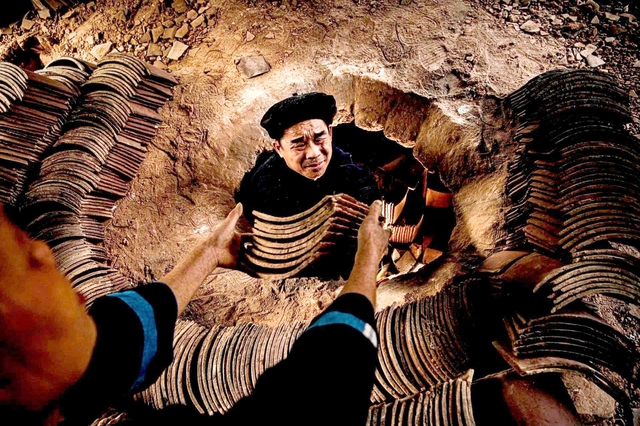
A craftsman lifts traditional yin-yang roof tiles in Lung Ri Village, Cao Bang Province, northern Vietnam. Photo: Tran Nhan Quyen
Rows of weathered gray-tiled stilt houses line the village, where kilns burn year-round and artisans from the Nung An ethnic group transform clay into curved tiles using techniques passed down through generations.
The craft remains one of the village’s main sources of income.
Lung Ri tiles are now used not only on traditional homes but also on villas, resorts, and architectural projects in cities including Hanoi, Hai Phong, Ha Long, and Ho Chi Minh City.
Artisan Mac Van Hoa, who learned the trade from his father and grandfather, said the village occasionally welcomes visitors from countries including France, Germany, Belgium, Britain, and the Netherlands who try their hand at making tiles and help introduce the craft to a wider audience.
Producing the tiles requires a lengthy process that begins with selecting suitable clay, which is soaked, kneaded, and carefully cleaned of stones before being shaped by hand on wooden molds and dried before firing.
Controlling the interaction of earth, water, wind, and fire is essential, as even small imperfections can cause tiles to crack during drying or firing.
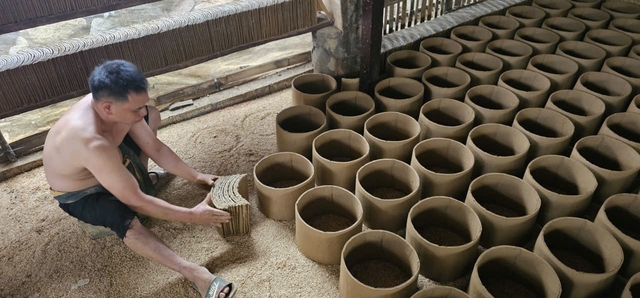
Tile maker Mac Van Hoa sits beside traditional roof tiles drying in Lung Ri Village, Cao Bang Province, northern Vietnam. Photo: Thai Loc
The village’s tile-making tradition dates back more than two centuries and remains closely tied to local culture, with the yin-yang tiles regarded as symbols of harmony between opposing elements and valued for keeping homes cool in summer and warm in winter.
Despite its reputation, the trade faces mounting challenges.
Tile maker Lam Van Bach said high-quality clay deposits near the village have largely been exhausted, forcing kiln owners to source raw materials from locations 40-50 kilometers away.
Fuel costs have also increased, with each kiln requiring around 20 cubic meters of firewood costing roughly VND14-15 million (US$532-570).
As a result, the number of households engaged in the trade has fallen to about 22 from more than 40 previously.
Most families continue to combine tile production with farming to support their livelihoods, while monthly earnings for a full-time tile worker average about VND5-6 million ($190-228) before expenses.
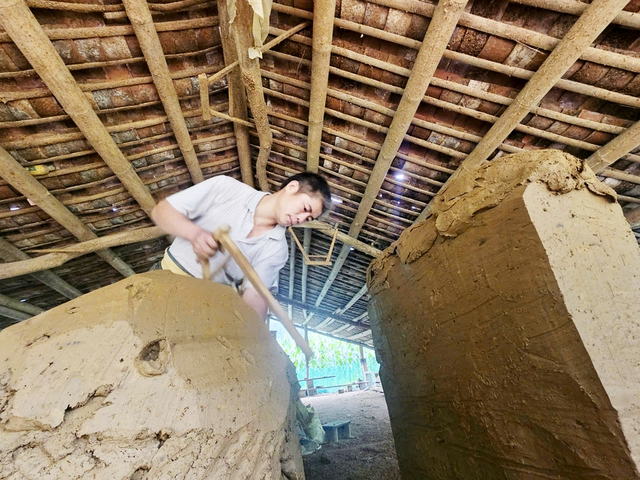
A worker filters clay, a key step in the production of traditional yin-yang roof tiles, in Lung Ri Village, Cao Bang Province, northern Vietnam. Photo: Thai Loc
Even so, Lung Ri’s products continue to find buyers nationwide.
Local craftsmen also travel to construction sites across Vietnam to install the tiles, bringing specialized roofing techniques that require about 70-80 overlapping tiles per square meter.
For villagers such as Hoa and Bach, seeing Lung Ri tiles used on projects far from Cao Bang offers reassurance that the craft remains relevant in modern Vietnam.
Each tile, they say, carries not only the imprint of clay and fire but also the heritage of generations who have preserved the village’s distinctive tradition.
“Sometimes we hear that our village’s tiles are being used in places like Ho Chi Minh City, Dong Nai, Hanoi or Ha Long,” Hoa said.
“They’re used on house roofs, villa gates, and decorative features in luxury buildings, and that makes us proud.
“Lung Ri tiles, a traditional product of our people, are being welcomed in many places.”
Bao Anh - Thai Loc / Tuoi Tre News
Link nội dung: https://news.tuoitre.vn/vietnams-200-year-old-tile-village-keeps-tradition-alive-amid-modern-challenges-103260616162941754.htm