
Vietnam's EV charging boom creates dynamic pricing maze
Timing is everything when it comes to where and when electric vehilce (EV) drivers plug in, as the wrong hour can turn a routine charge into a costly mistake. But that reality could soon shift as more automakers begin sharing their charging networks in Vietnam.
A survey of several charging networks in Ho Chi Minh City shows that operators use different pricing models.
Some charge a fixed rate, while others set separate prices for off-peak, regular and peak hours.
EV charging rates vary by time of day
For ride-hailing and taxi drivers, timing a charge right directly dictates daily profit margins.
At TMT Egreen, for instance, rates effective since July 15 stand at VND3,651 ($0.14) per kWh during off-peak hours, VND4,984 ($0.19) during normal hours, and VND7,436 ($0.28) during peak hours, including tax.
A ride-hailing driver operating a BYD M6 equipped with a 55.4 kWh battery calculated that a full charge ranges from roughly VND202,000 ($7.67) off-peak to nearly VND412,000 ($15.64) during peak hours.
"Plugging in at the wrong time can add over VND210,000 [$8] to a single charge, even before accounting for power loss or parking fees," he said.
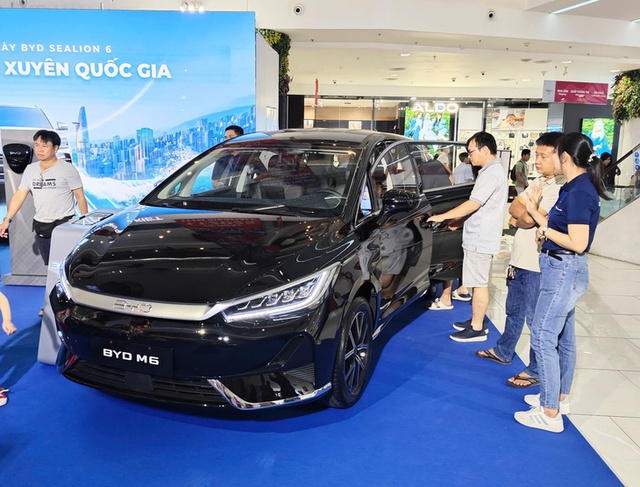
Customers examine a BYD M6 electric vehicle in Ho Chi Minh City. Photo: Cong Trung / Tuoi Tre
Other charging networks set their own rates.
Bitcharge stations at BYD Bitcar dealerships charge VND4,212-6,048 ($0.16-0.23) per kWh depending on the time of day, equivalent to about VND233,000-335,000 ($8.85-12.72) for the battery capacity of a BYD M6.
Esky, meanwhile, lists a rate of around VND7,000 ($0.27) per kWh, putting the cost of charging the equivalent of an M6 battery at nearly VND388,000 ($14.73), excluding customers eligible for promotional rates.
V-Green, which primarily serves the VinFast ecosystem, maintains a rate of VND3,858 ($0.15) per kWh. Drivers of the domestic EV brand also enjoy free charging through 2029.
Industry insiders note that this price gap does not stem solely from electricity input costs. Operators must also factor in site rental, equipment depreciation, maintenance, and revenue-sharing arrangements with location partners.
Charging networks move toward infrastructure sharing
Vietnam's EV charging landscape is evolving rapidly from siloed networks toward cross-brand interoperability.
Instead of building proprietary infrastructure from scratch, a growing number of automakers are opening their charging points to rival brands. Ford Vietnam and Tasco Auto recently inked a reciprocal charging agreement, allowing Ford owners to plug in at dealerships of Tasco-distributed brands, including Geely, Lynk & Co, Volvo, Zeekr, and Lotus, and vice versa.
Dealership networks for Omoda, Jaecoo, and Wuling have similarly opened their doors to third-party vehicles. Meanwhile, BYD Auto Vietnam has teamed up with Futa EV Power to tap into Phuong Trang Group's expansive transit ecosystem, exploring charging installations at bus terminals, parking lots, and highway rest stops.
Ride-hailing giant Grab has also stepped into the arena by investing in Eboost, a network focused on residential complexes, office towers, and malls. This partnership leverages driver movement data to pinpoint high-demand locations for future station deployment.
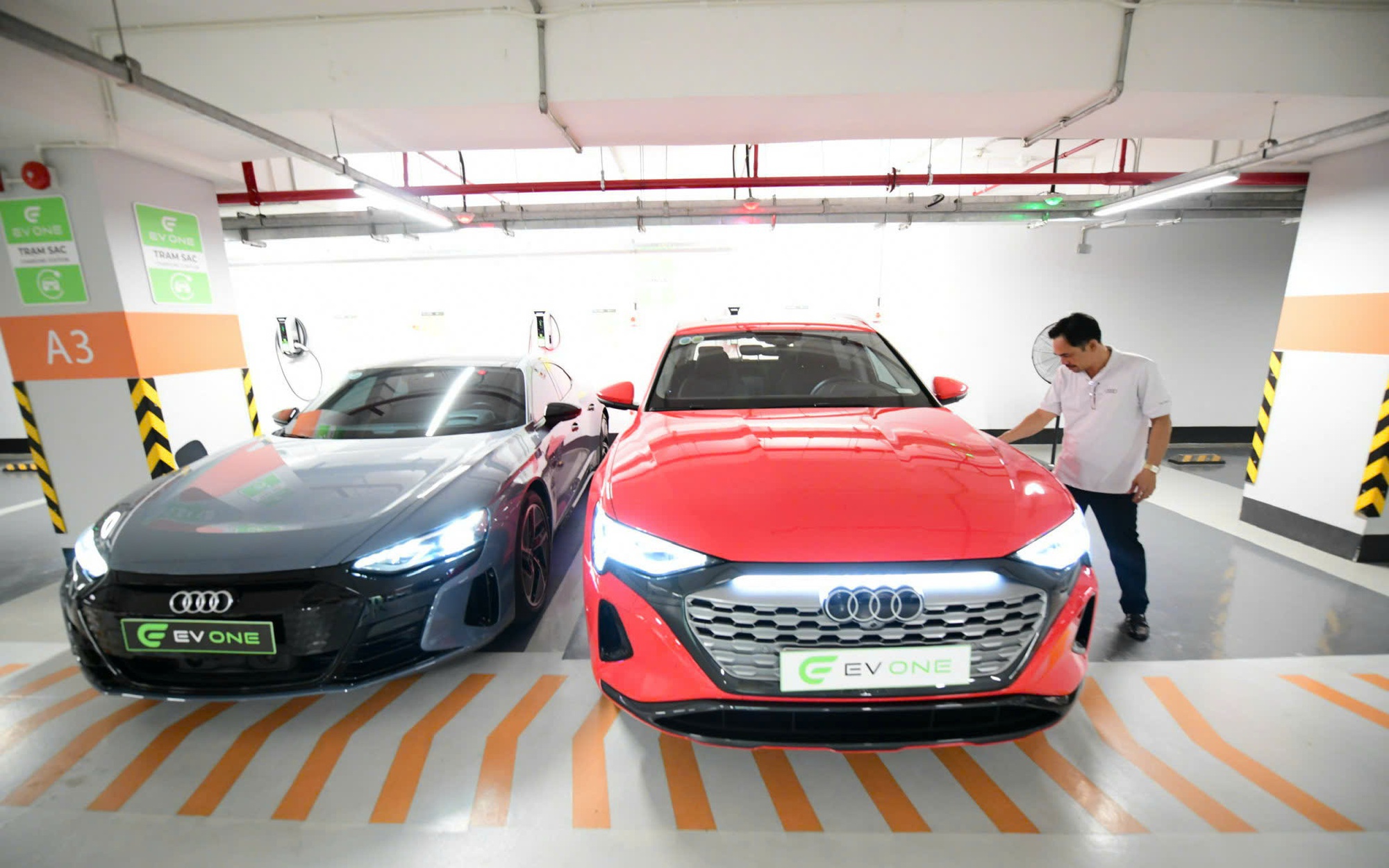
Nguyen Quang Khai, CEO of Phu My Ford, noted that Vietnamese consumers have moved past the early adoption phase, making now the optimal time to scale charging infrastructure.
A dense, reliable, and convenient network, he stressed, will be the ultimate catalyst for driving mainstream EV sales.
Shared charging networks among automakers and dealers are seen as a natural evolution, allowing brands to capitalize on mutual strengths.
For drivers, the immediate pay-off is clear: expanded access with less range anxiety and reduced wait times.
Beyond energy sales, charging hubs are increasingly viewed as commercial anchors.
Tracy Luong, an investor in the EV One brand, emphasized that stations can turn idle dwell time into consumer spending. While waiting for a charge, drivers frequently patronize nearby restaurants, hotels, and retail centers, unlocking new revenue streams for property developers.
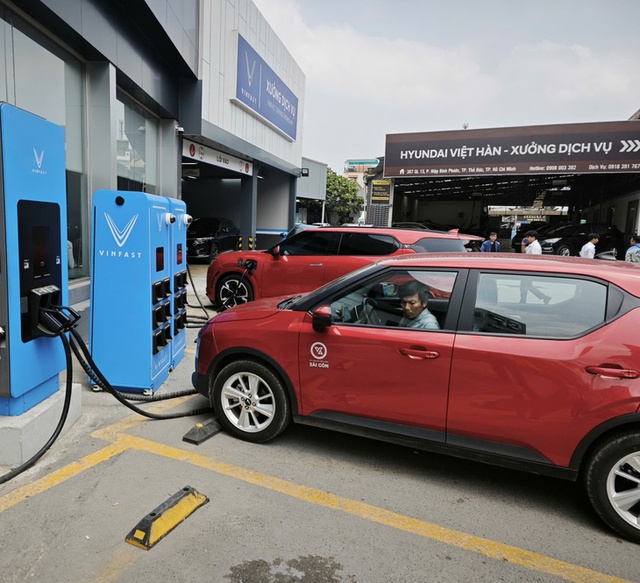
V-Green’s nationwide charging network primarily serves VinFast electric vehicles in Vietnam. Photo: Cong Trung / Tuoi Tre
VinFast, however, is charting a distinctly different course. Backed by a dominant market share and a booming green transportation ecosystem, the Vietnamese automaker continues to treat its proprietary charging grid as a core competitive moat, with no immediate plans to open access to rival brands.
Are EV charging stations a profitable bet?
Building an EV charging station is a capital-intensive play. A direct current fast-charging station with mutilple charging ports can cost billions of Vietnamese dong, according to Phan Duy, technical director of Tram EV. A single fast charger carries a price tag of over VND200 million ($7,600), with transformer upgrades adding another VND400-800 million ($15,200-$30,400) where grid capacity falls short.
Profitability hinges on utilization. Stations plagued by off-peak crowding, low weekday usage, or unfavorable revenue-sharing deals with site owners will struggle to break even.
However, charging networks offer a distinct cash-flow edge over traditional gas stations. As automotive expert Tran Tan Trung highlights, investors avoid heavy inventory lock-up in fuel. Electricity is billed periodically, while customers pay instantly, making strategic site selection and steady traffic the ultimate drivers of profitability.
Ngoc Nguyen - Cong Trung / Tuoi Tre News
Link nội dung: https://news.tuoitre.vn/vietnams-ev-charging-boom-creates-dynamic-pricing-maze-103260722143451717.htm