
Vietnam’s foreign ministry sets sights on digital ministry, diplomats
Vietnam’s Ministry of Foreign Affairs is accelerating its digital transformation agenda, aiming to build a fully integrated ‘Digital Ministry of Foreign Affairs’ while preparing a new generation of ‘digital diplomats’ equipped to navigate an increasingly technology-driven world.
Deputy Minister of Foreign Affairs Le Anh Tuan told reporters that the ministry views digital transformation as far more than the adoption of new technologies.
Instead, it represents a comprehensive overhaul of governance, strategic policymaking, diplomatic operations, and public services for citizens and businesses.
The ministry has implemented its digital transformation agenda in a coordinated manner across multiple areas, achieving significant initial results.
The ministry has incorporated science, technology, innovation, and digital transformation into Vietnam’s high-level diplomatic engagements and international cooperation agenda.
Particular emphasis has been placed on strategic technologies such as artificial intelligence (AI), semiconductors, digital technologies, digital infrastructure, and the development of high-quality human resources.
Vietnamese diplomatic missions abroad have also taken on expanded roles by monitoring global technological trends, participating in international forums on technology governance and digital transformation, and connecting overseas Vietnamese experts, businesses, and professionals with domestic innovation initiatives.
These efforts are intended to attract knowledge, technology, and investment that can contribute to the country’s long-term development.
According to the deputy minister, the ministry is gradually integrating AI into its professional operations while adhering to principles of safety and effectiveness.
The ministry has shifted from AI research to pilot deployment in report preparation and information processing.
The ministry is also exploring broader AI applications in information aggregation, classification, search, translation, knowledge management, and document processing.
Tuan emphasized that AI remains a productivity tool rather than a replacement for human judgment.
“On issues involving significant political, legal, and strategic considerations, humans will continue to make the final decisions and bear the ultimate responsibility,” he said.
The ministry has also achieved substantial progress in digitizing its internal administration.
All administrative procedures under the ministry’s domestic jurisdiction, along with several services provided overseas, are now available online.
More than 90,000 administrative applications are processed annually, while over 90 percent of non-classified official documents are handled electronically.
Digital systems for document management, task monitoring, treaty administration, international agreements, and specialized databases are gradually forming an integrated foreign affairs data ecosystem, strengthening leadership, coordination, and policy advisory capabilities.
In addition, the ministry and Vietnam’s overseas representative offices have significantly expanded their presence across digital platforms, creating an official, multi-platform communications network for external affairs.
Deputy Minister Tuan said the ministry intends to become a pioneer in ‘technology diplomacy.’
Future efforts will focus on establishing international cooperation frameworks in innovation, digital transformation, AI, quantum technologies, strategic minerals, and other emerging sectors.
It is vital to seek stronger links with leading global innovation hubs to support domestic socio-economic growth.
Vietnamese diplomatic missions overseas are expected to serve as key nodes, identifying opportunities to attract high-quality investment, advanced and green technologies, and world-class research and development centers to Vietnam.
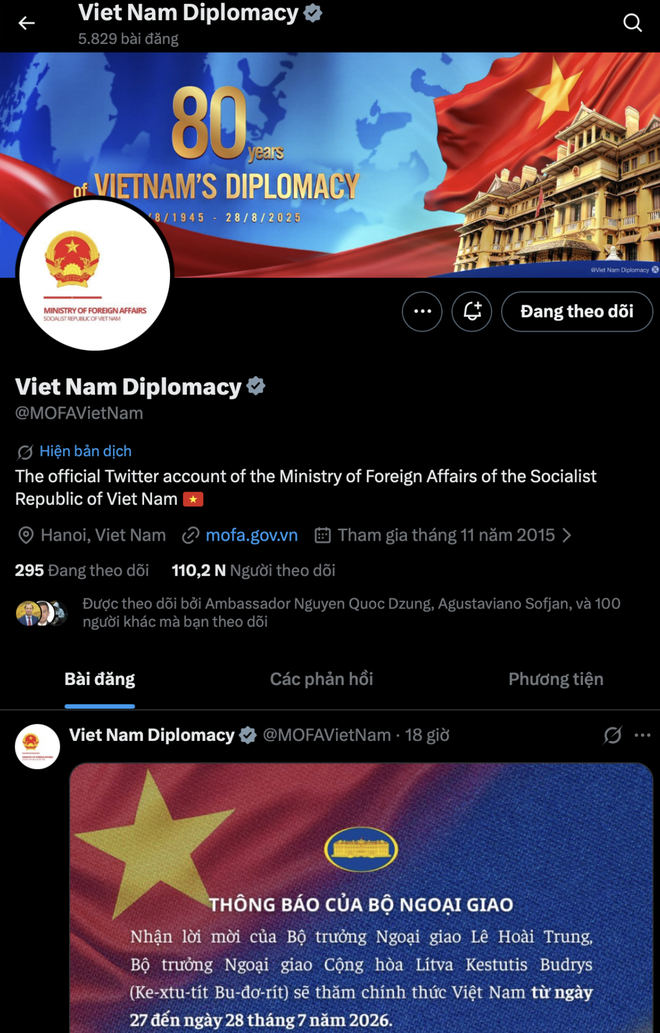
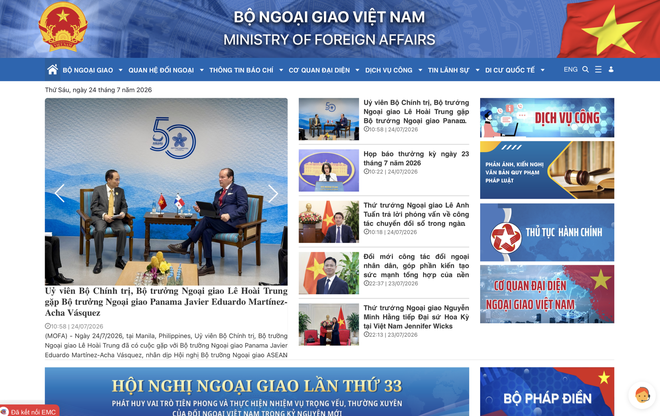
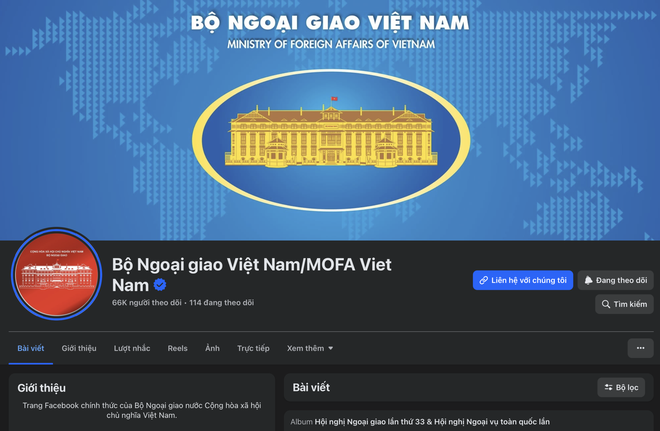
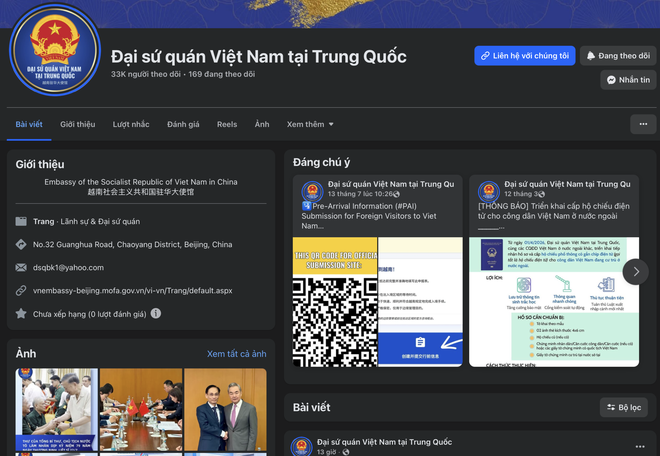
Screenshots of the social media accounts of Vietnam’s Ministry of Foreign Affairs and several Vietnamese diplomatic missions abroad
Building digital foreign ministry
The ministry's long-term ambition is to establish a fully digital foreign affairs system by digitizing workflows, expanding data infrastructure, utilizing big data analytics, and advancing digital diplomacy, digital citizenship, and digital communications.
The ministry believes these capabilities will strengthen strategic analysis, forecasting, and policymaking while modernizing Vietnam’s international communications through global digital platforms.
The broader goal is to project an image of Vietnam as a resilient, innovative nation and reinforce international strategic trust.
Online public services, particularly in consular affairs and citizen protection, will also undergo major upgrades to improve transparency, efficiency, and accessibility.
One of the ministry’s most ambitious initiatives is the creation of an AI ecosystem for Vietnam’s diplomatic sector by 2030, with a long-term vision to 2045.
The plan will be accompanied by continued improvements to legal frameworks, digital infrastructure, shared platforms, foreign affairs databases, cybersecurity mechanisms, data sovereignty protections, and AI risk management.
Seeking voice in global AI governance, preparing generation of digital diplomats
As the Fourth Industrial Revolution reshapes global governance, Tuan said that Vietnam should move beyond being a technology adopter and actively participate in shaping international rules.
Vietnamese diplomats will engage more actively in bilateral and multilateral forums to help develop global standards on AI, cybersecurity, cross-border data governance, and the digital economy.
While technology will play an increasingly important role, people remain the decisive factor in diplomacy, he stressed.
Therefore, the ministry plans to comprehensively reform its training programs to cultivate a new generation of ‘digital diplomats.’
Future diplomats will require not only strong political judgment and professional expertise but also technological literacy, adaptability, and the ability to effectively use digital tools in research, negotiations, and external communications.
The deep integration of science, technology, innovation, and digital transformation will serve as a critical driver enabling Vietnam’s diplomatic sector to play a leading role in the country’s expanding international integration and global engagement, he said.
Tieu Bac - Duy Linh / Tuoi Tre News
Link nội dung: https://news.tuoitre.vn/vietnams-foreign-ministry-sets-sights-on-digital-ministry-diplomats-103260724171059135.htm