
Vietnam’s former food safety head sentenced to 15 years in prison, husband jailed for 5 years in bribery case
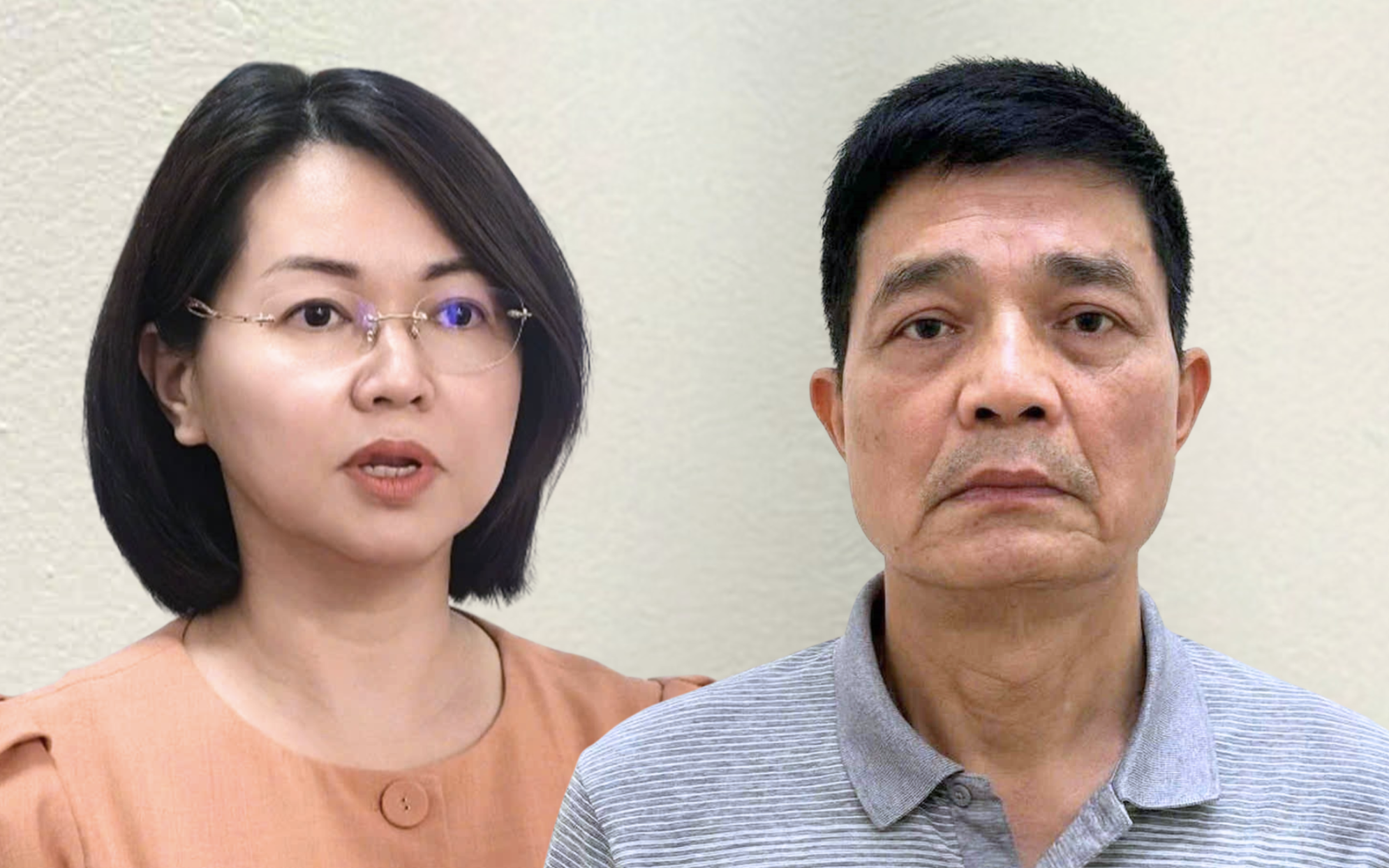
The Hanoi People’s Court on Wednesday handed down a 15-year prison sentence to Tran Viet Nga, former head of the Vietnam Food Safety Authority under the Ministry of Health, for her responsibility for VND12.7 billion (US$482,560) in bribes taken by officials under her authority, while sentencing her husband, Le Hoang, former deputy director of the Department of Disease Prevention under the ministry, to five years in prison.
As the verdict was read out, Nga collapsed to her knees and burst into tears upon hearing the 15-year sentence.
According to the judgment, of the total amount of bribery money, Nga personally gained about VND8 billion ($304,060).
Meanwhile, her husband was found to have pocketed nearly VND1 billion ($37,970) from the total VND7 billion ($266,420) in bribes received by specialists.
Nga received the second-heaviest sentence among the 55 defendants in the case.
The harshest sentence, 20 years in prison, was imposed on Nguyen Thanh Phong, another former head of the Vietnam Food Safety Authority.
The court determined that Nga acted as a mastermind and ringleader, bearing criminal responsibility for a total of VND12.7 billion in bribes received by specialists, while Phong was held accountable for nearly VND95 billion ($3.6 million) taken by his subordinates.
The sentences imposed on Nga and her husband exceeded the prosecutors’ earlier recommendations.
The procuracy had proposed a prison term of 12-13 years for Nga and two to three years for Hoang.
In announcing the verdict, the panel of judges described the offenses committed by the group of former leaders and specialists of the Vietnam Food Safety Authority as ‘particularly serious,’ requiring severe punishment to ensure deterrence.
Systematic bribery operation
According to the indictment, while serving as deputy head and later head of the Vietnam Food Safety Authority, Nga frequently obstructed businesses in order to force them to pay extra fees during the appraisal of dossiers and the issuance of certificates approving advertising content for health supplements.
Initially, Nga signed off on applications within the required time limits.
Later, however, she deliberately allowed dossiers to lapse without approval or returned them with vague, unconvincing reasons that were inconsistent with advertising regulations.
As a result, company executives contacted or visited the authority’s specialists to inquire about delays and seek guidance on amending their applications.
The specialists would then quietly inform them that to receive favorable treatment, they had to follow ‘Nga’s mechanism,’ paying VND4-8 million ($152-304) per dossier.
For each approved dossier, the specialists were required to pass VND2 million ($76) to Nga.
During questioning at trial, Nga claimed that when she was in charge of advertising dossier approvals, she had ‘heard colleagues talking about receiving money’ and described it as ‘a common situation in other divisions.’
She later acknowledged that specialists were taking VND4-8 million per dossier, depending on complexity.
Prosecutors countered that this practice arose only after Nga established the fee mechanism, under which specialists collected money from businesses and then transferred a portion to her.
Specialist Tran Thi Thu Lieu testified that Nga had summoned her to say all divisions had similar mechanisms and asked whether leadership would receive VND2 million for each signed dossier.
Although Nga did not say it explicitly, Lieu understood it as a directive rather than a suggestion.
Investigators concluded that following Nga’s instructions, specialists collected a total of VND12.7 billion in bribes from companies seeking expedited approval of health supplement advertisements.
The proceeds were divided according to an agreed scheme, with Nga receiving VND2-3.5 million ($76-133) per licensed dossier.
Stopping only after seeing other bribery cases
Both Nga and her husband hold doctoral degrees.
Nga was arrested just 11 months after being appointed head of the Food Safety Authority.
Her husband was also detained while serving as deputy director of the Department of Disease Prevention.
Hoang’s bribery offenses were determined to have occurred while he was head of a division at the Food Safety Authority.
At trial, he testified that following instructions from then-director Nguyen Thanh Phong, he convened a meeting to agree that the entire division would accept money, though no specific sharing ratio was set.
He claimed he told staff to process dossiers properly and not demand gifts, but to accept money if companies expressed gratitude, assigning another person to act as the collection point.
Questioned by prosecutors about whether he had organized meetings to discuss the receipt and division of money, Hoang denied issuing instructions, saying specialist Hoang Thanh Ha merely reported to him about businesses giving ‘thank-you money.’
He said he told Ha to continue operating under the old mechanism without further guidance.
Hoang said that since December 2022, he had instructed subordinates to stop accepting such payments.
This decision was prompted by his awareness of a growing number of bribery cases being uncovered at the time, he explained.
The court found that Hoang had coordinated with his deputy to allow specialists to collect money from businesses during the appraisal of product registration dossiers.
The money was gathered and passed to Hoang for delivery to senior leadership.
He was held responsible for nearly VND7 billion ($266,420) in bribes received by specialists, of which he personally misappropriated close to VND1 billion ($38,060).
In their final statements, both husband and wife broke down in tears, expressing remorse.
Tieu Bac - Than Hoang / Tuoi Tre News