
Vietnam's labor market dilemma: Employers struggle to hire, millions of youth remain out of work
Vietnamese businesses are struggling to fill vacancies despite offering salaries of up to VND48 million (US$1,860) a month, while 1.6 million young people remain outside employment, education, and training.
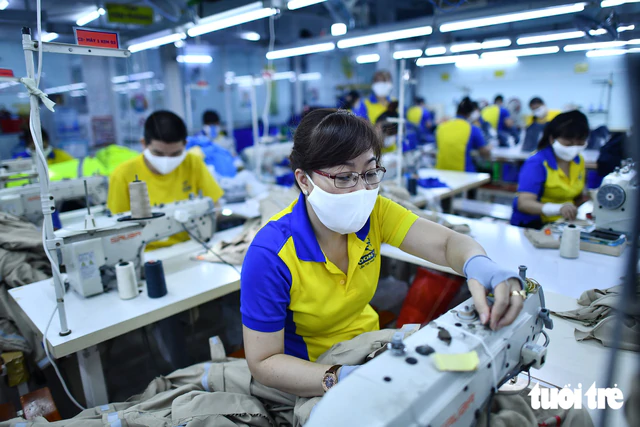
Suh Lim Vina Co., Ltd., a garment company based in Nghia Thanh Commune, Ho Chi Minh City, is recruiting sales staff with monthly salaries of VND19-20 million ($736-775), without requiring formal qualifications. Photo: Cong Trieu / Tuoi Tre
The mismatch is particularly evident as companies increasingly seek experienced, job-ready workers, while young people face shrinking entry-level opportunities and struggle to gain the practical skills needed to enter the workforce.
Firms struggle to recruit despite attractive salaries
Recruitment demand remains strong across multiple sectors, with employers offering competitive salaries for both skilled and unskilled positions.
According to the Ho Chi Minh City Employment Service Center and online job platforms, a construction company in Can Gio is offering monthly salaries of VND14-48 million ($542-1,860).
Team leaders can earn VND35-48 million ($1,356-1,860), skilled construction workers VND16-22 million ($620-852), and general laborers VND14 million ($542).
Other vacancies offer similarly attractive pay.
Positions in business administration, economics, and commerce advertise VND29-50 million ($1,123-1,937) per month, while animal nutrition and health advisors can earn VND20-30 million ($775-1,162).
Meanwhile, garment manufacturer Suh Lim Vina in Ho Chi Minh City is recruiting sales staff at VND19-20 million ($736-775) a month, with no formal qualifications required.
A September 2026 report by the Ho Chi Minh City Employment Service Center found labor shortages in 21 of 27 occupational groups, including manufacturing and technical operations, sales, finance and banking, construction, and logistics.

According to experts, the physically demanding nature of outdoor construction work is a major reason why the industry struggles to retain young workers. Photo: Cong Trieu / Tuoi Tre
1.6 million young Vietnamese outside employment and education
While businesses struggle to fill vacancies, approximately 1.6 million Vietnamese aged 15-24 were not in employment, education, or training (NEET) in the third quarter of 2026, accounting for 11.2 percent of the age group, according to the National Statistics Office.
Although down from a peak of 2.02 million in 2021, Vietnam's NEET rate remains higher than those of Japan (3.1 percent) and Singapore (3.8 percent), though below the Southeast Asia-Pacific average of 16.3 percent, according to ManpowerGroup.
Not all NEET youth are actively seeking work, but the figures underscore a broader labor market mismatch, with employers struggling to find suitable workers while many young people lack the skills, experience, or opportunities needed to enter the workforce.
Why employers and young workers struggle to connect
Nguyen Thu Trang, brand director at Manpower Vietnam, said several factors are contributing to the disconnect between employers and young job seekers.
One major obstacle is a lack of clear information about the skills businesses actually need.
Rapid advances in artificial intelligence, digital transformation, and broader economic uncertainties are continuously reshaping job requirements, making it increasingly difficult for young people to identify which skills they should develop.
At the same time, employers are becoming more selective, often favoring candidates who already have practical experience and can adapt quickly to workplace demands.
Entry-level opportunities, traditionally a stepping stone for young workers, are also coming under pressure as AI and automation take over tasks previously assigned to interns and junior employees.
According to ManpowerGroup's 2026 recruitment survey, 20 percent of participating companies in Vietnam reported reducing entry-level hiring compared with 2025.
They cited cost pressures, the growing adoption of AI and automation, and applicants' lack of practical experience as the main reasons.
This creates a difficult cycle for young job seekers: they need experience to secure employment, but fewer employers are willing to provide the opportunities through which they can gain it.
The challenge extends beyond recruitment.
Trang noted that many training and employment support programs focus primarily on initial skills development or job placement, without providing sufficient follow-up assistance as young workers adjust to the workplace.
Consequently, even those who complete training and find jobs may struggle to adapt to employers' expectations or remain employed over the longer term.
These gaps suggest that higher salaries and more vacancies alone may not resolve Vietnam's recruitment difficulties, particularly when young workers lack access to the skills, experience, and support needed to meet changing labor market demands.
Bridging the gap between education and employment
To narrow the mismatch, Manpower Vietnam experts have called for closer cooperation between schools, vocational training institutions, and businesses to ensure education and training better reflect actual hiring needs.
They recommended introducing career guidance earlier, expanding practical workplace experiences, and improving access to employment opportunities for disadvantaged groups, including rural youth, ethnic minorities, and people with disabilities.
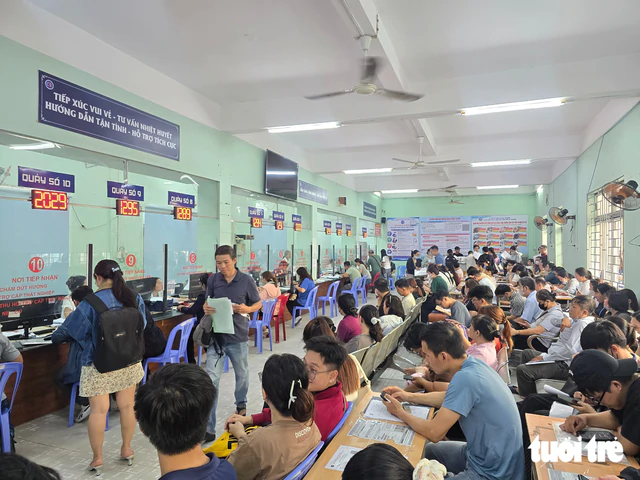
Workers apply for unemployment benefits, seek jobs, and access other services at the Ho Chi Minh City Employment Service Center. Photo: Cong Trieu / Tuoi Tre
International initiatives provide examples of how countries are attempting to address similar challenges.
In the European Union, employment support programs increasingly combine skills assessment, practical training, work experience, and follow-up assistance rather than relying solely on short-term courses.
The EU's ALMA initiative, for example, supports disadvantaged young people outside employment, education, or training through skills development, work experience abroad, and assistance in returning to education or employment.
In April 2026, South Korea launched its Youth New Deal strategy to help 100,000 young people develop job-ready skills and enter the workforce.
The initiative focuses on training in high-tech fields such as AI, semiconductors, and robotics, creating 20,000 public-sector work-experience opportunities, providing eligible low-income youth with monthly financial assistance of 600,000 won, and expanding access to psychological counseling and career guidance.
For Vietnam, these approaches point to the importance of connecting education more closely with actual labor market demand while providing young workers with opportunities to gain experience and develop long-term careers.
Trang emphasized that sustainable employment support should not end when a young person secures their first job, but should continue as they adapt to workplace demands, develop new skills, and navigate technological changes.


Ngoc Nguyen - Cong Trieu / Tuoi Tre News