
Vietnam’s Mekong Delta int’l airport still awaits a global air link
Can Tho International Airport, the first and oldest international airport in Vietnam’s Mekong Delta, operated no international flights in 2025.
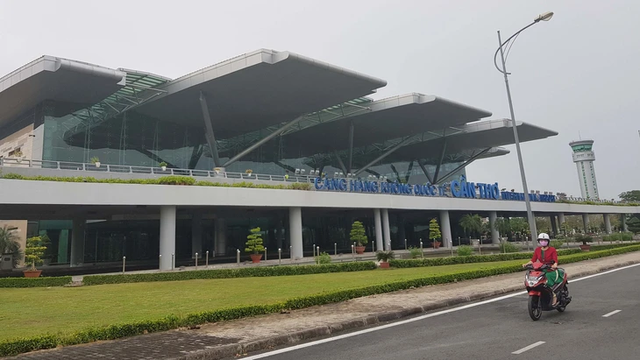
Can Tho International Airport in Can Tho City, southern Vietnam. Photo: Chi Quoc / Tuoi Tre
Editor’s note: The following opinion was submitted to Tuoi Tre (Youth) newspaper by Dr. Tran Huu Hiep, former director of the Economic Department of the former Mekong Delta Region Steering Committee and currently vice-chairman of the Mekong Delta Tourism Association.
The piece was translated from Vietnamese into English and edited by Tuoi Tre News, the daily’s English edition, for clarity, consistency, and coherence.
The absence of overseas routes highlights a broader bottleneck: the flow of tourism and foreign direct investment (FDI) into the delta remains constrained at what was once envisioned as the region's gateway to the world.
A gateway yet to open
On Vietnam's aviation map, Can Tho CIty was long expected to serve as the international gateway to the Mekong Delta.
From there, foreign visitors could disperse across the riverine region, from floating markets and orchards to coastal and island destinations.
In practice, however, most international travelers bound for the delta must first fly to Hanoi or Ho Chi Minh City and then travel onward by road to Can Tho and neighboring provinces.
While Tan Son Nhat International Airport in Ho Chi Minh City frequently operates beyond capacity, Can Tho's airport has struggled with low passenger volumes.
The Ho Chi Minh City–Can Tho route has been suspended, and connections to Cam Ranh, Lien Khuong, Da Nang, Vinh and Hai Phong, as well as the Can Tho–Phu Quoc route, have operated intermittently.
Key links between major economic and tourism hubs have been unstable.
From the perspective of a long-time observer of regional economics and tourism, this is not simply the story of one airport.
It reflects how development space across the Mekong Delta has been organized.
Foreign investors and overseas travel companies exploring opportunities in the region often view limited air connectivity as a constraint.
Without Can Tho functioning as an international arrival hub as planned, the Mekong Delta faces difficulty positioning itself as a standalone destination on the global tourism map, remaining reliant on Ho Chi Minh City and other gateways.
The implications extend beyond tourism numbers.
Slower visitor growth can translate into weaker investor interest and limited inflows of foreign capital.
Although road infrastructure in the delta has improved in recent years, air accessibility remains a key criterion for foreign businesses.
A destination that requires multiple transit legs may struggle to compete for FDI in services, logistics, high-tech agriculture or high-end tourism.
Why are foreign passengers absent?
A common question is why an international airport such as Can Tho has not attracted sustained international traffic.
The answer lies less in physical infrastructure than in market fundamentals.
International demand for direct travel to the Mekong Delta remains modest and inconsistent.
Most foreign visitors reach the region on short tours originating in Ho Chi Minh City, with brief stays and relatively limited spending.
There are few incentives for airlines to operate direct routes to Can Tho without sufficient, stable demand.
The region's tourism offerings are largely short-duration experiences.
Floating markets, fruit orchards, craft villages, and community-based tourism are appealing but lack large-scale, internationally branded complexes such as eco-resorts, golf courses, nightlife, and meetings, incentives, conferences, and exhibitions (MICE) facilities or extended thematic itineraries.
Can Tho, while the delta's central city, has yet to establish a distinct international identity as a specialized destination.
Connectivity gaps also persist.
The suspension of the Ho Chi Minh City–Can Tho route has reduced the city's role as a transit node.
Irregular service on the Can Tho–Phu Quoc route has disrupted links between two of the delta's most important tourism centers.
Although expressways have shortened travel times by road, air travel retains particular appeal for international visitors.
Policy coordination and risk-sharing mechanisms are also limited.
Airlines determine routes based on commercial viability, while airports provide infrastructure and ground services.
Creating aviation demand, however, depends on tourism development policy, market promotion, and regional coordination.
Promotion efforts remain fragmented among provinces, while international markets often require a regional-scale approach.
In short, the challenge is not the runway or the terminal, but the broader ecosystem: tourism products, transport connectivity, supportive policy, and interprovincial coordination.
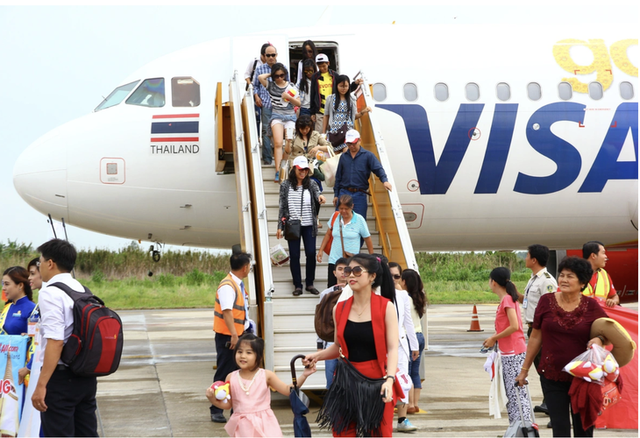
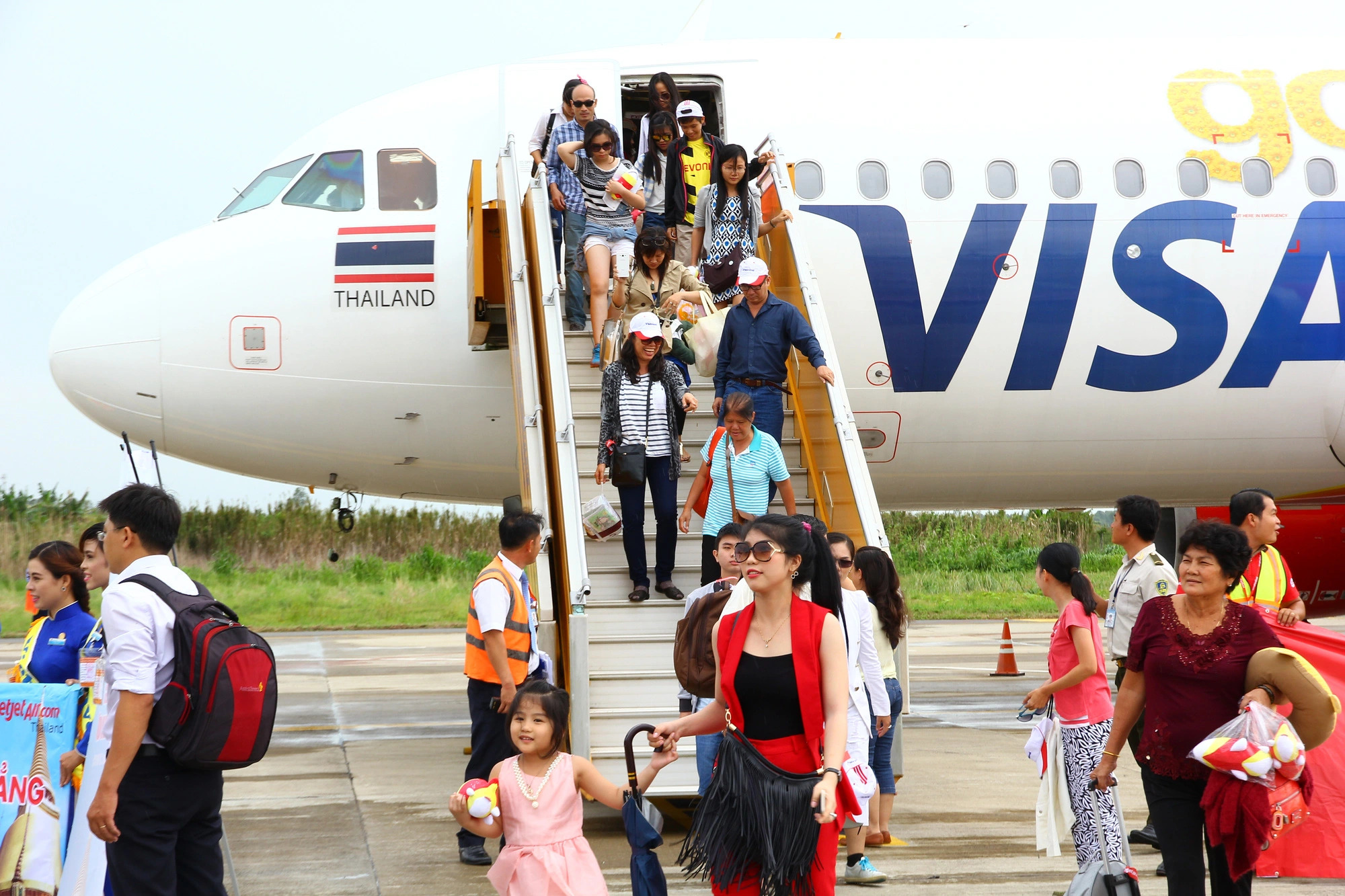
Passengers disembark from an aircraft at Can Tho International Airport in Can Tho City, southern Vietnam. Photo: Chi Quoc / Tuoi Tre
How to find int’l passengers?
Reactivating what is sometimes called the delta's 'central gateway' requires redefining Can Tho's role within the Mekong Delta's development strategy.
The airport must serve not only the city but the entire region as a true international entry point.
One approach is to restructure tourism offerings on a regional basis.
Can Tho could function as a tour organization and distribution hub, while neighboring localities serve as satellite destinations: Soc Trang with its Khmer cultural heritage, An Giang with spiritual and mountain ecotourism, Bac Lieu with traditional music heritage, and Ca Mau at Vietnam's southernmost tip.
By packaging multi-day itineraries across a broader area, the delta could support more sustainable international routes.
Restoring strategic air corridors is another priority.
The Ho Chi Minh City–Can Tho route could serve as a foundational link between the country's largest international gateway and the delta's central city.
While improved highways have reduced travel times, many countries maintain successful short-haul air routes despite parallel road infrastructure.
Stabilizing the Can Tho–Phu Quoc connection could also strengthen the region's tourism axis.
Charter flights from markets such as Thailand, Malaysia or South Korea could precede scheduled services.
Policy support and risk-sharing mechanisms are also important.
In various international markets, local authorities and tourism businesses establish aviation promotion funds to support marketing, reduce initial fees or guarantee partial revenue for new routes during their launch phase.
Without such measures, Can Tho faces strong competition from destinations with established international brands.
Regional coordination must move beyond rhetoric.
Airports in the Mekong Delta, particularly Can Tho, need clear positioning within the national and international airport network, with improved competitiveness and stronger integration.
Vietnam's hosting of the 2027 Asia-Pacific Economic Cooperation (APEC) forum in Phu Quoc presents a potential opportunity.
Rather than viewing it solely as an event for the island, policymakers could consider a multi-location model within the Mekong Delta economic space.
Phu Quoc could serve as the international focal point, while Rach Gia, Can Tho, and Ca Mau function as administrative, economic, and cultural centers.
Together, these four airports lie within a radius of less than 300 km.
Can Tho has the capacity to handle special flights and charters; Rach Gia and Ca Mau operate short routes of 30–40 minutes to Phu Quoc.
Ongoing expressway projects linking Can Tho and Ca Mau, along with coastal routes connecting Rach Gia and Phu Quoc, could strengthen logistics.
The absence of international flights at Can Tho International Airport in 2025 is not merely a short-term disruption but the result of years of fragmented development and limited market strategy.
Without a regional approach and long-term solutions to attract international travelers, the 'international' designation risks becoming symbolic.
If this moment is used to reposition Can Tho -- aligning the airport with tourism products, transport links and coordinated regional policy, the gateway could still open.
The issue is not the length of the runway, but whether there is sufficient vision and coordination to draw flows of people, capital, and experiences to land in the Mekong Delta.
Tuoi Tre News
Link nội dung: https://news.tuoitre.vn/vietnams-mekong-delta-intl-airport-still-awaits-a-global-air-link-103260221164116392.htm