
Vietnam's muzzle mandate: You see the threat, but who do you call?
Tougher penalties for unmuzzled dogs took effect across Vietnam this month, raising a practical question for the public: who do you call when owners ignore the rules?
You have likely lived this moment. You are walking down a narrow alley in Ho Chi Minh City or through a crowded public park in Da Nang when a large, unleashed dog appears. It is unmuzzled, its owner trailing several paces behind, seemingly unconcerned.
You have a vague sense that the law is now on your side. You know there are penalties. But as the animal barks and the owner offers the universal, dismissive refrain — "Don't worry, he's friendly" — you realize you have no idea who is actually supposed to pick up the phone.
On August 1, Vietnam gave its dog-control rules sharper teeth. Under the newly effective government decree, dog owners who fail to muzzle or leash their pets in public places now face fines of VND1-2 million ($38-76).
Yet, as the ink dries on the decree, a familiar gap remains between the rule of law and the reality of the sidewalk.
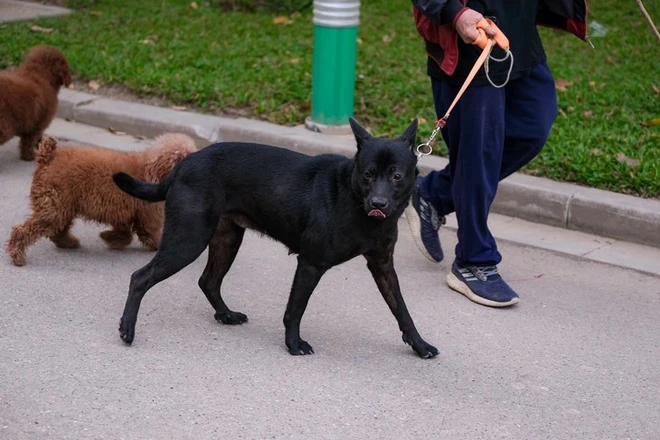

Dogs are seen without a muzzle in Hanoi. Photo: Chi Tue, Nam Tran / Tuoi Tre
The consequences of that uncertainty can be far more serious than an uncomfortable encounter.
Just as the new regulations took effect, a six-year-old boy in the southern city of Dong Nai was brutally attacked by a 20-kilogram black dog while playing in front of his home.
The child suffered severe injuries to his head and ears and was rushed to the Hospital for Tropical Diseases in Ho Chi Minh City, newswire VnExpress reported on August 2.
The dog, captured on camera roaming freely without a muzzle, fled the scene, leaving authorities to scramble to identify an owner who had ignored every safety protocol.
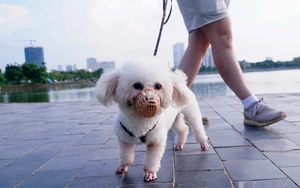
The enforcement maze
For the average citizen, the primary frustration is not a lack of law, but a lack of clarity on its execution.
If nobody seems concerned except you, who is actually supposed to intervene?
According to Phan Quang Minh, deputy director of the Department of Livestock and Veterinary, the net of authority is wider than many realize.
The decree empowers chairpersons of local People's Committees, specialized veterinary inspectors, and the entire police force — from the neighborhood officer to the district chief — to detect, stop, and fine violators, he told Tuoi Tre (Youth) online newspaper.
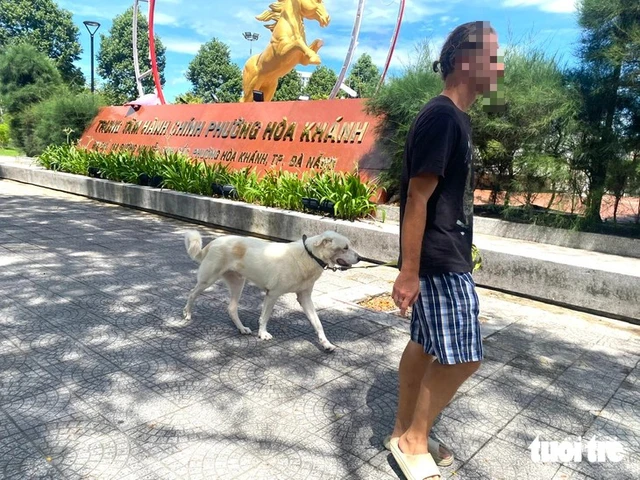
A dog is walked in a park in Da Nang City, central Vietnam, August 2, 2026. Although it is on a leash, it is not wearing a muzzle despite the crowded surroundings, raising safety concerns. Photo: Chau Sa / Tuoi Tre
Minh also urged commune- and ward-level authorities to strengthen public awareness campaigns, adopt clearer procedures for handling stray dogs, and establish dedicated capture teams to support enforcement.
He reminded owners that dogs must be registered, vaccinated against rabies, and kept leashed and muzzled when taken into public places. Beyond administrative penalties, owners may also be held financially liable if their dogs injure another person.
Officials say the tougher rules will be effective only if they are matched by greater public awareness and a stronger sense of responsibility among pet owners.
'Hitting the wallet'
Despite the new 'sting' in the law, compliance is a slow-moving target.
In the tourist destinations of Da Nang and Nha Trang, reporters still found dogs roaming beaches and parks without proper restraint just days after the law took effect.
"I used to let my dog out for 'relaxation' late at night without a muzzle," confessed one owner in Da Nang.
"But now that I hear about the fines, hitting the wallet makes me scared. I've already ordered muzzles online."
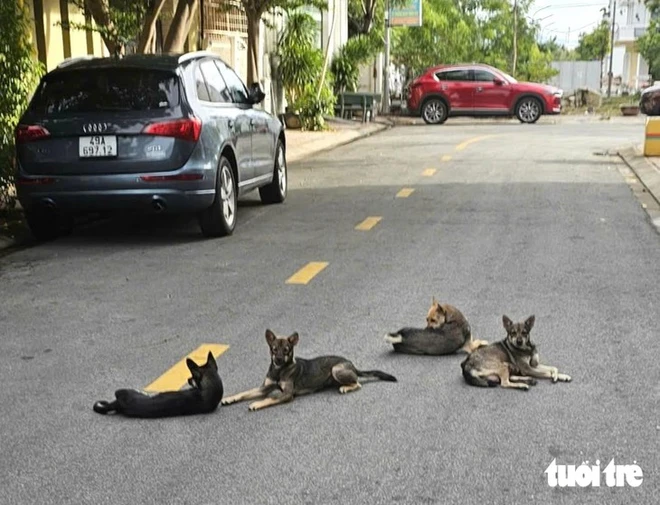

Dogs are seen roams freely in Khanh Hoa Province, south-central Vietnam. Photo: Nguyen Hoang / Tuoi Tre
For some owners, the new rules appear to have succeeded where years of public messaging did not. However, legal experts argue that fear of the 'wallet' is only effective if the fines are actually issued.
Lawyer Tran Minh Hung of the Ho Chi Minh City Bar Association points out three systemic hurdles: lax enforcement where authorities only act after an attack, low public awareness, and a culture where owners assume their 'friendly' pet is above the law.
"The deterrent effect depends more on the ability to detect and punish than on the size of the fine itself," Hung noted.
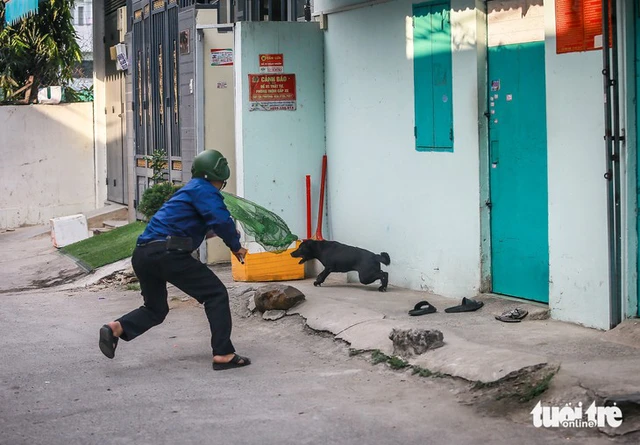
Hiep Binh Ward, formerly part of Thu Duc City, in Ho Chi Minh City has operated a dedicated stray dog capture team since 2023. Photo: Chau Tuan / Tuoi Tre
As Vietnam moves to professionalize its pet ownership culture, the message from officials is clear: a dog is only as 'friendly' as its owner's willingness to follow the rules.
Until enforcement becomes more consistent and every citizen knows which number to dial, the sidewalk will remain a place of uneasy encounters.
For now, the rules are clear. Whether members of the public know who to call — and whether someone answers — remains another question.
Beyond the nuisance of noise and hygiene, the ultimate shadow over this debate is rabies.
Dr. Truong Thi Hoa of Da Nang Hospital warns that 99 percent of human rabies cases in Vietnam stem from dog bites.
Once symptoms appear, the mortality rate is nearly 100 percent.
Son Luong / Tuoi Tre News
Link nội dung: https://news.tuoitre.vn/vietnams-muzzle-mandate-you-see-the-threat-but-who-do-you-call-103260804114732887.htm