
Vietnam’s strong 5-year run raises expectations among foreign analysts as 14th National Party Congress opens
As Vietnam convenes its 14th National Party Congress after five years of strong growth, governance reforms, and broader diplomatic engagement, foreign policymakers and analysts are looking to the congress to set the direction for a new stage of development.
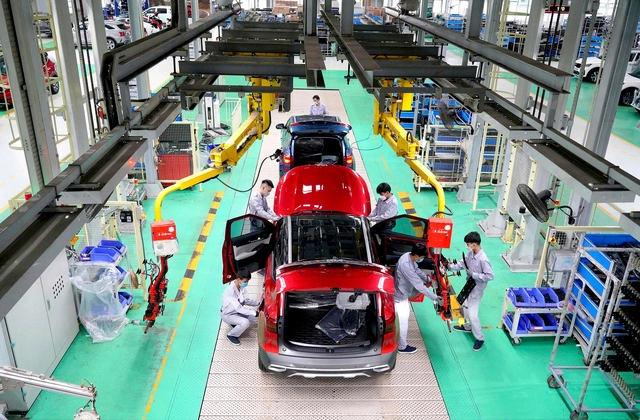
Workers assemble automobiles at a factory in Vietnam. Photo: H. Hanh / Tuoi Tre
Over the past half-decade, Vietnam has emerged as one of Southeast Asia’s standout performers, weathering the COVID-19 pandemic and global economic shocks while strengthening its role in regional and global supply chains.
Economists, diplomats, and foreign policy analysts say the period has not only laid a foundation for what the Party has described as an 'Era of the Nation’s Rise,' but also exposed challenges for the next phase.
Looking to the 14th Congress, Vietnam plans to build on earlier achievements with a new wave of infrastructure and social projects.

Kyril Whittaker, a British researcher of Vietnam and a member of the Communist Party of Britain
“Looking forward to the 14th Congress and beyond, Vietnam is advancing through the ‘Era of the Nation’s Rise’ where previous achievements are further built upon and consolidated, Kyril Whittaker, a British researcher of Vietnam and a member of the Communist Party of Britain, told Tuoi Tre (Youth) newspaper.
He cited planned projects including the Phu Quoc urban railway, Vietnam’s first nuclear power plants, the Lao–Vietnam railway, a North–South high-speed rail line, and the continued shift of public transport to green energy.
Alongside these investments, Whittaker highlighted social policies such as making basic medical care free by 2030, expanding environmental regulations, and deepening diplomacy.
The congress, he believed, would again underscore “the Vietnamese people’s collective mastery, the unity and solidarity of the country as it enters a new era,” with the stated aim to “advance the nation powerfully in the new era, toward a peaceful, independent, democratic, prosperous, civilized and happy society, moving forward on the path to socialism.”
Fast growth after crisis
Vietnam’s economic record since 2021 has underpinned that optimism.
Dr. Ye Xuan, chair of talent development at the Vietnam Private Capital Agency, said the country had transformed its socio-economic position over the last five years, emerging as the fastest-growing economy in ASEAN despite pandemic disruption.
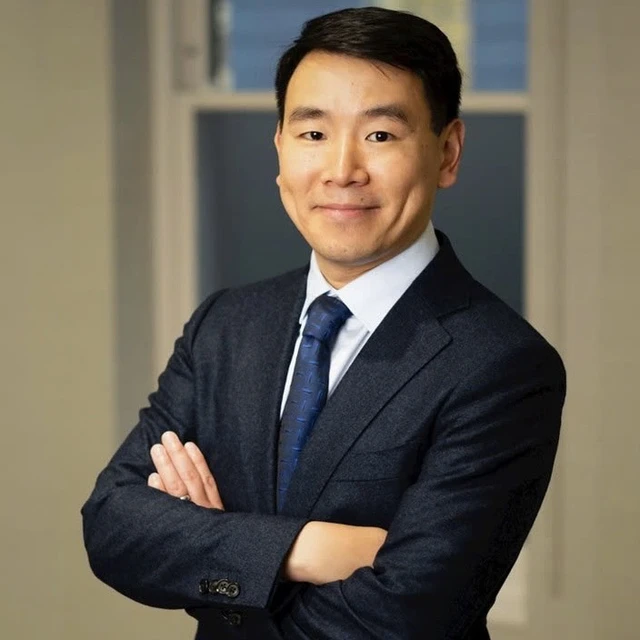
Dr. Ye Xuan, chair of talent development at the Vietnam Private Capital Agency
Export resilience, strong public investment, and a rapid rebound in services drove the recovery, Ye said, with manufacturing remaining the backbone of growth and tourism reinforcing domestic demand.
By late 2025, Vietnam’s multidimensional poverty rate had fallen to around 0.9–1.1 percent, roughly a quarter of its 2021 level, while unemployment stayed below 2.3 percent, beating official targets.
Digital transformation has been another pillar.
Under the national digital transformation program, the government has pushed digital government systems such as VNeID, e-tax and e-invoicing, alongside a digital economy targeted to reach 30 percent of gross domestic product (GDP) by 2030.
Vietnam’s digital economy was valued at about US$45 billion by 2025 and is projected to grow to $90–200 billion by 2030, Ye said.
Foreign direct investment (FDI) has remained robust.
Registered FDI reached $38.42 billion in 2025, with disbursed capital at a record $27.62 billion, reflecting sustained investor confidence as Vietnam seeks higher-quality investment in semiconductors, renewable energy, and advanced electronics.
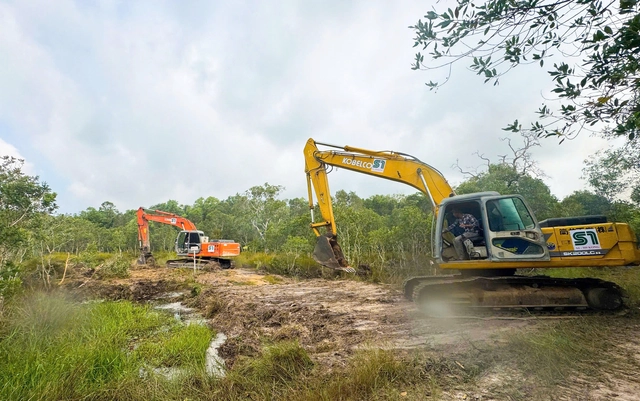
Construction work advances at the Ham Ninh resettlement project in Phu Quoc, An Giang Province, southern Vietnam. Photo: Chi Cong / Tuoi Tre
The European Union’s ambassador to Vietnam, Julien Guerrier, said the past five years showed a country “not only growing fast, but also reforming in ways that can make that growth more resilient, more innovative, and more attractive to long-term investment.”
He pointed to government restructuring, the merger of provinces and the reduction of administrative layers as signals of a push to improve efficiency and public service delivery.
He called Vietnam’s growth momentum, reaching around eight percent in 2025, “a powerful signal of dynamism and confidence.”
EU–Vietnam ties have deepened in parallel, driven in part by the EU–Vietnam Free Trade Agreement (EVFTA), which took effect just before the pandemic.
Guerrier said the agreement helped cushion Vietnam during the global downturn, with exports recording double-digit growth even as world trade contracted.
EU investment in Vietnam has risen to more than 30 billion euros ($35.1 billion), from about 22 billion euros ($25.8 billion) previously.
“In today’s uncertain environment, the EVFTA stands as a testimony to our shared commitment to open, rules-based trade,” he said.
Strategic positioning
Analysts say Vietnam’s performance has also been shaped by its geopolitical positioning.

Collins Chong Yew Keat, a foreign affairs and security analyst at the University of Malaya
Collins Chong Yew Keat, a foreign affairs and security analyst at the University of Malaya, said Vietnam emerged from a turbulent period “not weakened, but structurally strengthened,” as multinational firms diversified supply chains amid U.S.-China rivalry.
Vietnam’s growing role as a diversified manufacturing hub, combined with policy continuity and the state’s ability to mobilize infrastructure and labor quickly, helped it re-embed into global production networks, Chong said.
He added that “this was not merely cyclical recovery; it reflected the deepening of Vietnam’s role as one of Asia’s most critical manufacturing and export platforms.”
Diplomatically, Vietnam widened its strategic space through what officials call ‘bamboo diplomacy,’ balancing ties with major powers while avoiding dependence on any single partner.
The 2023 upgrade of relations with the United States opened deeper cooperation in technology, semiconductors, and supply chains, while Hanoi also elevated ties with other major and middle powers.
Dr. Sonu Trivedi, an associate professor at the University of Delhi, distinguished fellow at the India Foundation, and founder of the Vietnam–India Studies Center, said Vietnam’s “strategic independence and multi-lateral diplomacy have solidified its global standing,” helping it align foreign policy with development goals and navigate global uncertainty.
Challenges ahead
Despite the progress, experts caution that Vietnam faces mounting challenges as it targets at least 10 percent annual growth from 2026 to 2030 and aims to become a developed, high-income country by 2045.
Chong warned that Vietnam’s export-led, assembly-focused growth model is approaching diminishing returns, with slowing productivity and emerging financial vulnerabilities, particularly in real estate and credit.
Climate risks, including more frequent storms and flooding, also threaten development gains.
To meet its long-term goals, Vietnam must diversify beyond low-cost manufacturing, invest more aggressively in human capital and accelerate the green transition.
Education and health, Chong said, must become “Vietnam’s core competitiveness strategy,” shifting the country from cheap labor to “smarter, more capable talent.”
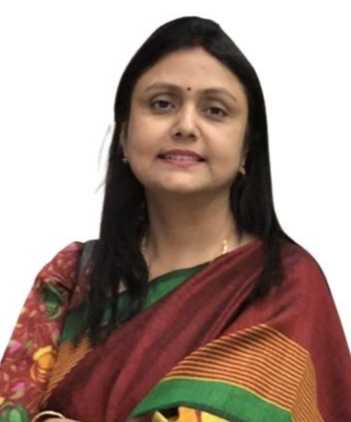
Dr. Sonu Trivedi, an associate professor at the University of Delhi, distinguished fellow at the India Foundation, and founder of the Vietnam–India Studies Center
Dr. Trivedi similarly called for a comprehensive human capital plan, alongside institutional innovation, trade diversification, digital transformation, and renewable energy development.
Environmental sustainability will be critical.
Vietnam has set ambitious targets for electric mobility and is pursuing a Just Energy Transition Partnership to speed the shift from coal to renewables, supported by international climate finance.
The achievements of the past five years have raised expectations at home and abroad, but analysts agree that sustaining momentum will require difficult reforms to ensure growth remains inclusive, resilient, and sustainable.
Guerrier, however, said the progress of the past five years “gives every reason to be confident about what we can achieve together in the years to come.”
- REFERENCE MORE
Tuoi Tre News