
Vietnam's top leader says no plan to redraw commune boundaries, urges smooth 2-tiered local government operation
Vietnam's Party General Secretary and State President To Lam has said the central government has no plans to reorganize or redraw commune-level administrative boundaries, while pushing authorities for maintaining the smooth operation of the current two-tiered local government system.
The leader made the statement while addressing a conference on Wednesday on the implementation of the resolution adopted at the third plenum last week of the Party Central Committee, where he called for policy decisions to be translated into concrete actions with clear responsibilities, deadlines, and measurable results.
Regarding the two-tiered local government system, he said no further reorganization or redrawing of commune-level administrative boundaries is planned because the system has generally operated stably and effectively since officially beginning operations on July 1, 2025, following the adoption of Resolution No. 203 by the law-making National Assembly (NA) on June 16, 2025.
The model, which replaces the old three-tiered system, was launched to coincide with the national administrative restructuring on the reorganization of provincial-level administrative units, reducing the number of provinces and centrally governed cities from 63 to 34.
The leader said that any province or centrally governed city that considers further adjustments to its administrative boundaries truly necessary may submit a proposal for approval based on Party guidelines, state laws, planning, actual governance needs, and the legitimate aspirations of local residents.
"Any proposal to adjust administrative boundaries must be scientific, cautious, feasible, and capable of building consensus. It must serve local socio-economic development and better serve the people," the leader said.
He emphasized that the implementation of the two-tiered local government system must focus on strengthening the capacity of authorities at all levels and ensuring that all necessary conditions are in place for the political system to operate smoothly and effectively.
The central government will delegate powers to local authorities, while provincial governments will further delegate tasks that commune-level governments are capable of handling.
Commune-level governments are on the front line of public governance, directly handling the needs and affairs of residents and businesses, and must have sufficient capacity to manage local development, he said.
Commune-level authorities must make every effort to carry out their assigned responsibilities instead of passing matters within their jurisdiction to higher levels.
The effectiveness of the two-tiered local government system must ultimately be measured by tangible improvements in governance, the quality of public services, and people's satisfaction.
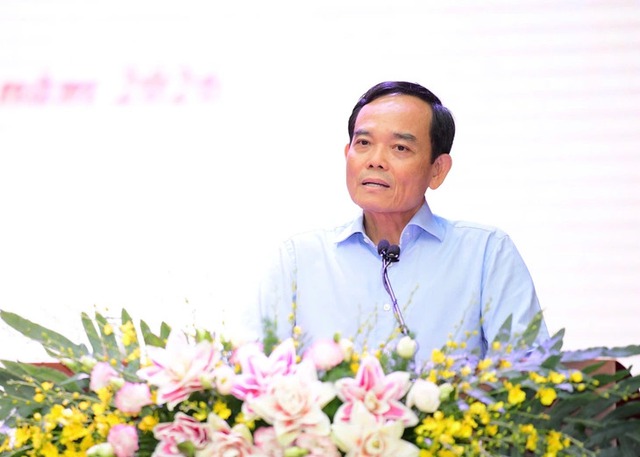
Secretary of Ho Chi Minh City Party Committee Tran Luu Quang speaks at a dialogue with local government and Party officials as part of a training program in Ho Chi Minh City, July 28, 2026. Photo: Quang Dinh / Tuoi Tre
In a related development, Secretary of the Ho Chi Minh City Party Committee Tran Luu Quang affirmed that the Politburo has no plans to further merge communes or redraw administrative boundaries, but localities that see a real need may propose adjustments based on their practical conditions.
He made the remarks during a dialogue with local government and Party officials as part of a training program in Ho Chi Minh City on Tuesday.
The city's Party chief said Party committees of communes, wards, and special zones should discuss whether further mergers are necessary and report their proposals to the municipal Party Committee's Standing Board.
Local authorities should also seek residents' opinions on any proposed mergers before completing submissions to competent authorities, he said.
The Ho Chi Minh City Development Research Institute has been tasked with conducting an independent assessment based on criteria including development potential, strategic position, national defense and security, and local conditions to determine whether mergers are needed.
All proposals must be compiled and submitted to the Standing Board by August 30, he said.
Tuoi Tre News