
What are Vietnamese consumers spending on entertainment?
Spending on entertainment is not just a market story; it is also a question of cultural direction.
Editor’s note: The following opinion was submitted to Tuoi Tre (Youth) newspaper by Prof. Dr. Huynh Van Son, a psychology expert in Ho Chi Minh City.
The piece was translated from Vietnamese into English and edited by Tuoi Tre News, the daily’s English edition, for clarity, consistency, and coherence.

People visit the Songlab digital art center in Hue City, central Vietnam, October 20, 2023. Photo: Nhat Linh / Tuoi Tre
Historically, Vietnamese household budgets have prioritized essentials such as food, housing, education, and healthcare.
But over the past decade, shifts in the country’s socio-economic landscape have revealed a notable trend: rising expenditure on entertainment and cultural consumption.
The film industry offers one of the clearest examples.
Recent data show Vietnamese audiences spent nearly VND5.6 trillion (US$212.8 million) on cinema tickets in 2024, a record high for the country’s box office.
The figure reflects not only a strong post-pandemic recovery for the film sector, but also a significant change in cultural consumption patterns.
Two decades ago, going to the cinema was still a relatively infrequent activity for many families.
Today, crowded multiplexes at weekends and during holidays have become commonplace.
Movie-going is no longer just an individual pastime; it has evolved into a social activity where families, groups of friends, and couples seek relaxation and connection.
Beyond cinema, a wide range of entertainment formats is attracting increasing consumer spending.
Digital content platforms, video games, online music, and social media-based entertainment are all expanding rapidly.
As a result, entertainment is no longer a marginal item in household budgets but is becoming a meaningful component of modern consumer life.
Market data suggest that entertainment spending in Vietnam is growing across multiple sectors.
Box office revenues have risen sharply in recent years.
In the early 2010s, total annual revenues were around VND1 trillion ($38 million); by 2024, they had surpassed VND5.6 trillion -- an increase of more than fivefold in just over a decade.
Several Vietnamese films have grossed between VND300 billion ($11.4 million) and VND400 billion ($15.2 million), with some exceeding VND450–500 billion ($17.1–19 million), underscoring the strong appeal of domestic productions.
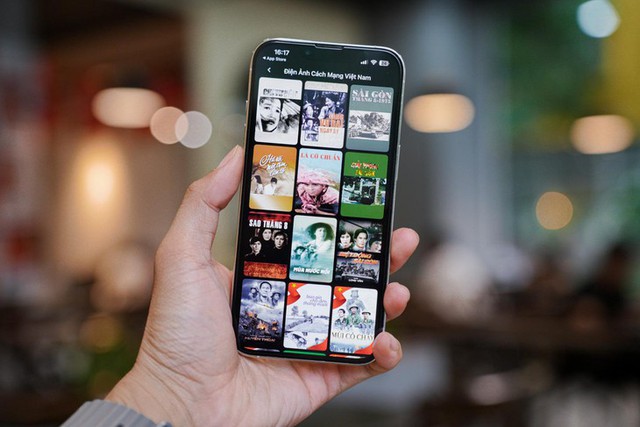
A person holds a smartphone displaying a streaming app featuring a list of Vietnamese films. Photo: Tuoi Tre
Willingness to pay for premium content
Alongside cinema, the video game industry is expanding rapidly.
Market reports estimate Vietnam’s gaming revenues at around $700 million annually, with more than 50 million players.
Mobile gaming accounts for the largest share, as smartphones have become the most common entertainment device.
Digital content platforms are also scaling quickly.
Millions of Vietnamese consumers are willing to pay for streaming services, online music, and premium digital entertainment.
The widespread adoption of the internet and smartphones has made access to such content easier than ever.
According to internet usage data, more than 77 percent of Vietnam’s population is now online, with individuals spending an average of six to seven hours per day on internet-based activities.
Much of that time is devoted to entertainment, including watching videos, listening to music, gaming, and engaging with social media.
In a broader economic context, rising entertainment spending is closely linked to improving living standards.
Vietnam’s per capita income has surpassed $4,300, several times higher than two decades ago.
As basic needs are increasingly met, consumers tend to allocate more resources to intangible and psychological well-being.
Yet important questions remain.
Of the VND5.6 trillion spent on cinema tickets, what share does this represent compared with other forms of entertainment?
How does it compare with overall spending on mental well-being?
And when measured per capita or across income groups, what do these figures reveal?
What is clear is that entertainment is no longer an occasional indulgence but a routine part of daily life, effectively an emerging ‘consumer industry’ in its own right.

This trend is also tied to broader discussions about the development of cultural industries, a topic that has drawn increasing attention in recent years.
Still, cultural industries are deeper, broader, and more complex than spending figures alone suggest.
Rising entertainment expenditure reflects profound changes in social life.
First, it signals higher living standards and rising expectations for quality of life.
As economic conditions improve, people seek not only to ‘get by’ but to ‘live better.’
Entertainment becomes a legitimate need for recharging, reducing stress, and maintaining emotional balance.
In a fast-paced society with mounting academic and workplace pressures, leisure time is increasingly essential.
A film, a video game or a favorite song can offer a temporary escape from daily stress.
From a psychological perspective, entertainment serves as a means of mental recovery.
At the same time, digital technology has transformed how people access entertainment.
Whereas leisure activities were once tied to physical spaces such as cinemas, theaters or cultural venues, most content today is accessible via smartphones.
This shift has made entertainment faster, more convenient and more personalized.
But the popularity of fast, easily consumable content also reflects a defining feature of modern psychology.
In the digital age, consumers tend to favor short, accessible experiences that deliver instant emotional gratification.
Short-form videos, online games, and social media content have therefore flourished.
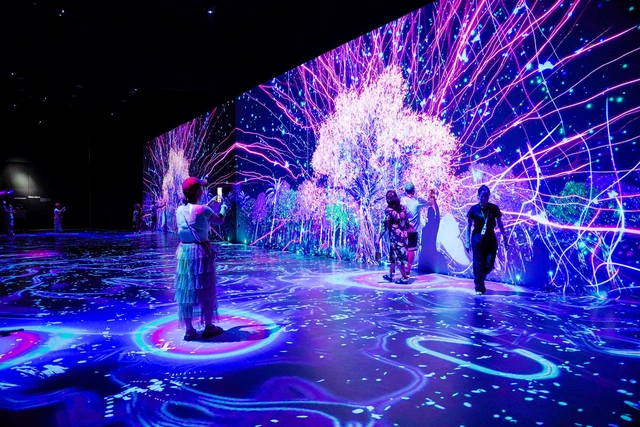
People visit the Songlab digital art center in Hue City, central Vietnam, October 20, 2023. Photo: Xuan Loc
Revisiting cultural direction
From a cultural standpoint, this presents both opportunities and challenges.
On one hand, the expansion of the entertainment market creates room for creative industries to grow.
Film, music, digital content, and online creative products can become significant economic sectors.
On the other hand, if entertainment products focus primarily on commercial appeal and instant gratification, cultural life risks being reduced to short-term experiences.
Traditional art forms, deeper cultural activities, and educational creative works may struggle to attract audiences.
If traditional cultural activities continue to face limited engagement without active rebalancing, what implications might this vast pool of consumption data hold?
The issue of entertainment spending is therefore not just about the market; it is also about cultural direction.
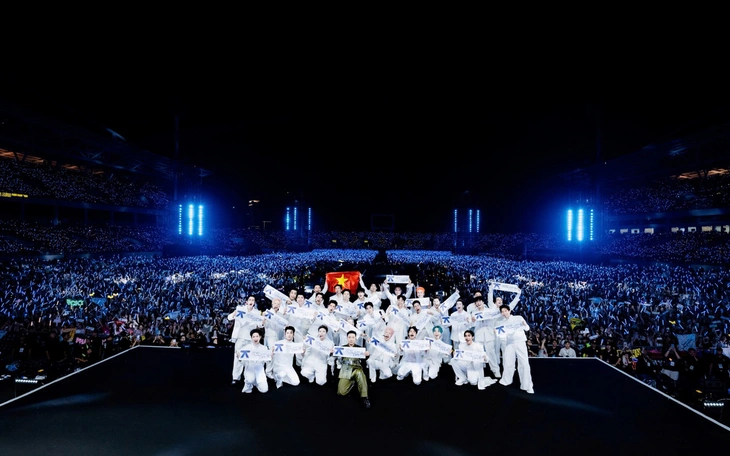
A society with a vibrant entertainment life is often one with higher living standards and stronger cultural demand.
Entertainment industries can also serve as economic drivers and help promote a country’s image.
Yet alongside this growth, a fundamental question arises: it is not only how much Vietnamese consumers spend on entertainment, but what kind of entertainment culture is being shaped.
Do these expenditures help nurture cultural life, or do they merely sustain fast, consumption-driven experiences?
Can the entertainment market evolve in a way that is both engaging and meaningful, or will it be dominated by short-term content?
These questions are not only for content producers or cultural regulators, but also for consumers themselves.
Ultimately, the way people choose to be entertained reflects how they build their inner lives.
The key issue may not be how much is spent on entertainment, but what kind of entertainment environment is being created -- one that offers only fleeting pleasure, or one that fosters enduring cultural values for society.
Tuoi Tre News
Link nội dung: https://news.tuoitre.vn/what-are-vietnamese-consumers-spending-on-entertainment-10326031817275827.htm