
What does Ho Chi Minh City need to become magnet for global capital?
Economic experts, investors and people who channel foreign investment into Vietnam have shared their views on how Ho Chi Minh City can become a hub for international capital during discussions at the Autumn Economic Forum 2026.
As traditional advantages such as cheap land, low-cost labor and tax incentives gradually lose their appeal, what will drive Ho Chi Minh City’s efforts to attract higher-quality investment?
Economic experts, investors and people directly involved in bringing foreign capital into Vietnam said change must come from both sides: the government and businesses themselves.
Luu Trong An Ha, general director of Lotus Investment Group, said the flow of investors into Vietnam had increased significantly in recent months following FTSE’s market upgrade decision.
According to Ha, the upgrade does not guarantee direct investment. However, it sends a clear signal that Vietnam is working to improve transparency and make its market more measurable.
To attract direct investment, Vietnam needs more initiatives focused on specific projects, he said.
Beyond government commitments, foreign investors need stable policies, Ha added.
“Policies can be strict, but the important thing is that they do not change after a few years. Every investment requires milestones that can be calculated and forecast in advance, and these milestones are often disrupted when policies change,” he explained.
Tran Hai Linh, chairman of the Vietnam-Korea Business and Investment Association, shared this view, saying that the two most important factors for Ho Chi Minh City were institutions and transparency.
“Businesses must be able to predict their costs. They are not concerned about how high those costs are, but transparency is the most important thing,” he said.
According to Linh, foreign partners have changed their perception of Vietnam.
“What South Korean businesses value most when cooperating in high technology is no longer Vietnam as a low-cost manufacturing destination that offers cheap labor or tax incentives. They now want to know how Vietnam will work with South Korea to participate in global supply chains and how the two countries can develop together,” he said.
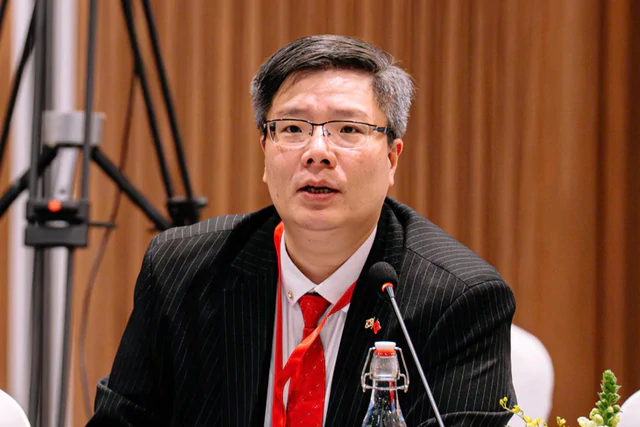
Tran Hai Linh, chairman of the Vietnam-Korea Business and Investment Association. Photo: Thanh Hiep / Tuoi Tre
Investors seek assurances
Ha said he had brought five banks to AEF 2026 to explore investment opportunities. Based on his discussions with clients, he found that assurances were their most important concern.
“They want to see a clear growth roadmap from the Vietnamese government, including the steps involved. They also need to know how their investments will be financially secured, because they are the ones providing capital to their clients investing in Vietnam,” Ha said.
He also noted that Vietnam had long relied primarily on real estate as collateral, tying up substantial assets and making it harder for banks to lower interest rates and increase lending.
Meanwhile, Linh said Ho Chi Minh City had become a megacity following its 2025 merger with Binh Duong and Ba Ria-Vung Tau.
International investors are keen to learn how the special mechanisms for the international financial center will operate. They also want to know whether the center can be linked to growth hubs in areas such as semiconductors, chip design and testing.
Logistics infrastructure is another important consideration for investors, particularly in the technology sector.
“Any corporation or business investing in growth hubs, especially those related to technology, needs a logistics system that includes seaports, airports and supporting infrastructure. These factors determine whether technology companies will continue to establish their operations in Ho Chi Minh City,” Linh emphasized.
Building ecosystem around FDI
Nguyen Viet Hoang, co-founder of Vietnam Vanguard, a network for young leaders, said Vietnam must continue administrative reforms and improve national governance to attract high-quality FDI.
It must also ensure adequate electricity, water, land and human resources to support a business-friendly environment.
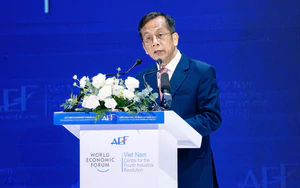
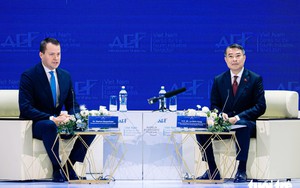
Vietnam needs not only more FDI but, more importantly, an entire ecosystem built around these investment flows, Hoang said.
The government and leading businesses, including both foreign-invested companies and major domestic enterprises, need to work together to develop a network of domestic suppliers capable of participating in global supply chains.
He proposed several policies to develop next-generation industries among small and medium-sized enterprises, which account for up to 98 percent of Vietnamese businesses but face significant difficulties with administrative procedures and access to capital and technology.
“First, they must upgrade their industrial standards, production processes and technology to keep pace with the world.
However, to make the right investments in machinery, technology and people, they also need substantial support from state agencies and financial institutions,” Hoang said.
The Autumn Economic Forum 2026 is taking place in Ho Chi Minh City from October 26 to 29 under the theme 'Collaboration in a New Era,' bringing together government officials, business leaders, investors, and international experts to discuss new drivers of economic growth.
Its two main days, Tuesday and Wednesday, are co-branded with the World Economic Forum for the first time.
The forum serves as a platform for Ho Chi Minh City to strengthen international partnerships, showcase its investment potential, and advance its ambition to become a regional financial and economic hub.
Thanh Ha - Ngoc Duc / Tuoi Tre News
Link nội dung: https://news.tuoitre.vn/what-does-ho-chi-minh-city-need-to-become-magnet-for-global-capital-103261029125620608.htm