
What drives Ho Chi Minh City’s 17-place climb in global financial centers ranking?
Ho Chi Minh City’s sharp rise in the latest global financial centers ranking appears to have been driven by the development of its financial sector, including the establishment of the Vietnam International Financial Center in Ho Chi Minh City (VIFC-HCMC), and growing international recognition, according to financial experts.
The 40th Global Financial Centres Index, or GFCI 40, released in September by Z/Yen Partners and the China Development Institute, placed Ho Chi Minh City 67th globally with 692 points, up 27 points and 17 places from the previous edition in March.
The city recorded the second-largest rise in the latest ranking, behind Copenhagen, which climbed 19 places.
The GFCI combines 144 quantitative factors from more than 80 sources with 39,531 assessments from 6,147 financial professionals.
It evaluates financial centers across five areas: business environment, human capital, infrastructure, financial-sector development, and reputation.
The report does not provide separate scores for Ho Chi Minh City for each of these areas.
However, in analyzing the GFCI 40 results, VIFC-HCMC experts said the city’s 17-place rise “appears to have come from the development of its financial sector and growing international recognition,” while its business environment still needs further improvement.
VIFC-HCMC builds broader financial ecosystem
Officially launched in February 2026, the center is moving from establishing a legal framework toward building a market where financial institutions operate, capital is raised, and financial products are traded, according to Nguyen Huu Huan, deputy chairman of the VIFC-HCMC's executive agency.
A key focus is developing financial products that can channel capital into the economy.
In September, VIFC-HCMC sought opinions on issuing municipal and project bonds to mobilize medium- and long-term capital for major infrastructure projects in Ho Chi Minh City.
Green finance is another focus, with the center aiming to connect international capital with domestic green-transition projects through loans, green bonds, and transition finance.
Several specialized segments are also taking shape.
VIFC-HCMC and Vietnam's low-cost carrier Vietjet have announced the Asia-Pacific Aviation Finance Center, while maritime finance is being developed to serve international transportation and trade needs.
A fintech hub is also being developed to provide a platform for digital finance models and cross-border payments.
The center is also attracting financial institutions and companies.
Several banks and securities companies have planned to establish legal entities at VIFC-HCMC, while Modern Bank of Vietnam Limited has opened its business headquarters at 8 Nguyen Hue Street.
TikTok, a strategic member of VIFC-HCMC, is also expanding its digital commerce and logistics operations in the city.
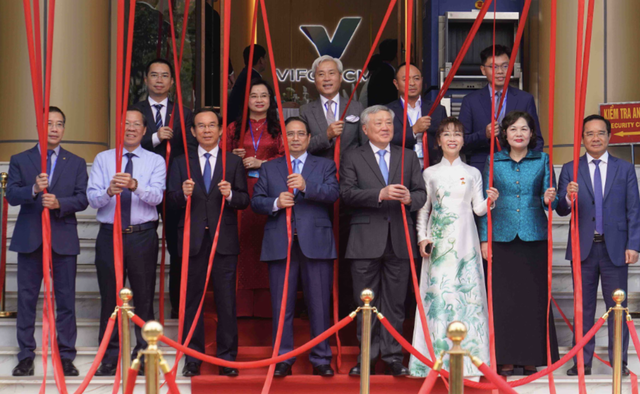
Delegates attend the launch ceremony for the headquarters of the executive agency of the Vietnam International Financial Center in Ho Chi Minh City (VIFC-HCMC). Photo: HDBank
International recognition rises
Greater recognition among international financial professionals is another factor behind Ho Chi Minh City’s improved standing.
The city received 34 mentions in the latest GFCI survey when respondents were asked which financial centers would become more important over the next two to three years.
It ranked 11th among the 15 most frequently mentioned centers, up from 21 mentions in GFCI 39, released in March.
An international financial expert told Tuoi Tre (Youth) online newspaper that Vietnam’s stronger promotion of its international financial center on the global stage was a notable factor.
Since VIFC-HCMC was launched, Vietnam has repeatedly promoted the center through activities and meetings with international financial institutions, investment funds, and corporations.
The expert said this could have influenced the international financial community’s recognition and assessment of Ho Chi Minh City, particularly because the GFCI combines quantitative indicators with assessments from financial professionals.
Despite the higher ranking, Ho Chi Minh City remains classified as an 'International Contender,' unchanged from the previous edition.
Its connectivity is rated at the international level, while the breadth and depth of its financial ecosystem remain at an emerging level.
This suggests that the 17-place rise has yet to be matched by a corresponding transformation in the city’s financial-center structure.
From international interest to actual capital flows
Looking ahead, Ho Chi Minh City is striving to turn growing international interest into financial institutions, financial products, and capital flows.
One potential source of momentum is Vietnam’s upgrade by FTSE Russell from frontier-market to secondary-emerging-market status, effective September 21.
The upgrade is expected to expand access to international investment funds, particularly those that allocate capital according to FTSE Russell indexes.
Major global asset managers including BlackRock and Vanguard visited Vietnam before the upgrade took effect, while FTSE Russell estimated that related capital flows could reach around US$6 billion.
The actual amount, however, will depend on investment decisions and the market’s ability to absorb the capital.
For VIFC-HCMC, the opportunity extends beyond attracting capital to the stock market to connecting international funding with domestic investment needs.
In September, Standard Chartered, EQuest, and EQuest Capital signed an agreement aimed at mobilizing up to $325 million for education projects in Vietnam.
International interest is also extending to technology companies and financial institutions.
Qualcomm has expressed interest in joining VIFC-HCMC, while the City of London has discussed supporting the center in connecting long-term funding sources with institutional investors.
The longer-term question is whether growing international recognition can translate into a deeper financial ecosystem, more financial institutions and products, and actual capital flows.
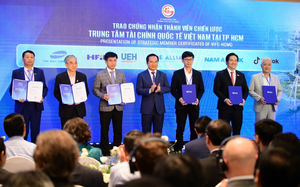
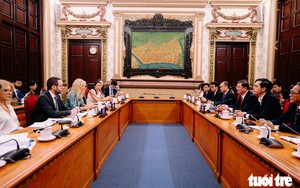
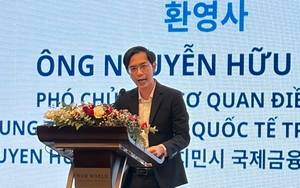
Vinh Tho – Nghi Vu / Tuoi Tre
Link nội dung: https://news.tuoitre.vn/what-drives-ho-chi-minh-citys-17-place-climb-in-global-financial-centers-ranking-103261002200943995.htm