
What it will take for Ho Chi Minh City to reach 20 million int'l visitor arrivals by 2030
Ho Chi Minh City’s goal of welcoming 20 million international visitors by 2030 will require more than boosting arrivals, with the city also needing to raise tourist spending, lengthen stays, encourage repeat visits and ensure its infrastructure can handle the growing influx.
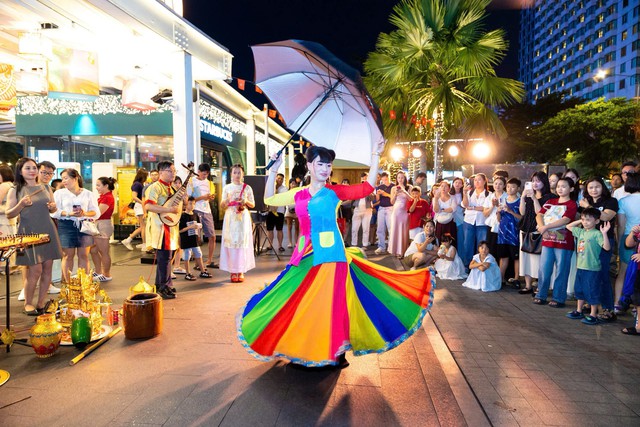
Ho Chi Minh City aims to welcome 20 million international visitors by 2030. Photo: Do Dat / Tuoi Tre
Ho Chi Minh City aims to welcome 20 million international visitors by 2030, accounting for 40-44 percent of the country's total international arrivals.
The challenge is to attract the right visitors while increasing tourist spending and the value generated by each arrival.
Beyond volume: Attracting higher-value visitors
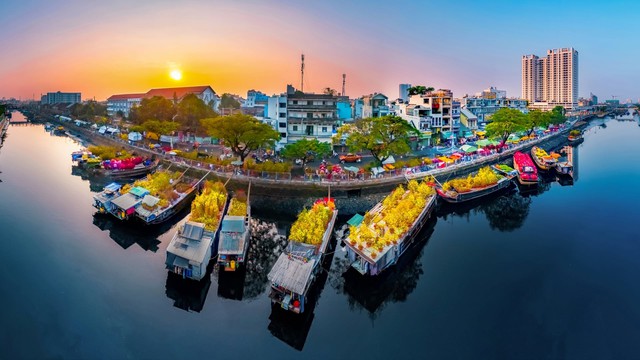
Developing waterway tourism to meet international visitors’ demand for deeper experiences. Photo: Pham Quynh Nga
From the perspective of a waterway tourism operator serving international visitors, Phan Xuan Anh, director of Saigon Boat Co., Ltd., said setting an ambitious target was necessary to give the tourism sector a clear direction for growth.
However, the city must first distinguish between visitors and visitor arrivals.
"Twenty million visitors is very different from 20 million visitor arrivals. For example, in the cruise sector, a ship carrying 1,000 tourists may dock at Saigon Port, sail into international waters overnight, then stop in Nha Trang and Da Nang the following day. The statistics could count that as 2,000 and then 3,000 visitor arrivals," Xuan Anh said.
Accurate statistics, he said, are essential for properly assessing visitor numbers and tourism's actual contribution to the city's economy.
Beyond how visitors are counted, Xuan Anh said the 20 million-arrival target should be tied to a specific market mix, ranging from high-end visitors from North America and Northern Europe willing to spend $100 or more per night at four- and five-star hotels, to upper-middle-income travelers from Europe and developed Asian markets, as well as budget travelers from India, Southeast Asia and backpackers.
He said chasing visitor numbers by focusing on low-spending travelers could boost arrivals without generating a corresponding increase in tourism revenue.
The city should instead target visitors seeking deeper experiences, longer stays and more repeat trips.
Xuan Anh also said the government should create mechanisms and remove barriers to help businesses develop tourism products, while prioritizing inbound tourism from international visitors, who bring foreign currency into the city by spending on locally available resources and products.
More visitors, greater pressure on infrastructure
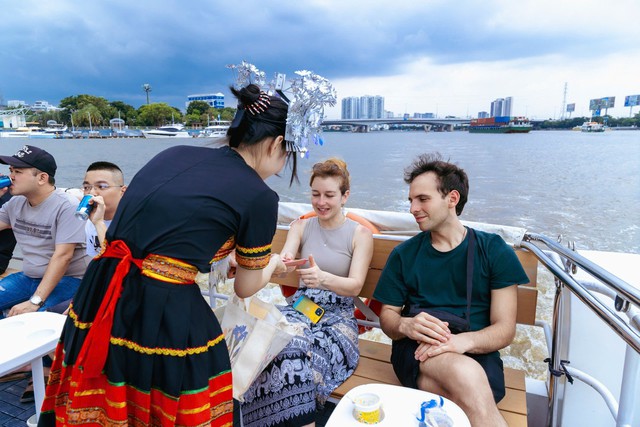
Waterway tourism is seen as a product with potential to expand international visitors’ experiences. Photo: Do Dat / Tuoi Tre
Nguyen Kim Toan, director of Thuong Nhat Co., Ltd., which operates Saigon Waterbus, also said 20 million visitor arrivals should not be the only metric the city focuses on.
It needs to identify the types of visitors it wants to attract and whether its infrastructure can meet their needs.
“In business, market segmentation is essential. We are not discriminating against any visitors, but we cannot allocate resources equally across all segments,” Toan said.
He said that if visitor numbers grow rapidly while transportation, environmental services and urban infrastructure fail to keep pace, the city could face greater pressure from congestion, pollution and public security, while spending by some visitor segments may remain low.
For example, he said, with the same profit margin of 15-20 percent, a visitor who spends 10 units generates about two units in profit, while one who spends just one unit generates only about 20 cents.
Visitor spending therefore needs to be considered alongside arrival numbers when assessing tourism performance.
Focusing on visitors with higher spending power does not mean excluding budget travelers, Toan said. As demand grows, smaller businesses can still upgrade their rooms and services to meet different market segments.
“Attracting higher-value visitors can stimulate the entire supply chain, from water and road transport to food, souvenirs and the city’s service culture. Conversely, if the city competes mainly on low prices, its infrastructure may be forced to lower its standards to keep up,” he said.
Turning everyday experiences into tourist draws
From a research perspective, Dr. Duong Duc Minh said Ho Chi Minh City’s target of welcoming 20 million international visitor arrivals by 2030 is supported by the city’s market potential and regional connectivity.
He said Vietnam and Ho Chi Minh City are becoming increasingly well known in international markets.
Beyond the country’s history, its cuisine, from pho, the iconic noodle soup, and Vietnamese banh mi, to cha gio (fried spring rolls), and banh xeo (a crispy savory pancake), is also a major draw for visitors.
Ho Chi Minh City also has an advantage in connecting the southeastern region, the Mekong Delta, the Central Highlands and the south-central coast, allowing it to develop both short and extended itineraries while encouraging longer stays.
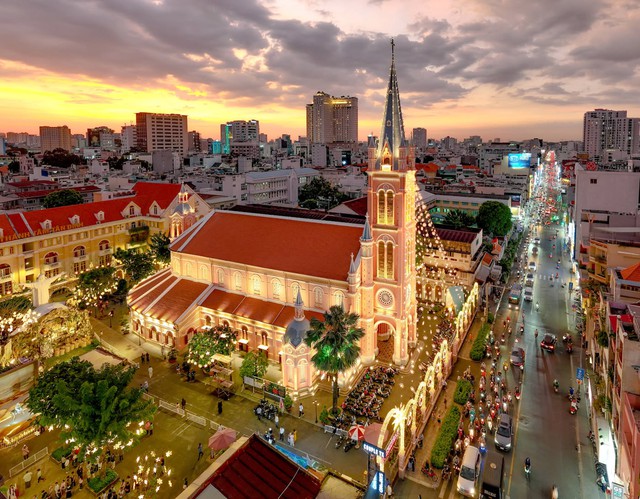
Cultural and historical attractions need more investment in storytelling and visitor experiences to appeal to international tourists. Photo: Tran Dinh Hai
To increase visitor numbers while maintaining tourism efficiency, Minh said the city needs to focus on three key areas.
First is transport infrastructure, particularly how visitor flows will be reorganized as new gateways come into operation, including Long Thanh International Airport.
Second is promotion. Information presented to the market must accurately reflect the actual products and experiences, he said, to avoid creating expectations that exceed what visitors encounter at the destination.
Third is tourism products. The city should avoid developing too many offerings without a clear focus and instead identify product groups where it has an advantage. MICE tourism could be an important area for development, while cultural and ecotourism should serve as the foundation.
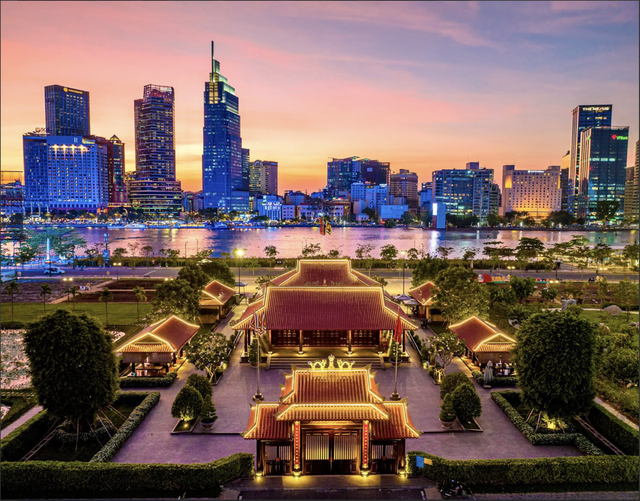
Dr. Minh highlights the potential of developing the Nha Rong Wharf complex around Ho Chi Minh City’s history and riverside setting. Photo: Nguyen Anh Tuan
Minh also highlighted the potential of heritage sites, including the Nha Rong Wharf complex, which combines historical significance with Ho Chi Minh City's riverside setting.
He said these destinations need greater investment in storytelling and visitor experiences to turn them from niche offerings into classic attractions capable of drawing international visitors.
The 20 million visitor-arrival target, therefore, is not only about how many people the city can accommodate, but also how long they stay, how much they spend and whether they return.
Van Giang - Do Dat / Tuoi Tre News
Link nội dung: https://news.tuoitre.vn/what-it-will-take-for-ho-chi-minh-city-to-reach-20-million-intlvisitor-arrivals-by-2030-103260930160243249.htm