
WHO urges Vietnam to expand ban on new tobacco products to protect young people
Nicotine pouches, shisha, and products containing nicotine-like substances are gaining ground with eye-catching designs and appealing flavors targeting young consumers in Vietnam, prompting the World Health Organization (WHO) to recommend expanding the Vietnamese ban on new tobacco products to prevent nicotine addiction.
Nicotine pouches not necessarily less harmful than conventional cigarettes
According to WHO, the tobacco and nicotine industries are constantly developing new products, adopting new technologies and marketing strategies to attract new users while seeking ways to circumvent regulations.
This poses challenges for regulators as products become increasingly diverse in their appearance, ingredients, and methods of use.
Nguyen Viet Ha from the Health Strategy and Policy Institute under the Ministry of Health said Vietnam ranks among the world's 15 countries with the highest male smoking rates and third in ASEAN.
Smoking causes approximately 84,500 deaths in Vietnam each year, while exposure to second-hand smoke accounts for another 18,800 deaths, she said.

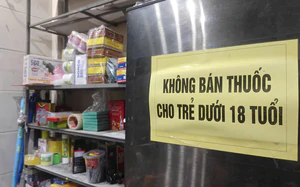
Alongside conventional cigarettes, e-cigarettes and heated tobacco products, the emergence of new products such as nicotine pouches is raising concerns about nicotine addiction in the community, particularly among adolescents.
Nicotine pouches are powder-filled products containing natural or synthetic nicotine, flavorings, and other ingredients.
Users place a pouch inside their mouths, allowing nicotine to be absorbed through the oral mucosa without burning tobacco or inhaling smoke.
Doctor Nguyen Trung Nguyen, director of the poison control center at Bach Mai Hospital in Hanoi, said these products can cause nicotine addiction, damage the oral mucosa, adversely affect cardiovascular health, and cause an acute increase in heart rate.
Of particular concern, certain additives, organic acids, and cooling agents used in these products can increase nicotine absorption, raising the risk of dependence, especially among young people who have never smoked.
Experts said nicotine pouches often come in sweet, mint and 'ice' flavors, with attractive designs and discreet methods of use.
These features may make them appealing to adolescents, particularly those who dislike the smell of cigarette smoke or are concerned about teeth discoloration.
Marketing products as 'tobacco-free' or 'less harmful' can also create a false sense of safety among consumers.
Dr. Nguyen warned that nicotine levels in some products can be extremely high, even exceeding those commonly found in conventional cigarettes.
According to WHO, a nicotine pouch containing around 4mg of nicotine can deliver a total nicotine exposure comparable to that from smoking a conventional cigarette, while some products contain as much as 50-150mg per pouch.
Products with high nicotine concentrations pose a risk of dependence. Experts therefore stressed the need for measures to prevent nicotine addiction among young people.
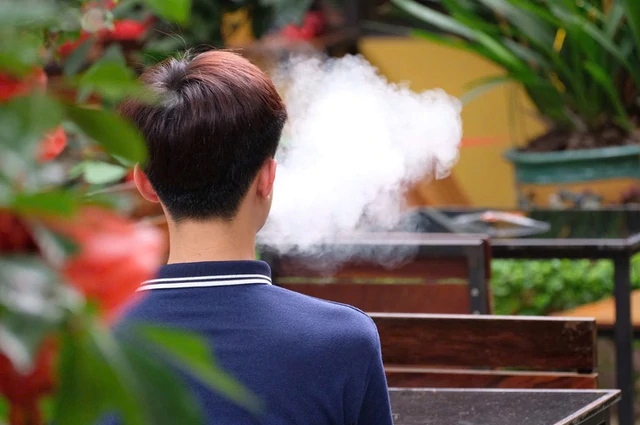
Stricter penalties are proposed for the use of e-cigarettes. Photo: Nguyen Bao / Tuoi Tre
Expanding ban to close regulatory loopholes
Vietnam banned e-cigarettes and heated tobacco products in 2025.
However, products containing nicotine in various forms, designs and under different names continue to appear on the market.
A draft amendment to the Law on Prevention and Control of Tobacco Harms proposes expanding the list of prohibited products.
Under the proposal, the production, trading, sale, storage, transportation, export, import, transit, temporary import for re-export, entrepot trade and sheltering of e-cigarettes, heated tobacco products and counterfeit tobacco products would be prohibited.
The draft also proposes banning products designed to resemble cigarette packs, tobacco packages, individual cigarettes, e-cigarettes or heated tobacco products, as well as products featuring the designs of e-cigarettes and heated tobacco devices. Nicotine pouches and shisha would also be added to the list of prohibited products.
The proposed regulations would also prohibit the use of e-cigarettes, heated tobacco products, nicotine pouches, shisha and products designed to resemble e-cigarettes or heated tobacco devices.
According to WHO technical documents, substances such as nornicotine, anabasine and 6-methylnicotine are increasingly being used in e-cigarettes and nicotine pouches.
Although they are not nicotine, these substances have similar properties and addictive potential.
WHO in Vietnam warned that regulations focusing solely on tobacco leaves and nicotine-containing substances could leave loopholes for products that contain no nicotine but use nicotine analogues, as well as products labeled nicotine-free, particularly e-cigarettes.
WHO recommended that, alongside e-cigarettes and heated tobacco products, the law should define other new tobacco products and include them in the list of prohibited products.
It also called for an explicit ban on product components and parts, including e-cigarette liquids.
The definition of tobacco materials should also be expanded to cover materials derived from tobacco plants, nicotine-containing substances, nicotine analogues and even nicotine-free substances used in tobacco products.
Thanh Ha - Duong Lieu / Tuoi Tre News
Link nội dung: https://news.tuoitre.vn/who-urges-vietnam-to-expand-ban-on-new-tobacco-products-to-protect-young-people-103261116203206895.htm