
Why do crowds keep flocking to Ho Chi Minh City’s major hospitals?
Ho Chi Minh City’s leading top-tier hospitals, including Cho Ray Hospital, Ho Chi Minh City Oncology Hospital, and University Medical Center, continue to receive enormous numbers of patients every day, with some facilities recording unprecedented volumes.
The question is why the flow of patients to these hospitals has not eased, but instead continued to grow year after year.
As observed by Tuoi Tre (Youth) online newspaper reporters on Thursday, patients arrived at these major hospitals early in the morning to register for medical examinations.
Reception areas and outpatient departments were crowded, with some people lining up before dawn in the hope of being seen as early as possible.
Many were patients from other provinces accompanied by relatives.
At Ho Chi Minh City Oncology Hospital’s health-insurance ultrasound and X-ray registration area, staff had already announced that all appointment numbers were taken shortly after 9:00 am.
Patients unable to secure a slot had to wait until the following day.
Those wanting examinations on the same day had to register for paid after-hours services.
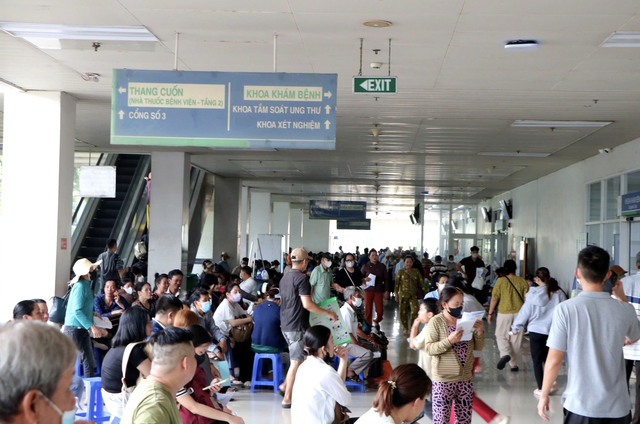
Ho Chi Minh City Oncology Hospital is packed with patients, September 17, 2026. Photo: Thu Hien / Tuoi Tre
Trust in top-tier hospitals
H.K., a patient from Khanh Hoa Province, south-central Vietnam, is undergoing treatment for stage 3B cervical cancer.
Although Khanh Hoa has a specialized oncology hospital, she chose to travel to the southern metropolis because she believed the quality of treatment at a major top-tier facility would give her greater peace of mind.
After undergoing an endoscopy and tissue sampling that confirmed her diagnosis, she decided not to receive treatment in the province and instead went directly to Ho Chi Minh City Oncology Hospital.
“There is also an oncology hospital in my province, but I feel more reassured going to a higher-level hospital,” she explained.
Dr. Vo Hong Minh Phuoc, deputy director of Ho Chi Minh City Oncology Hospital, told Tuoi Tre that the hospital receives an average of 4,800-5,000 patients each day for examinations and treatment.
Its chemotherapy department handles some 650-700 patients daily, while the radiotherapy department treats around 750-800.
Patients from other provinces account for about 75 percent of the hospital’s patient population, the doctor said.
To cope with the demand, the hospital has begun receiving and examining patients from 5:00 am.
It has increased the number of radiotherapy sessions, starting as early as 5:00 am and continuing until around midnight.
Surgeries are also scheduled outside regular working hours and on Saturdays, while chemotherapy services are provided beyond normal hours on Saturdays.
According to the doctor, several factors are driving the influx.
Patients tend to feel more secure when seeking treatment at higher-level hospitals, while the medical capabilities of top-tier hospitals have continued to improve.
Besides, public awareness of medical examinations and disease screening has increased.
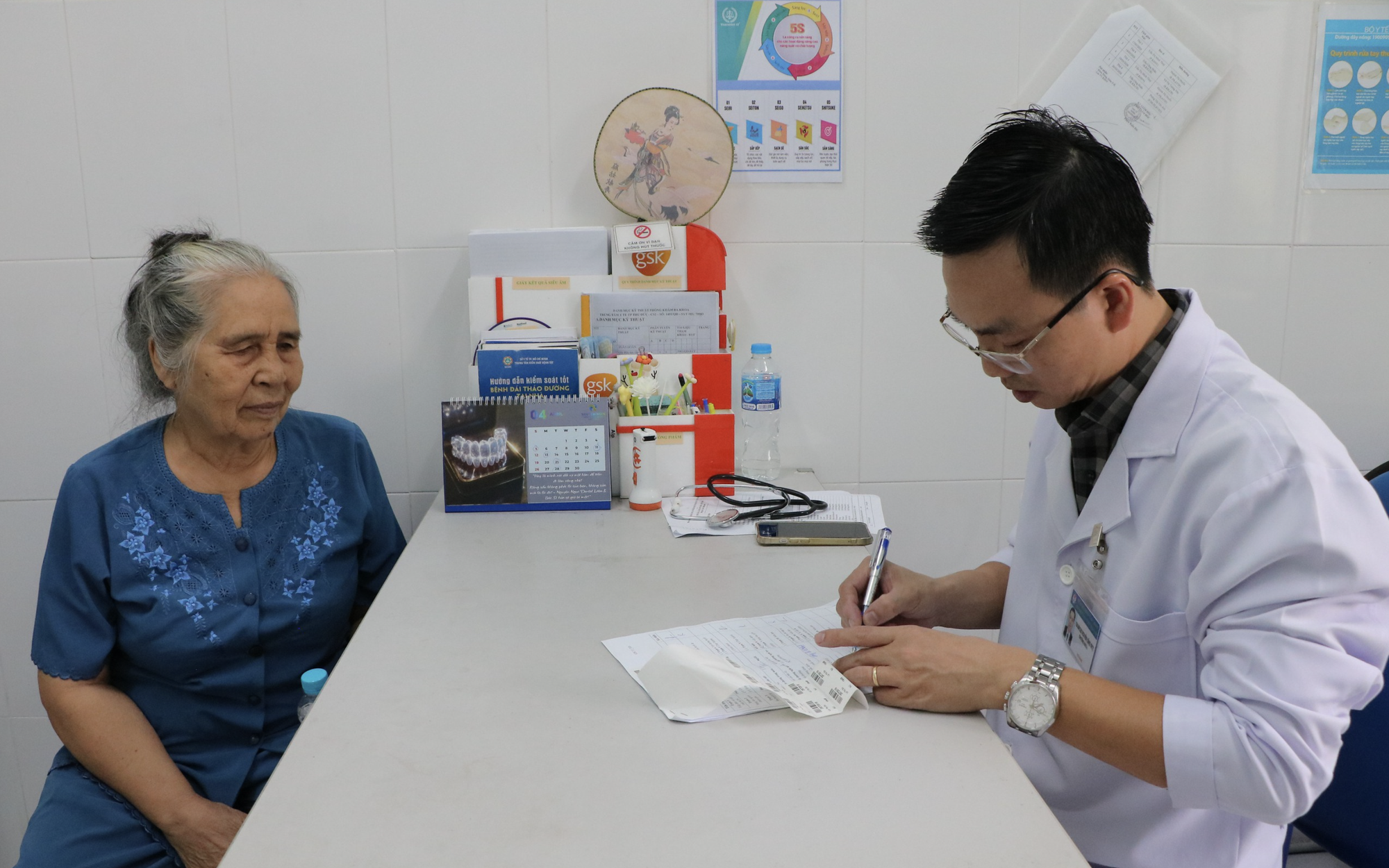
Building trust
Cho Ray Hospital recorded about 10,000 outpatient visits on September 7 alone, the highest figure in its history.
Dr. Pham Thanh Viet, director of the hospital, said the sharp rise in patient numbers reflects public confidence in the hospital’s professional capabilities.
However, the growing number of patients also raises concerns about service quality.
Cho Ray Hospital is seeking to reduce pressure on top-tier facilities by strengthening cooperation with lower-level hospitals through training, technology transfers, and technical support, Viet said.
The goal is to improve the capabilities and reputation of local hospitals so that patients will have greater confidence in seeking treatment closer to home.
A healthcare expert said that with healthcare access opened across different levels, patients tend to choose the highest-level hospitals because they have greater confidence in their medical expertise.
However, concentrating patients at top-tier hospitals can cause overcrowding, affect service quality, and make it harder for lower-level healthcare facilities to develop.
The tendency to seek treatment at major hospitals can also be explained from a psychological perspective.
Nguyen Tran Phuoc, a psychology specialist and sociological researcher, said two major factors are at work.
First, illness often creates anxiety and fear, generating a strong need for safety.
Therefore, patients tend to prioritize hospitals that they believe have highly qualified doctors, strong professional capabilities, and the ability to handle complicated medical conditions.
For many patients, top-tier hospitals represent a higher level of reassurance and trust, making them the preferred destination even when appropriate treatment is available closer to home.
Second, stories of successful treatment can reinforce this perception.
Recommendations from relatives and friends, as well as positive assessments circulating within the community, help create a powerful image of top-tier hospitals as reliable places to seek care.
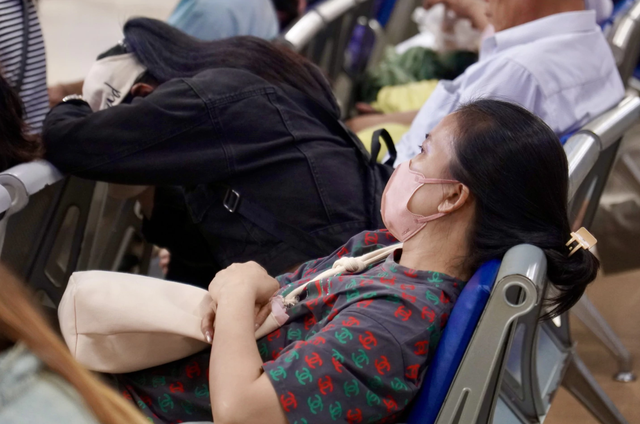
Patients wait to be examined at University Medical Center Ho Chi Minh City, September 17, 2026. Photo: Xuan Mai / Tuoi Tre
Strengthening primary care is long-term solution
Tang Chi Thuong, director of the Ho Chi Minh City Department of Health, said experience has shown that the key to addressing the problem of patients going directly to higher-level hospitals lies at the grassroots level, particularly commune health stations.
If primary healthcare facilities cannot yet earn the public's confidence as the first place to seek medical care and prevent disease early and locally, the entire tiered healthcare system becomes distorted.
People bypass the first level and move directly to higher levels, leaving top-tier hospitals overloaded while lower-level facilities are unable to fulfill their role as the 'gatekeepers' of the healthcare system.
If primary healthcare is not strengthened, efforts to reduce overcrowding at major hospitals will remain largely temporary measures.
Tieu Bac - Thu Hien - Xuan Mai / Tuoi Tre News
Link nội dung: https://news.tuoitre.vn/why-do-crowds-keep-flocking-to-ho-chi-minh-citys-major-hospitals-103260917223918933.htm