
Why do Vietnamese businesses struggle to find successors?
Finding capable successors remains a major challenge for Vietnamese enterprises seeking to sustain growth, preserve corporate values, and ensure a smooth leadership transition beyond their founders.
Business leaders say that empowering employees, developing human capital, and preparing the next generation of leaders are critical to ensuring long-term corporate resilience.
Yet many firms continue to face difficulties identifying and grooming successors when their founders or long-serving executives step down, heard the HAWEE Leaders Forum 2026, held in Ho Chi Minh City on Thursday.
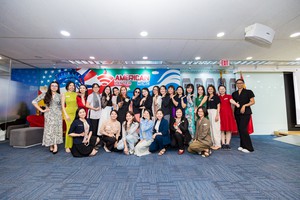
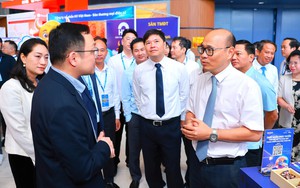
The forum, organized by the Ho Chi Minh City Association for Women Executives and Entrepreneurs (HAWEE), brought together more than 600 business leaders, founders, executives, and distinguished guests, alongside over 16 speakers.
Huynh Thi Xuan Lien, vice-chairwoman of HAWEE, said business leaders must strike a balance between growth and sustainability, while preserving core values and embracing innovation in management.
True leadership does not lie in eliminating all contradictions, but in the ability to guide an organization through them, she noted.
Empowering others to pave way for growth
Sharing her experience at the forum, Nguyen Thi Mai Thanh, chairwoman of the Strategy Committee at REE Corporation, revealed that the company had transferred executive responsibilities to three chief executive officers who did not hold ownership stakes in the business.
The first successfully completed the transition period.
However, the next two executives left their positions after just six months and one year, respectively.
After more than four decades with REE, Thanh’s experience sparked discussions on preserving corporate legacies, transferring responsibilities and creating opportunities for successors to shape the company’s future in their own way.
Professional expertise is necessary but not sufficient, she said.
An executive must also have the ambition to grow the business, the ability to identify opportunities, and a strong commitment to management discipline.
Drawing lessons from these leadership transitions, she stressed that business leaders must be willing to embrace new approaches.
“The greatest legacy of a leader is not the power we hold on to, but a system strong enough for us to confidently let go,” Thanh said.
Empowerment, however, should not be limited to the executive level; it also requires a shift in management practices at the employee level.
At Biti’s, CEO Vu Le Quyen shared the company’s journey from a strict management style toward building a workplace that prioritizes both employee well-being and performance.
Quyen acknowledged that changing long-established management practices was far from easy, particularly because the firm could not predict the outcome of adopting a new approach.
During the transformation, Biti’s placed greater emphasis on listening, empathetic communication and strengthening connections among employees.
The company aims to encourage staff to take the initiative in solving problems and contributing ideas, rather than simply carrying out instructions.
Developing people to create long-term value
Alongside management innovation, investment in human capital is widely regarded as essential to enhancing corporate competitiveness and building a strong pipeline of future leaders.
Mai Huu Tin, chairman of UniGroup, said Vietnam has significant advantages, including a population of more than 100 million and a dynamic younger generation eager to advance.
However, turning these advantages into drivers of economic growth requires greater investment in developing talent with the ability to organize, manage, and lead teams.
“We cannot continue to rely on cheap labor, natural resources, and contract manufacturing,” he said.
“We must move up the value chain through knowledge, technology, productivity, management capabilities, and high-value brands.”
He revealed a plan to establish the Vietnam Leadership Institute, which will focus on developing a new generation of leaders equipped with professional expertise, global perspectives, adaptability, and a strong sense of social responsibility.
Citing Singapore’s experience, Tin noted that systematic investment in human capital had helped the country develop a pool of highly capable professionals and executives able to operate at an international level.
“The long-term value of a leader should not be measured solely by business performance during their tenure, but also by their ability to develop successors capable of taking an organization forward and driving its continued growth,” Tin said.
Tieu Bac - Ha Phuong / Tuoi Tre News
Link nội dung: https://news.tuoitre.vn/why-do-vietnamese-businesses-struggle-to-find-successors-103261106151126526.htm