
Why South Korean football coaches succeed where Japanese fail in Vietnam
South Korean coaches Park Hang-seo and Kim Sang-sik have delivered trophies and breakthroughs for Vietnam in recent years, while their Japanese counterparts have repeatedly struggled. So what lies behind the contrast?
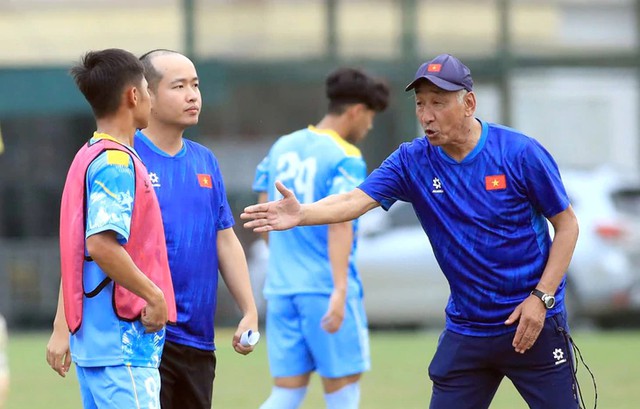
Coach Yutaka Ikeuchi with Vietnam’s U20 team. Photo: VFF
The debate has intensified after Japanese coach Yutaka Ikeuchi endured two disappointing campaigns with Vietnam’s youth teams.
Vietnam were eliminated in the group stage of the 2026 AFF U19 Championship before the U20 side finished bottom of Group C in the 2027 AFC U20 Asian Cup qualifiers on home soil, losing all three matches.
The results have put Ikeuchi’s position under growing scrutiny and added to a difficult record for Japanese coaches in Vietnamese football.
Strong credentials, but not the right fit
Japan is one of the benchmarks Vietnamese football has long sought to follow.
The Japanese men’s national team currently sit 17th in the FIFA rankings, while the country boasts one of Asia’s most developed football systems, spanning school football, youth academies, professional clubs and national teams.
Yet there is a striking paradox: Japanese coaches who have worked in Vietnam have rarely produced results matching their credentials.
Ikeuchi, 65, arrived with a substantial background in Japanese youth football. He previously coached Japan’s U15, U16 and U17 teams, taking the U17 side to the 2009 FIFA U17 World Cup.
He later spent years in youth development roles at the Japan Football Association and worked at the JFA Academy Fukushima before taking charge of Vietnam’s U20 team.
His résumé, however, has not translated into results in Vietnam.
Toshiya Miura faced a similar trajectory.
Appointed to lead Vietnam’s senior and U23 teams in 2014, Miura had previously coached several Japanese clubs, including Vegalta Sendai, Omiya Ardija, Vissel Kobe and Ventforet Kofu.
His tenure began promisingly, with Vietnam beating Iran 4-1 at the 2014 Asian Games and reaching the knockout stage.
But results soon deteriorated.
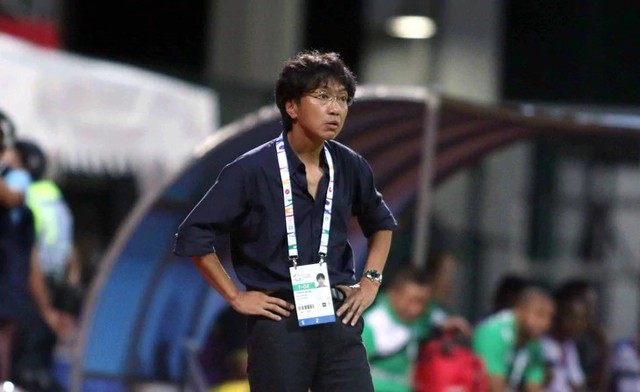
Coach Toshiya Miura during his tenure with the Vietnam national team. Photo: N.K. / Tuoi Tre
Vietnam crashed out of the 2014 AFF Cup semifinals after losing 4-2 at home to Malaysia, then suffered two defeats to Thailand in the 2018 World Cup qualifiers.
A 2-1 semifinal loss to Myanmar at the 2015 SEA Games proved the final blow, prompting the Vietnam Football Federation to end Miura’s contract early in 2016.
In women’s football, Norimatsu Takashi also left Vietnam at the end of 2015 after just nine months in charge.
Akira Ijiri, who spent six years working with Vietnam’s women’s youth teams, also failed to make a major continental breakthrough.
Yet after leaving Vietnam in December 2024 and returning to Japan, he led the country’s U20 women’s team to the 2026 Asian title, including a 4-0 quarterfinal victory over Vietnam.
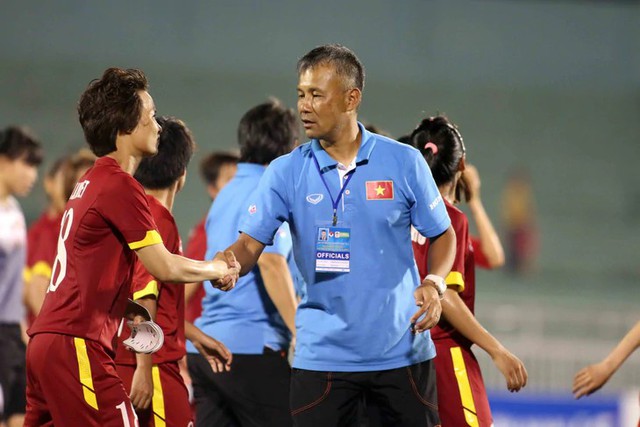
Coach Norimatsu Takashi of the Vietnam women's national team. Photo: N.K. / Tuoi Tre
The contrast underlines a broader point: coaching ability alone does not guarantee success. The surrounding football environment can be just as important.
Japanese coaches working in Vietnam have tended to bring over much of Japan’s football model and training methods with relatively little adjustment, and that has arguably been one of the biggest reasons for their struggles.
Japan has highly developed facilities and a well-established football system. Its players are generally technically strong, highly professional and trained within a consistent playing philosophy from youth level upward.
Vietnam does not yet offer the same level of infrastructure, player development or consistency across the football pyramid.
That makes it difficult to simply transplant Japanese methods and standards without substantial adaptation.
Adaptability gives South Korean coaches the edge
South Korean coaches Park Hang-seo and Kim Sang-sik, by contrast, have shown a stronger ability to adapt their methods to Vietnam’s football environment.
Park arrived in Vietnam in 2017 after a long coaching career in South Korea, including serving as an assistant to Guus Hiddink when South Korea reached the semifinals of the 2002 FIFA World Cup.
He went on to transform Vietnam’s fortunes, leading the U23 team to runners-up at the 2018 AFC U23 Championship, the Olympic side to the Asian Games semifinals, and the senior team to the 2018 AFF Cup title and the 2019 Asian Cup quarterfinals.
Kim, who took charge in 2024, quickly continued that success, guiding Vietnam to the 2024 ASEAN Championship and successfully defending the title in 2026. He also led Vietnam to third place at the 2026 AFC U23 Asian Cup.
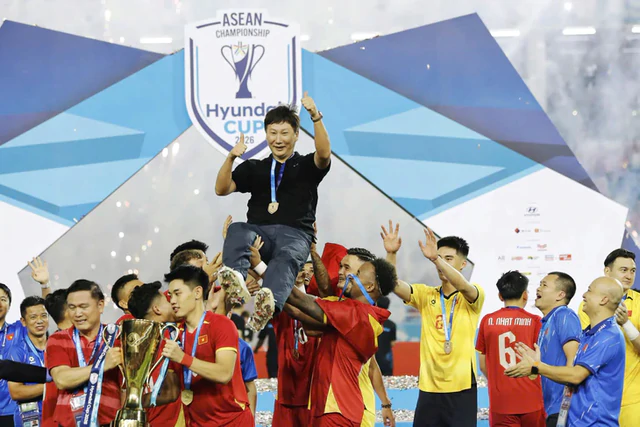
Coach Kim Sang-sik is lifted into the air by Vietnam players after winning the 2026 ASEAN Cup. Photo: VFF
Their success has not been based simply on importing South Korean football methods.
Beyond their résumés, both coaches have placed strong emphasis on relationships, discipline, team spirit and players’ psychology, helping them build trust quickly within the squad.
Le Huy Khoa, Park Hang-seo’s former language assistant, said this is especially important in football because players need not only to understand tactics, but also to trust the person leading them.
Approach and temperament may also play a role.
Japanese coaches often take a patient, system-building approach and are willing to wait years for results, while South Korean coaches tend to be more decisive and more focused on delivering results quickly.
That may suit Vietnamese football better, where expectations are high and fans often rally most strongly around winning teams.
Japanese coaches are typically highly process-oriented, but Vietnam does not always provide the complete football structure needed for such methods to work smoothly.
Training facilities can be limited, player quality uneven and off-field issues unpredictable. In that environment, flexibility and improvisation can be just as important as tactical planning.
Support staff also matter.
Japanese coaches in Vietnam have generally had limited backing from experienced compatriot assistants, while Park and Kim have both worked with strong South Korean backroom teams.
That support has helped them turn ideas into effective training and match-day execution.
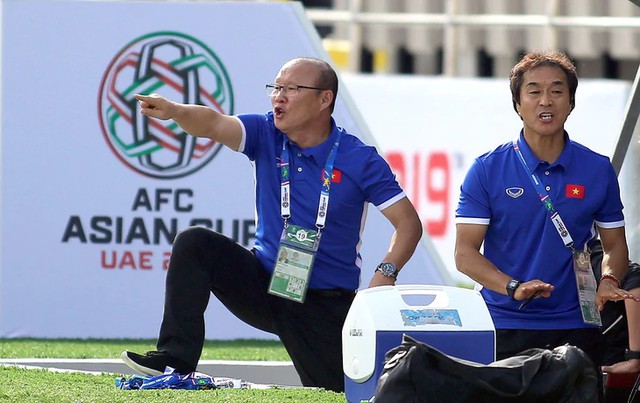
Coach Park Hang-seo (L) and his top assistant Lee Young-jin enjoyed a successful spell with Vietnamese football. Photo: N.K. / Tuoi Tre
The contrasting records of Japanese and South Korean coaches in Vietnam therefore appear to be less about nationality than about fit.
Strong credentials may open the door, but in Vietnamese football, the ability to adapt to the players, the system and the pressure to deliver can matter just as much.
Ngoc Nguyen - Nguyen Khoi / Tuoi Tre News
Link nội dung: https://news.tuoitre.vn/why-south-korean-football-coaches-succeed-where-japanese-fail-in-vietnam-10326090818341569.htm