
Women paid the highest price in Jakarta train tragedy
JAKARTA -- When Harum Anjarsari's husband finally got through to her phone, he did not hear her, but instead, rescue workers who said they pulled the device from the debris of one of two ill-fated trains that collided outside the Indonesian capital.

Putri, sister of Nur Aina Eka Rahmadhyna, a 32-year-old journalist with KompasTV, who was killed in the deadly collision between a commuter line train and a long-distance train on Monday, and other relatives attend the funeral in Bekasi, on the outskirts of Jakarta, Indonesia, April 29, 2026. REUTERS/Willy Kurniawan
Only a day later was Harum, 30, confirmed to be among the 16 people, all women, killed in a mangled carriage reserved for the use of women to avoid sexual harassment in crowded trains.
"She was clearly the economic backbone of the family," said her brother Aldyansah, 25, describing the life of the mother of two children, aged three and nine, who worked as a cosmetics salesperson in an upscale mall in Jakarta.
"She was a great help to the family and was a really hardworking person," Aldyansah told Reuters, as Harum's husband was too distraught to speak.
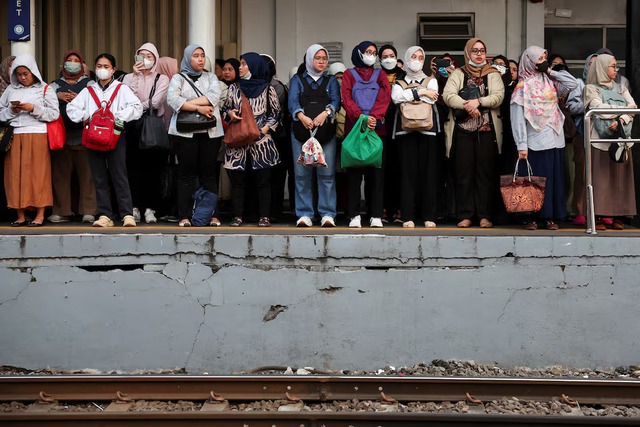
Passengers, mostly women, stand on the platform as they wait for a commuter train during afternoon rush hour in Jakarta, Indonesia, April 29, 2026. REUTERS/Willy Kurniawan
The family were gathered at a police forensic unit where victims' families took custody of relatives' bodies, while others wept and some still waited for news of loved ones caught in the tragedy that injured 91, also mostly women.
Hundreds of thousands of women ride the commuter line
Harum was one of the hundreds of thousands of women who ride each day on the commuter line linking the world's most populous city with satellite cities to its east and west.
The busiest of Jakarta's modes of public transport, it carries a daily average of more than 1.1 million people, the train operator says.
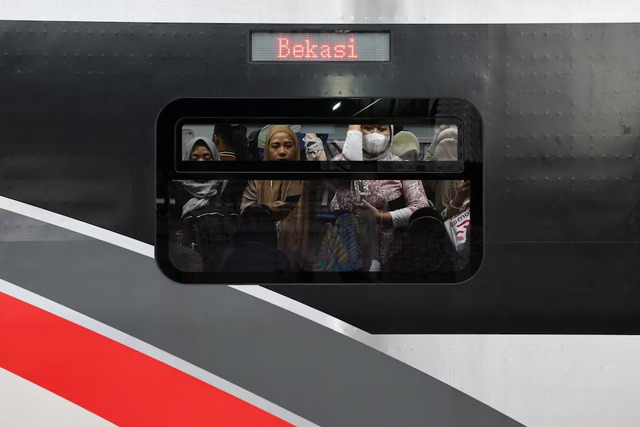
Passengers ride a commuter train on the Bekasi line during afternoon rush hour in Jakarta, Indonesia, April 29, 2026. REUTERS/Willy Kurniawan
The crush of commuters during rush hours brought a feeling of suffocation that could make some women cry, said Nur Aisyah, 31, who works at an office building in central Jakarta and travels every day to Bekasi, the site of Monday's collision.
"But why do I still ride it?" she asked rhetorically, before answering, "I have to, because I have to make a living."
It is still the quickest and cheapest way to get home to your family, she added.
World Bank figures show more Indonesian women workers and commuters depend on public transport than men in a workforce where the manpower ministry says they accounted for about 40% in 2024 in the world's largest Muslim-majority nation.
The last carriage of the usually crowded train is always reserved for women, as in many countries, but Monday's accident turned it deadly, when a train collided with it.
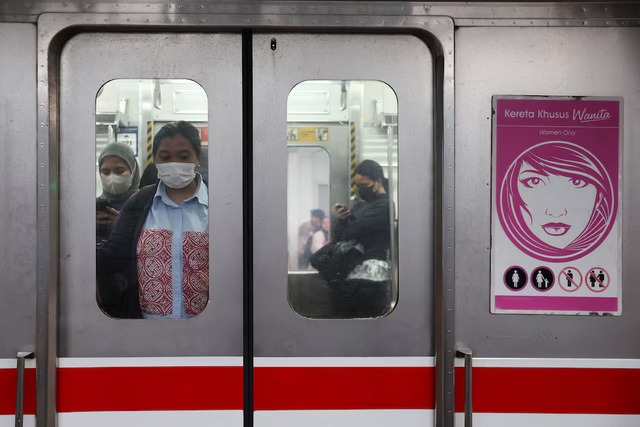
Passengers stand inside the women's carriage of a commuter train during afternoon rush hour in Jakarta, Indonesia, April 29, 2026. REUTERS/Willy Kurniawan
Testing conditions even at the best of times
The accident aroused fears for their safety among women who take the same packed service in testing conditions even at the best of times in a city notorious for its nerve-wracking traffic.
"After the incident, I got scared because I got to and back from work on the women's carriage," said Nur Aisyah.
The collision happened just before 9:00 pm, with the train less crowded than usual after peak office hours.
"Even now, it’s still on my mind," said Bekasi resident Dian Afridianti, 34, who works in cleaning services in Jakarta.
"I think about what if I’d been there."
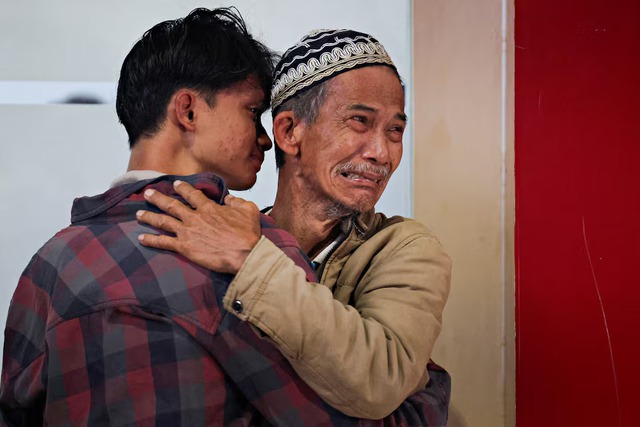
Tuin, 60, and his relative react as they wait identification of Harum Anjarsari at Kramat Jati National Police Hospital, following a deadly collision between a commuter line train and a long-distance train in Jakarta, Indonesia, April 28, 2026. REUTERS/Ajeng Dinar Ulfiana
Mornings are also a challenge, with the women's carriage packed when she gets on at 7:00 am.
"People were jostling each other so much that the doors couldn’t close," she added.
"You really had to push your way through."
More women rely on public transport than men as they find it affordable, said transport analyst Hafida Fahmiasari, because men control more financial assets in any given household in Southeast Asia's biggest economy, from motorcycles to cars.
"This (accident) will affect women but only in the short term," added the doctoral candidate in civil engineering at Singapore's Nanyang Technological University.
"Life must go on."
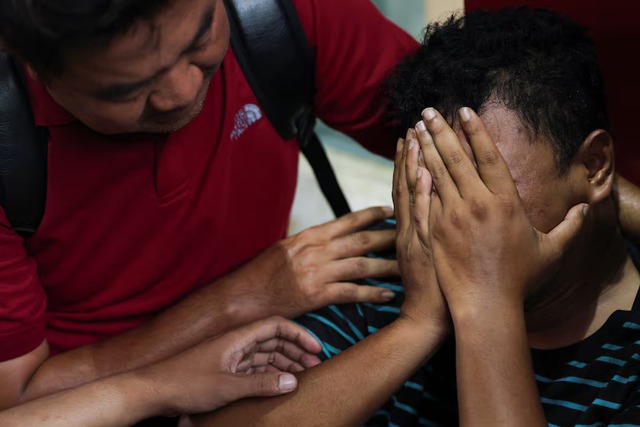
Relatives of Harum Anjarsari react as they wait for identification at Kramat Jati National Police hospital, following a deadly collision between a commuter line train and a long-distance train, in Jakarta, Indonesia, April 28, 2026. REUTERS/Ajeng Dinar Ulfiana
Reuters
Link nội dung: https://news.tuoitre.vn/women-paid-the-highest-price-in-jakarta-train-tragedy-103260430104630089.htm