
Young Vietnamese revive analog photography as film processing gains niche following
In a small darkroom tucked inside a house in Ho Chi Minh City, young photography enthusiasts are reviving the craft of manual film developing and printing, embracing a slower and more tactile process in the digital age.
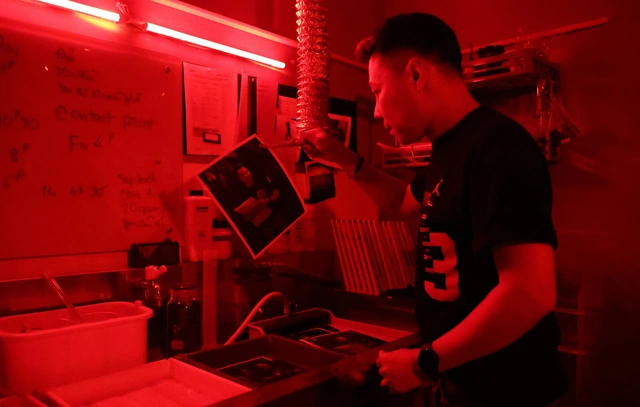
A person washes a photographic print during the darkroom development process in Ho Chi Minh City, Vietnam. Photo: Duc Anh
Le Duc Anh, a former graphic design student, runs a home-based darkroom studio where he processes black-and-white film by hand, a practice he describes as both a creative pursuit and a form of quiet concentration.
"Each step requires patience and focus, and I learn to accept the results calmly, even when they are not perfect," he said.
Inside the roughly 10-square-meter room, kept at around 20 degrees Celsius, shelves are lined with imported chemicals, trays, and equipment used to develop and print photographs under dim red safelight conditions.
After shooting images on a large-format film camera, Anh guides beginners through each stage, from loading film into tanks and mixing chemicals to washing negatives and exposing them onto photographic paper.
The process demands precise timing, sometimes measured down to seconds, as images gradually appear during chemical reactions in trays of liquid, a moment participants describe as both tense and rewarding.
Results are not always immediate, with multiple attempts often needed to achieve the desired contrast and tone, requiring both time and materials.
For many, the appeal lies in the unpredictability and the hands-on experience absent from digital photography, where results are instant.
Tang Thuy Nhat Linh, a 27-year-old freelance photographer, said the most challenging stage is printing images in a quiet, controlled environment where each adjustment affects the final outcome.
"It is demanding and sometimes exhausting, but it helps me improve my skills and accept experimentation and failure," she said.
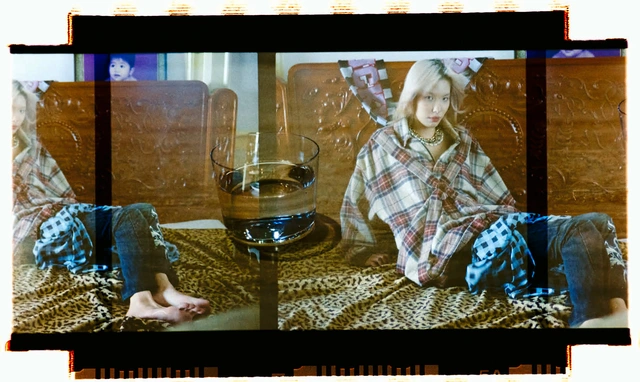
A double-exposure photograph created using traditional darkroom printing techniques by photographer Tang Thuy Nhat Linh
Some sessions can last up to 12 hours, leaving participants physically tired but satisfied with the process and results.
Vu Ngoc Tu, who has worked in film processing since 2009, said he now trains younger generations, emphasizing the need for patience, care, and discipline.
He said that while the number of analog labs in Ho Chi Minh City remains limited, interest has grown steadily, with an estimated 15,000 rolls of film processed and scanned each month across the city.
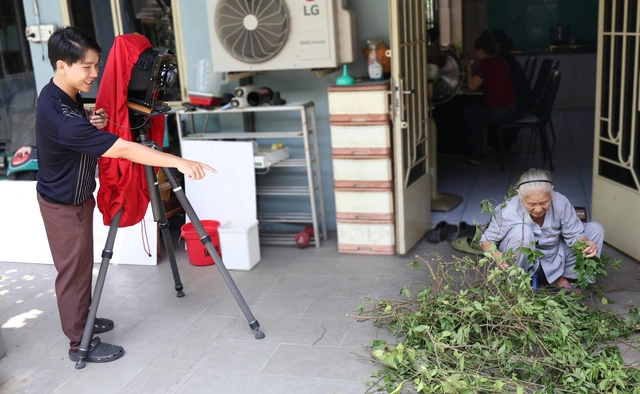
A young photographer uses a vintage film camera to shoot images for manual darkroom processing as a personal passion in Ho Chi Minh City, Vietnam. Photo: Trung Nghia
Students and part-time workers at these labs handle tasks such as developing and scanning film, sometimes working overtime during peak periods when demand surges.
Lam Nhung, a university student working at a lab, said the job offers both income and exposure to a wide range of images taken by customers.
"Each roll of film feels like a journey through different places and stories," she said.
Despite the dominance of digital photography, practitioners say the analog process continues to attract those seeking a more deliberate and immersive creative experience.
Bao Anh - Trung Nghia / Tuoi Tre News
Link nội dung: https://news.tuoitre.vn/young-vietnamese-revive-analog-photography-as-film-processing-gains-niche-following-103260405160347959.htm