


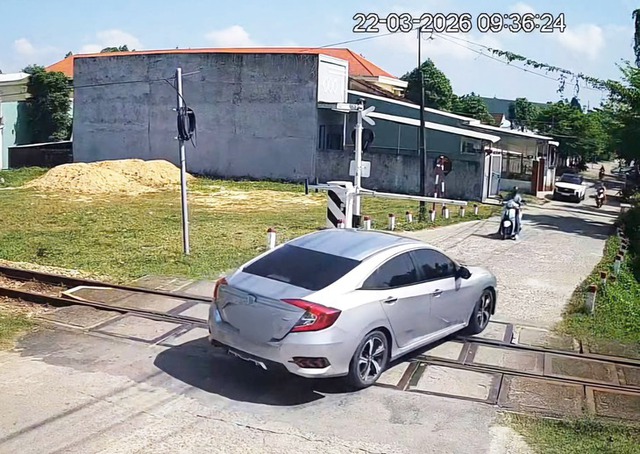
Camera footage shows a car running a red light at a railway crossing in Tam Xuan Commune, Da Nang City, central Vietnam on March 22, 2026
The incident occurred on April 18, when a car attempted to cross a railway as automatic barriers lowered onto it.
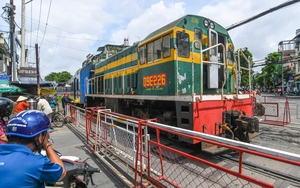
Several bystanders tried unsuccessfully to push the vehicle off the tracks before the SE6 train struck it.
The driver escaped in time, and no fatalities were reported.
However, the broader picture is concerning.
In the first four months of this year, Vietnam recorded 65 railway accidents that killed 32 people and injured 30.
About half occurred at level crossings, with 42 percent at informal, self-created crossings.
Across the national rail network, more than 2,350 such crossings still exist.
These are not simply the result of careless behavior but stem from decades of urban development that allowed residential areas to grow alongside railways without adequate alternative routes.
Recent cases illustrate two recurring patterns.
Some incidents arise from risky circumstances, including a fatal accident involving a 10-year-old boy in the Central Highlands province of Dak Lak, where a farm vehicle driven by his grandfather crossed an unprotected, unofficial track on April 12.
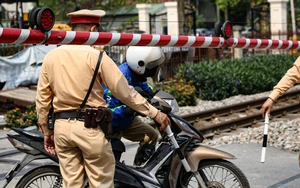
Others reflect deliberate violations, such as a woman in Da Nang’s Thanh Khe Ward who assaulted two railway employees for lowering barriers in accordance with safety rules as a train approached on April 6.
While Government Decree 81, effective from May 15 this year, will impose administrative fines of up to VND25 million (US$980) on individuals violating railway safety rules, enforcement alone cannot address the root causes.
Three systemic gaps stand out.
First, current barrier systems operate on timing rather than real-time detection, lacking sensors to identify vehicles still on the tracks.
Second, infrastructure planning remains incomplete, as the closure of crossings without providing alternative routes forces people to take risks.
Third, railway gatekeepers, often employed by private companies, lack legal authority to enforce compliance beyond verbal warnings.
International experience shows that technology and design matter more than appeals to public awareness.
In Japan, crossings equipped with obstacle sensors record only 0.12 accidents per million train passes, compared to 0.43 at crossings without sensors.
East Japan Railway Company reduced accidents from 247 in 1987 to 39 in 2016 largely by eliminating level crossings and upgrading safety systems.
For Vietnam, proposed solutions include accelerating the closure of unauthorized paths while ensuring replacement access roads or underpasses, mandating obstacle detection sensors at busy crossings, and designing the planned North-South high-speed railway with no level crossings.
Legal clarity is also needed to recognize on-duty railway staff as public safety officers.
Repeated violations across regions and demographics show the issue is not individual morality but systemic design flaws.
Responsibility lies with planning authorities and budget decisions, not just with road users.
* This article was originally written in Vietnamese by lawyer Hoang Ha and translated by Tuoi Tre News.








Max: 1500 characters
There are no comments yet. Be the first to comment.