


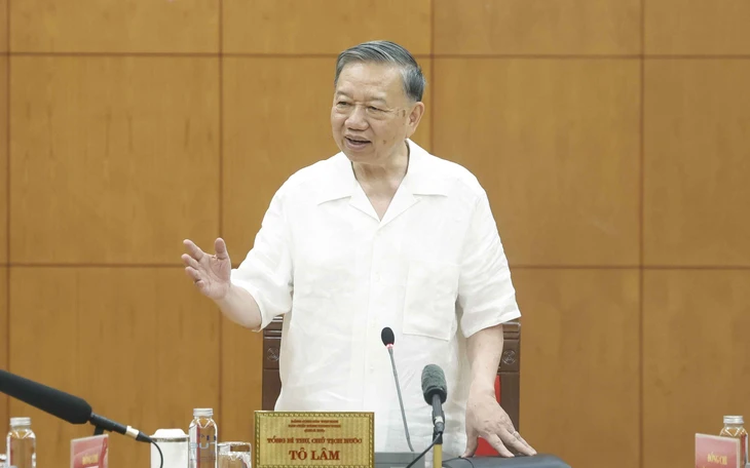
Vietnamese Party General Secretary and State President To Lam speaks at a working session in Hanoi, May 19, 2026. Photo: Vietnam News Agency.
Party chief and State President Lam chaired a working session with the Government Party Committee, ministries, and relevant agencies on the afternoon of May 19 on the implementation of a directive issued by the Party Central Committee’s Secretariat on strengthening the Party’s leadership in social housing development under the new circumstances, according to the Vietnam News Agency.
Housing must match people’s affordability
In his concluding remarks at the working session, the top leader stressed that in the new development era, access to safe and affordable housing must be regarded as a basic right of citizens and a measure of social progress.
Housing, he said, must become a stable component of urban and rural structures, social welfare, urban security, labor productivity, and the healthy development of the real estate market.
The Party leader stressed that housing development must be viewed from a comprehensive perspective rather than as a matter solely for the construction sector or a policy aimed at supporting low-income groups.
He said the issue involves coordination across sectors, administrative levels, and regions, linked to urban planning, land management, industrial development, public transportation, the labor market, and population management.
He acknowledged that the National Assembly, government, ministries, sectors, and localities have made considerable efforts to improve institutions, issue policies, remove administrative bottlenecks, and promote housing development.
However, housing policies in the new period must be designed with a new mindset and a new vision to ensure that everyone has access to housing.
“Houses are for living, not for speculation or asset accumulation,” he noted, adding that the results achieved in housing policies so far have generally fallen short of targets and remain inadequate compared to the enormous demand.
Pointing out several shortcomings and limitations, Party chief Lam called for housing to be integrated into the national urban development strategy.
Each urban area, industrial park, economic zone, growth corridor, and key economic region must include housing planning alongside technical infrastructure, social services, cultural institutions, healthcare, and education facilities for residents, he required.
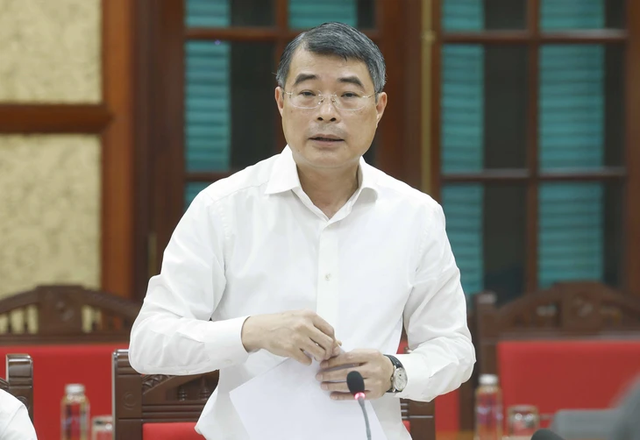
Prime Minister Le Minh Hung speaks at the working session in Hanoi, May 19, 2026. Photo: Vietnam News Agency.
Housing planning must also closely follow labor supply and demand.
Areas with large numbers of workers, migrant laborers, industrial zones, universities, hospitals, and service-sector employees should be prioritized for land allocation, infrastructure investment, and suitable social housing development mechanisms.
Lam said Vietnam’s housing development model in the new period should neither follow a subsidized housing model nor rely entirely on market forces.
The state would create land banks, carry out planning, provide financial support, set standards and regulations, and simplify administrative procedures, while the market would participate in construction and operation with reasonable benefits.
People, he stressed, must have access to stable, safe, and affordable housing suitable for eligible groups.
Rental housing must be identified as a strategic pillar, especially in major cities, industrial zones, labor migration areas, and places where housing prices far exceed people’s income levels, the top leader said.
Developing new housing policy models
Party General Secretary and State President Lam called for continued improvements to the legal framework on housing.
He said the state must take the leading role in planning, taxation, credit regulation, and ensuring fairness while controlling housing speculation.
Local authorities were instructed to review land banks and complete local housing planning, proactively clear sites, and prepare clean land reserves for policy housing projects while creating favorable conditions for investors.
The Ministry of Finance and the State Bank of Vietnam were asked to coordinate with relevant ministries and agencies to develop long-term financial mechanisms for policy housing.
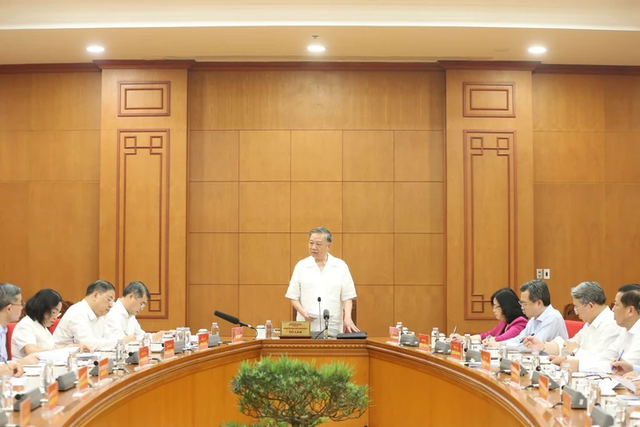
An overview of the working session in Hanoi, May 19, 2026. Photo: Vietnam News Agency.
Businesses, he said, should be allowed reasonable profits while remaining subject to strict controls over costs, quality, construction progress, sale prices, and rental prices.
The top leader also emphasized the need to research and introduce policies to accelerate the development of the apartment rental market.
He encouraged private enterprises and non-profit organizations to participate in building, financing, and managing low-rent apartments subsidized by the state for low-income and very low-income households that are unable to purchase homes.
He called for strict and transparent controls over homebuyers and policy beneficiaries to prevent speculation and profiteering.
“Housing must not become a speculative asset,” he said, stressing the need for close supervision of beneficiaries, purchasing mechanisms, and resale activities to prevent abuse of housing policies for personal gain.
Officials, civil servants, and Party members, he added, must take the lead in strictly implementing housing policies and regulations.
The Party chief and state president assigned the Government Party Committee to study and formulate housing development policies consistent with the Constitution, Party, and state policies, and the needs of the people for submission to the National Assembly.








Max: 1500 characters
There are no comments yet. Be the first to comment.